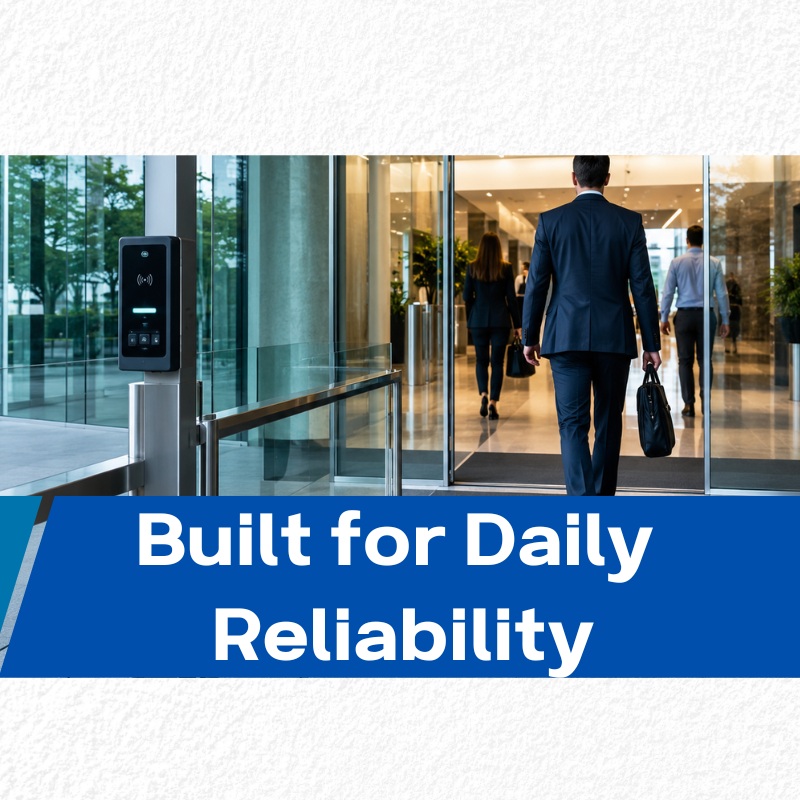
Building security systems are expected to work every day without interruption. In commercial environments, dependable performance is not just a technical requirement — it directly affects operations, employee access, tenant safety, and business continuity.
Many property owners focus heavily on installation and initial system setup. However, long-term system stability is what determines whether a security solution continues protecting the facility years later.
A security system that becomes inconsistent over time creates operational risks. Delayed door response, worn lock cylinders, failed credentials, or outdated permissions can disrupt workflows and weaken overall building protection.
For offices, apartment complexes, hotels, retail stores, warehouses, clinics, and mixed-use properties, long-term system consistency should be part of every security decision from the beginning.
Security Systems Need to Perform for Years, Not Just at Installation
Buildings constantly evolve. Security infrastructure must evolve with them.
A property that originally supported one tenant may later become a multi-tenant facility. Employee counts increase, visitor traffic changes, and access permissions become more complex over time.
At the same time, security hardware experiences continuous daily wear. Door locks cycle thousands of times per year. Credentials are reassigned, staff roles change, and management platforms receive updates throughout the system lifecycle.
Without long-term planning, even well-designed systems gradually become less dependable.
Most security failures do not happen suddenly. They develop slowly through repeated use, aging hardware, inconsistent maintenance, and outdated access management.
Common long-term performance issues include:
- Lock cylinders becoming difficult to rotate
- Door latches failing to return smoothly
- Credentials syncing inconsistently
- Electronic readers responding slowly
- Sensors drifting out of alignment
- Audit logs becoming incomplete or inaccurate
These problems often appear minor at first. Over time, they can create larger operational and safety concerns.
A dependable security system is not defined by installation day. It is defined by how consistently it performs year after year.
Poor Reliability Creates Daily Business Problems
Security systems support daily operations far beyond intrusion prevention.
In commercial environments, doors, credentials, and access permissions directly affect how employees, visitors, contractors, and deliveries move through the property each day. When system performance declines, operations become less predictable.
For example, inconsistent access control can lead to:
- Employees being locked out during business hours
- Delivery delays at secured entrances
- Tenant complaints about inconsistent entry
- Visitor management disruptions
- After-hours access confusion
- Increased pressure on facility management staff
A retail shop with unstable door hardware may delay opening procedures every morning. A coworking office with inconsistent credential syncing may create confusion for temporary members and contractors. A warehouse manager may need to grant temporary nighttime access to delivery teams without affecting daytime employee permissions.
These problems affect productivity, customer experience, and operational efficiency.
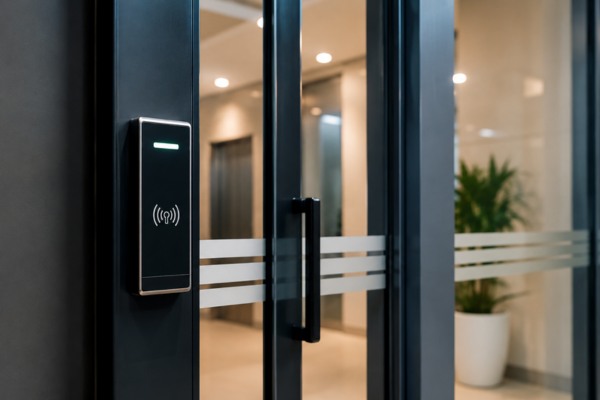
Dependable access systems help maintain smooth people flow, uninterrupted operations, and more predictable access management. That consistency becomes especially important in facilities with high occupant turnover or extended operating hours.
Door Locks and Access Systems Wear Down Faster Than Many Owners Expect
Among all building security components, locking systems experience some of the highest daily usage.
Doors in offices, apartment complexes, schools, healthcare facilities, hotels, and retail environments are opened and secured repeatedly throughout the day. Over time, constant mechanical stress affects cylinders, lock bodies, latches, hinges, and electronic readers.
Low-quality hardware often struggles under high-traffic conditions.
Common long-service hardware issues include:
- Keys sticking inside cylinders
- Internal pin wear reducing key precision
- Misaligned latch mechanisms
- Electronic reader failures
- Loose mounting hardware
- Increased resistance during locking and unlocking
These failures rarely happen at convenient times. Many occur during busy operational periods when uninterrupted access matters most.
In managed properties, unstable locking systems can quickly become operational liabilities rather than security assets.
Preventive maintenance helps reduce these risks. Regular inspections allow facility teams to identify wear before it creates larger disruptions.
Typical maintenance procedures include:
- Testing lock cylinder rotation consistency
- Inspecting latch return performance
- Cleaning debris inside cylinders
- Lubricating moving mechanical components
- Verifying reader responsiveness
- Testing backup power systems and batteries
Planned maintenance is far more predictable and cost-effective than emergency lock replacement or after-hours repair calls.
Commercial Properties Need More Than Residential Smart Locks
Many smart locks designed for homes are not built for commercial operating conditions.
Residential systems typically support fewer users, lighter traffic volume, and simpler permission structures. Business facilities operate very differently.
A commercial access control system may need to support:
- Hundreds of daily access events
- Multiple user groups
- Temporary contractor credentials
- Shift-based permissions
- Audit trail requirements
- Remote management
- Continuous operation across multiple entry points
This creates much higher demands on both mechanical and electronic components.
Commercial-grade systems are designed for:
- Higher duty cycles
- Long-service hardware durability
- Stable credential management
- Faster maintenance procedures
- Scalable permissions
- Predictable daily operation
For example, a property manager may need to revoke temporary contractor access immediately without affecting permanent staff credentials. A hotel may require uninterrupted room access across hundreds of doors every day. A clinic may need restricted after-hours access for cleaning staff while maintaining secure medical storage areas.
These environments require security hardware that remains dependable under constant operational pressure.
Stable Locking Systems Help Reduce Long-Term Costs and Operational Risks
Consistent system performance helps reduce both security risks and operational uncertainty.
When property owners invest in dependable locking systems, they gain more than physical protection. They also improve maintenance planning, compliance management, and long-term cost control.
Stable systems help reduce:
- Emergency repair costs
- Unplanned downtime
- Frequent hardware replacement
- Credential management errors
- Access disruptions
- Liability exposure during incidents
Consistent operation also improves emergency response readiness.
During emergencies, access systems must function immediately and predictably. Fire response teams, medical personnel, and facility managers rely on doors, master key systems, and electronic permissions to operate without delay.
A worn lock cylinder or failed electronic module can slow emergency access during critical situations.
Dependable systems support stable building operations during both routine use and emergency conditions.
What to Look for in a Dependable Building Security System
Not all security systems are designed for long-term operational stability.
When evaluating security infrastructure, property owners and facility managers should prioritize design features that support both security and uninterrupted daily operation.
Commercial-Grade Lock Cylinders Support Stable Daily Access
Lock cylinders remain one of the most important components in physical security systems.
High-quality cylinders help maintain smooth operation, stable key control, and consistent locking performance under repeated daily use. In busy commercial environments, dependable cylinders help reduce access interruptions and support predictable building operations.
Commercial-grade cylinders should offer:
- Precision-engineered internal components
- High resistance to wear
- Anti-drill and anti-pick protection
- Stable key insertion and rotation
- Tested durability standards
International certifications such as EN1303 and SKG help verify sustained performance and long-term security consistency.
Modular Systems Simplify Maintenance and Future Upgrades
Modular systems simplify long-term maintenance and upgrades.
Instead of replacing entire lock assemblies, modular designs allow individual components to be serviced or upgraded independently. This helps reduce downtime, simplify repairs, and lower long-term replacement costs.
Modular security architecture also supports phased upgrades as building requirements evolve.
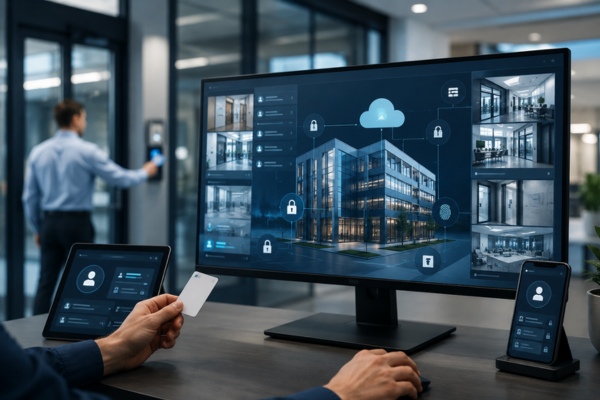
For example, a facility may begin with mechanical cylinders and later integrate electronic credentials, keyless entry, mobile access, or cloud based management without replacing core hardware infrastructure.
Upgrade-Friendly Systems Protect Long-Term Investments
Well-designed systems should support future expansion.
Buildings rarely remain static over time. Security infrastructure should allow for:
- Additional access points
- New credential technologies
- Software updates
- Expanded audit capabilities
- Hybrid mechanical and electronic configurations
Open and upgrade-compatible systems help protect long-term investments while reducing unnecessary hardware replacement.
Access Logs and Permission Controls Improve Accountability
Modern business facilities often require detailed access tracking.
Modern access systems should support:
- Accurate audit logs
- Role-based permissions
- Temporary credential expiration
- Centralized management
- Consistent time synchronization
These features improve compliance, strengthen accountability, and simplify building management for growing businesses.
Dependable Security Systems Support Long-Term Business Stability
A building security system should continue performing consistently long after installation day.
Long-term system stability affects security performance, operational continuity, maintenance costs, compliance readiness, and user confidence. Properties that rely on unstable hardware or poorly maintained infrastructure often face avoidable disruptions over time.
Dependable systems support predictable daily operations. They also provide the flexibility needed to adapt as buildings, tenants, and business requirements evolve.
Long-term operational consistency often depends on the quality of the hardware behind the system. Commercial properties with high traffic volumes require lock cylinders and access hardware that maintain stable performance under repeated daily use.
EOS SECURE develops precision-engineered mechanical and electronic lock cylinders designed for dependable long-term building protection. Our high-security cylinders meet EN1303 and SKG standards, helping maintain uninterrupted access control operation in demanding commercial environments. By combining advanced Swiss-type CNC machining with modular system architecture, EOS SECURE helps businesses scale and upgrade access management systems without unnecessary hardware replacement. From master key systems to smart lock integration, EOS SECURE supports secure, scalable, and predictable building access designed for sustained operational stability. Explore EOS SECURE solutions to strengthen your business security.