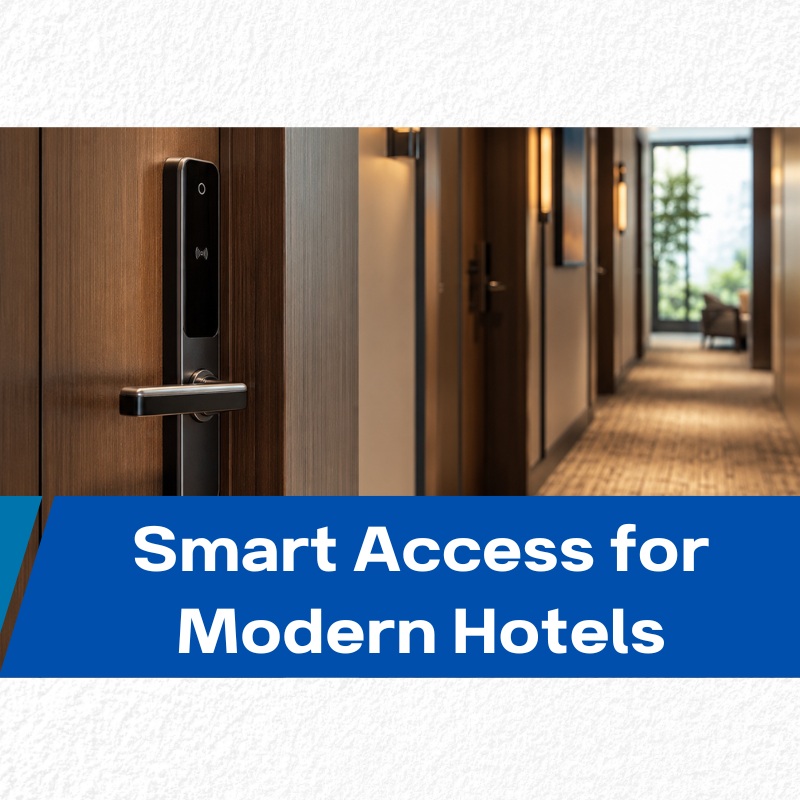
Hotel door locks once served a single purpose — securing guest rooms. Today, they influence far more than physical protection. Modern hospitality access platforms now affect guest satisfaction, workflow efficiency, staff coordination, and property-wide security management.
As hotels continue moving toward digital operations, older room entry systems are becoming harder to manage. Guests expect smartphone-based entry, staff require centralized permission management, and operators need real-time visibility across rooms, floors, and multiple buildings.
Modern hospitality security is no longer built around standalone door hardware. It now depends on connected access infrastructure that supports both security and daily operations.
Why Hotel Locks Now Affect More Than Security
Hotels once viewed door hardware as a long-term mechanical asset. Once installed, many systems remained unchanged for years.
That approach no longer supports modern hospitality workflows.
Today’s properties manage:
- mobile check-in processes
- temporary employee credentials
- cloud-connected management platforms
- multi-building permissions
- digital guest access
- audit tracking and compliance oversight
A room entry platform now affects how quickly guests check in, how efficiently teams work, and how securely staff manage access across the property.
For example, a boutique hotel with a small front desk team may issue dozens of temporary credentials during a busy weekend. A centralized digital management platform allows staff to update permissions instantly without manually reprogramming cards room by room.
Hotels are also reevaluating how they approach physical security investments. Operators increasingly prioritize flexibility, scalability, and simplified management instead of focusing only on hardware lifespan.
How Hotel Door Locks Have Changed Over Time
Hospitality security technology has evolved through several major stages, with each generation improving convenience, credential control, and operational flexibility.
Mechanical Keys
Mechanical keys were once the standard for guest room security. They were durable and simple to use, but they created management challenges for hotels.
Lost keys often required replacing the entire lock cylinder. Duplicate keys were difficult to track, and operators had little visibility into who accessed a room.
Small inns and older properties still use mechanical systems today. However, they lack the flexibility and centralized oversight modern hotels now expect.
Magnetic Stripe Cards
Magnetic stripe credentials became popular in the 1970s and 1980s. They allowed hotels to issue programmable room access cards without replacing physical locking hardware.
This improved operational efficiency significantly. Staff could deactivate lost cards and issue replacements quickly.
But magnetic stripe systems also introduced new issues:
- cards demagnetized easily
- readers wore down over time
- cloning risks increased
- maintenance demands became more frequent
Many hospitality properties still operate older magnetic stripe infrastructure, especially buildings that postponed modernization projects.
RFID Access Systems
RFID technology became the next major step in electronic room entry.
Instead of swiping a card, guests simply tap the credential near the reader. RFID-based systems are more durable, faster, and harder to duplicate than magnetic stripe technology.
Modern RFID credentials also support stronger encryption standards such as:
- MIFARE Plus
- MIFARE Ultralight AES
These technologies improve protection against credential cloning and unauthorized entry.
RFID remains one of the most widely used access solutions across mid-range and upscale hospitality environments.
Mobile Keys and Digital Credentials
Smartphone-based entry is now driving the latest phase of hospitality security evolution.
Guests can unlock rooms using:
- hotel apps
- Apple Wallet
- Google Wallet
- Bluetooth credentials
- NFC-enabled devices
This removes the need for physical keycards entirely.
For hotels, digital room keys help reduce:
- front desk congestion
- replacement card costs
- lost credential incidents
- manual administration
For guests, the experience feels faster and more seamless. Travelers can check in remotely and access their rooms immediately without waiting at reception.
Why Older Hotel Lock Systems Create Daily Problems
Many hospitality properties still rely on outdated guest room access systems that were never designed for connected operations.
Over time, these older platforms create hidden costs and workflow inefficiencies.
Limited Guest Experience
Modern travelers expect convenience.
Guests already use smartphones for boarding passes, payments, and reservations. Hotels operating outdated room entry technology can feel disconnected from those expectations.
Long front desk lines and repeated keycard failures create friction during check-in — one of the most important moments in the guest experience.
Manual Maintenance Workloads
Older electronic locking hardware often requires constant manual oversight.
Staff regularly spend time:
- replacing batteries reactively
- recoding failed cards
- resolving lockouts
- checking offline door status
In many properties, housekeeping teams become the unofficial reporting system for low batteries and malfunctioning readers.
Connected entry platforms reduce these inefficiencies through remote diagnostics and centralized monitoring tools.
Integration Barriers
Legacy systems often rely on isolated on-premise software.
This creates disconnects between:
- the room access platform
- the PMS
- housekeeping operations
- guest management tools
Without integration, staff must manually update multiple systems, increasing administrative workload and creating opportunities for human error.
Security and Credential Risks
Older entry management systems typically provide weaker encryption and limited audit visibility.
Magnetic stripe credentials are more vulnerable to duplication. Some outdated platforms cannot instantly revoke lost credentials across the property.
Modern hotels increasingly require:
- encrypted credentials
- real-time permission updates
- centralized audit records
- access tracking visibility
These functions are becoming essential for operational accountability and guest confidence.
How Modern Hotel Locks Improve Hotel Operations
The biggest advantage of connected hospitality access solutions is not the hardware itself. The real value comes from operational flexibility and centralized oversight.
Faster Check-In and Reduced Front Desk Pressure
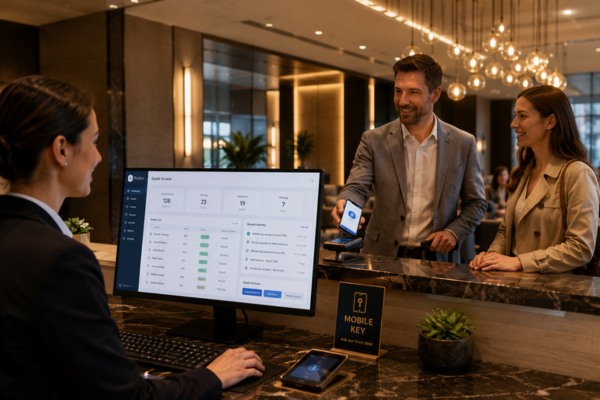
Digital guest credentials allow travelers to bypass traditional check-in lines.
A guest arriving late at night can receive smartphone-based room access instantly and enter the property without waiting for staff assistance.
This helps reduce:
- front desk congestion
- staffing pressure
- guest wait times
For properties with high turnover, these efficiency improvements become significant over time.
Better Staff Access Control
Hotels manage many forms of temporary access:
- housekeeping teams
- maintenance vendors
- delivery personnel
- security staff
Modern credential management systems allow operators to issue permissions with:
- time restrictions
- floor restrictions
- department-based access windows
This improves security while reducing the risks associated with physical master keys.
Lower Operational Costs
Traditional room entry systems create ongoing costs through:
- lost keycards
- rekeying
- manual maintenance
- emergency lockouts
Remotely managed access platforms simplify credential administration and reduce unnecessary labor.
Remote diagnostics also help maintenance teams identify issues before guests experience lock failures.
Easier Multi-Property Management
Hotel groups increasingly require centralized oversight across multiple locations.
Cloud-connected hospitality access solutions allow operators to:
- manage permissions remotely
- standardize security policies
- monitor activity across properties
- update systems without on-site visits
This scalability is especially valuable for expanding hospitality businesses.
Improved Audit Visibility
Modern access platforms generate detailed audit records showing:
- who accessed a room
- when access occurred
- which credentials were used
These logs improve incident investigation and support compliance requirements.
For hotels managing VIP guests or sensitive areas, audit visibility has become a critical operational feature.
The Technologies Behind Modern Hotel Lock Systems
Several technologies are shaping today’s hospitality access environment.
RFID and Advanced Credential Encryption
RFID remains the foundation for many electronic guest room access platforms.
Modern encryption standards help protect against:
- credential cloning
- unauthorized duplication
- tampering attempts
Hotels upgrading older infrastructure often prioritize stronger encryption as part of broader cybersecurity improvements.
Mobile Key Infrastructure
Digital room access systems rely on:
- Bluetooth Low Energy
- NFC communication
- wallet-enabled credentials
- encrypted mobile authentication
These technologies support contactless entry while reducing dependence on physical cards.
Cloud-Based Access Management
Web-based management platforms allow hotels to control permissions remotely in real time.
Front desk teams can:
- issue credentials instantly
- revoke access immediately
- monitor system status
- review audit records remotely
This improves operational visibility while reducing on-site maintenance demands.
Retrofit-Ready Hardware
Many modern hospitality entry systems support retrofit upgrades.
Hotels can often modernize electronic components without replacing entire doors or modifying fire-rated openings.
This reduces:
- installation costs
- guest disruption
- operational downtime
Retrofit compatibility is especially important for older hotels balancing modernization with renovation budgets.
Open API Integration
Modern room access platforms increasingly support open API architecture.
This allows integration with:
- PMS platforms
- energy management systems
- housekeeping software
- guest experience applications
As hospitality operations become more connected, integration flexibility provides long-term operational advantages.
How to Choose the Right Hotel Lock System
Hotels have different operational priorities, so the right guest room access solution depends on property type, guest expectations, and long-term management goals.
Assess Operational Needs First
A small boutique hotel may operate efficiently with RFID-based room entry.
A large business hotel with high guest turnover may benefit more from:
- smartphone-based access
- centralized online management
- automated PMS synchronization
The system should match operational complexity, not simply room count.
Evaluate Long-Term Operational Cost
Initial hardware pricing only tells part of the story.
Lower-cost entry systems often create higher long-term expenses through:
- replacement cards
- maintenance labor
- rekeying
- manual administration
Connected hospitality platforms frequently reduce operational overhead over time despite higher upfront investment.
Verify PMS Compatibility
Hotels should confirm that room access infrastructure integrates directly with their PMS.
Without integration, staff may need to manually manage:
- room assignments
- credential updates
- guest access changes
This slows operations and increases administrative workload.
Plan for Future Scalability
Hotels should prioritize platforms that support:
- firmware updates
- hybrid RFID and mobile access
- centralized remote management
- future integrations
A flexible system reduces the likelihood of expensive full replacements later.
What Hotels Should Expect From Future Lock Systems
Hospitality access technology continues evolving toward connected, intelligent management environments.
Biometric Access Will Expand
Fingerprint and facial recognition systems are becoming more practical for hospitality properties.
These technologies eliminate physical credentials while improving convenience.
Hotels must still balance innovation with:
- privacy regulations
- guest consent requirements
- data security responsibilities
Predictive Maintenance Will Become Standard
AI-assisted analytics can already identify:
- repeated failed entry attempts
- unusual credential activity
- low battery conditions
- mechanical wear patterns
This allows hotels to resolve issues before guests experience disruptions.
Hybrid Cloud Systems Will Grow
Some hospitality businesses will move fully cloud-native.
Others will adopt hybrid platforms that continue functioning locally during internet outages while maintaining synchronized records once connectivity returns.
This flexibility improves operational resilience.
Connected Room Ecosystems Will Expand
Modern room access tools are increasingly becoming part of broader smart-building operations.
Unlocking a guest room may eventually trigger:
- lighting adjustments
- HVAC settings
- housekeeping notifications
- occupancy updates
This creates a more connected and efficient hospitality environment.
Build Stronger Hotel Security From the Core
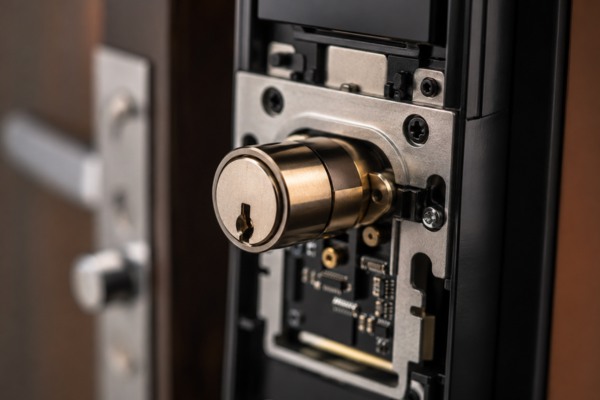
Today’s hospitality properties rely on encrypted credentials, connected entry platforms, and centralized permission management. But every secure room still depends on one physical component — the lock cylinder.
Digital guest access improves operational efficiency, but physical locking hardware still determines how well a door resists drilling, picking, forced entry, and unauthorized manipulation.
EOS SECURE delivers precision-engineered mechanical and electronic lock cylinders built for commercial-grade security. Established in 2011, our factory operates under ISO9001 and ISO14001 certifications. Every product meets rigorous international standards including EN1303 and SKG.
With more than 50 advanced Swiss-type CNC automatic lathes and integrated machining centers, EOS SECURE manufactures high-quality lock cylinders trusted by hotels, offices, and commercial properties worldwide. Whether you need small-batch customization or large-scale production, EOS SECURE provides reliable performance, consistent quality, and dependable technical support.
Explore EOS SECURE solutions to strengthen your hospitality security infrastructure.