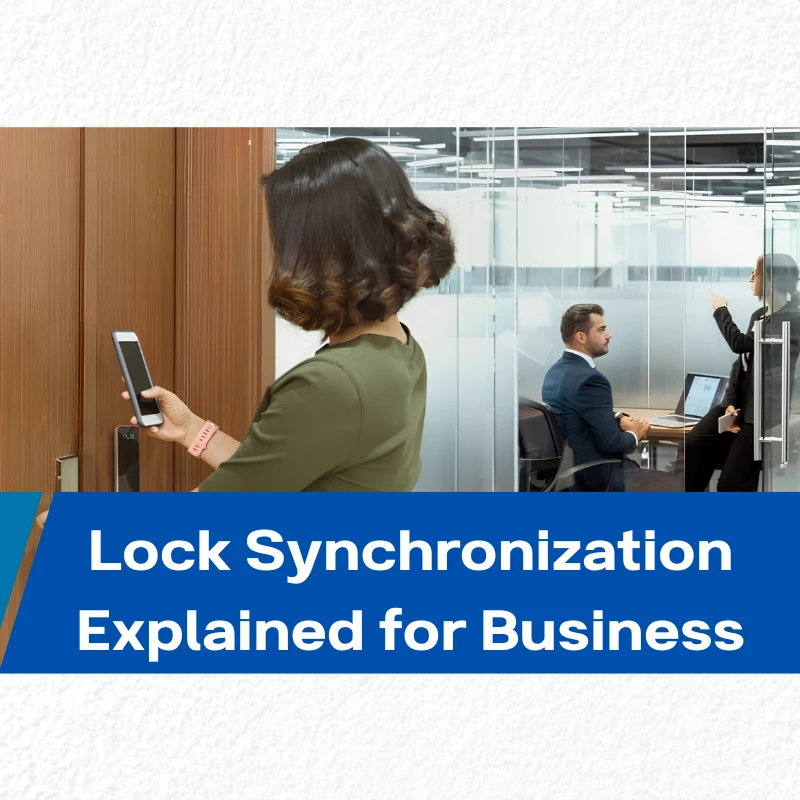
Why Multiple Keys Become a Security Problem for Businesses
As businesses grow, managing access becomes more complex. Offices add doors, teams expand, and keys begin to multiply.
This often leads to lost keys, unclear access permissions, and operational delays. Over time, these issues increase both security risks and daily inefficiency.
Lock synchronization helps businesses simplify access while maintaining control across multiple entry points.
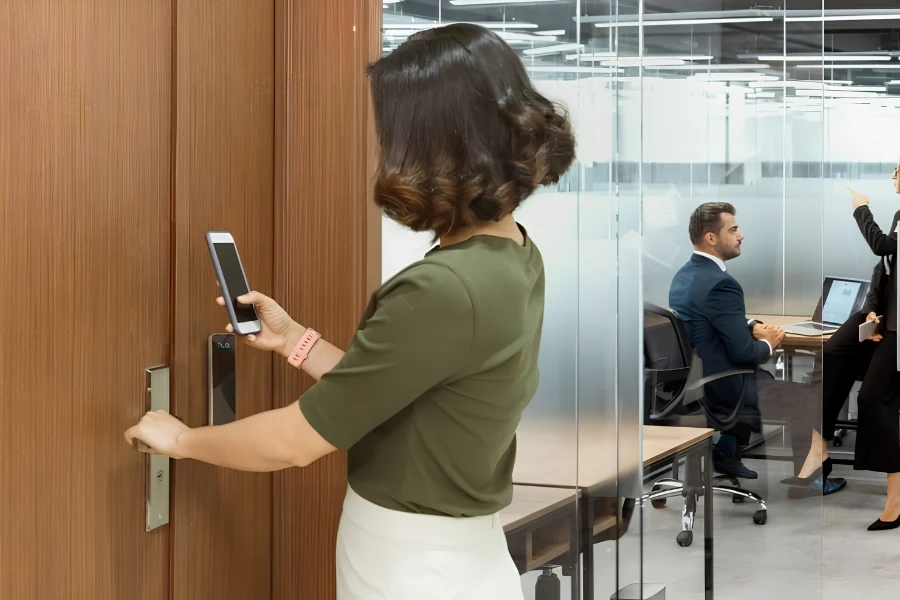
What Lock Synchronization Means for Access Control
Lock synchronization is the process of configuring multiple lock cylinders so they operate within a unified system. It allows businesses to control access using fewer keys while maintaining structured permissions.
There are two common approaches:
- Keyed alike systems – one key operates multiple locks
- Master key systems – individual keys open specific locks, while a master key provides full access
This reduces key management complexity while improving access control.
Keyed Alike vs Master Key – Choosing the Right System
Keyed Alike Systems
All locks operate with the same key, making this the simplest form of synchronization.
- Best for small offices, retail stores, and single-location businesses
- Reduces key handling and employee confusion
- Improves speed in daily operations
A retail store, for example, can allow staff to open storage rooms and back doors using one key, reducing delays during busy periods.
Master Key Systems
Each lock has its own key, but a master key can open all locks, creating a structured access hierarchy.
- Suitable for offices, apartments, and multi-department facilities
- Allows managers full access while limiting staff permissions
- Supports scalable growth
An office can assign department-level access while management maintains full control across all areas.
Keyed alike systems simplify access, while master key systems provide controlled scalability. Businesses should choose based on whether convenience or structured access is the priority.
EOS SECURE lock cylinders are engineered for precise pin alignment across large systems, helping businesses maintain consistent lock synchronization without frequent reconfiguration.
How Lock Synchronization Actually Works in Practice
Lock synchronization is achieved through mechanical configuration combined with system design.

Rekeying
Rekeying adjusts the internal pin structure of a lock cylinder so it responds to a new key.
- Used when keys are lost or access needs to be reset
- Allows multiple locks to operate under one key system
This helps businesses update access without replacing hardware.
Modular Lock Cylinders
Modular systems allow lock configurations to be adjusted without replacing the entire unit.
- Ideal for growing businesses
- Reduces long-term upgrade and maintenance costs
Key Control Systems
High-security systems include restricted keyways and registration processes.
- Prevent unauthorized duplication
- Maintain system integrity over time
Lock Synchronization vs Rekeying vs Access Control Systems
These concepts are related but serve different purposes.
- Rekeying changes how a lock responds to a key
- Lock synchronization ensures multiple locks operate as one system
- Access control systems add digital permissions and remote management
Businesses should choose synchronization for physical key management, and upgrade to access control when remote management is required.
Where Lock Synchronization Makes the Biggest Difference
Lock synchronization delivers value in environments where access must be controlled efficiently.
Residential Properties
Homeowners can simplify access by using one key across all entry points, reducing daily inconvenience.
Offices and Workspaces
Access can be assigned based on roles.
A small office can allow employees into shared spaces while restricting access to storage or management areas.
Rental and Short-Term Properties
Property managers can rekey locks between tenants instead of replacing them, reducing cost while maintaining security.
Commercial and Institutional Facilities
Larger facilities benefit from structured access systems.
A warehouse can allow delivery access to loading zones while restricting inventory areas.
Lock synchronization allows businesses to manage access based on operational needs, not just door locations.
How to Keep a Synchronized Lock System Secure
Convenience must be balanced with security.
Key considerations include:
- Key control – restrict duplication through registered systems
- Attack resistance – use anti-drill, anti-pick, and anti-snap cylinders
- Access planning – limit master key distribution
A synchronized system is only as secure as the lock cylinders within it.
EOS SECURE high-security cylinders combine reinforced structures with controlled key systems, ensuring reliable protection in synchronized environments.
Installation and Maintenance Tips for Long-Term Reliability
Proper installation and maintenance ensure stable performance.
- Keep cylinders flush with the door surface
- Use reinforced hardware and protective escutcheons
- Apply dry lubricants for smooth operation
- Inspect regularly for wear or misalignment
Routine maintenance prevents access failures and extends system lifespan.
From Mechanical Locks to Smart Access Synchronization
Modern systems are evolving toward digital access management.
Smart lock systems allow:
- Remote access control
- Temporary digital credentials
- Real-time entry tracking
Many businesses adopt hybrid systems, combining mechanical lock synchronization with smart technology for flexibility and reliability.
Simplify Access and Strengthen Your Security System
Lock synchronization transforms multiple independent locks into a structured access system. It reduces complexity, improves control, and supports business growth.
Instead of managing keys individually, businesses can manage access strategically.
EOS SECURE delivers precision-engineered mechanical and electronic lock cylinders designed for consistent performance across synchronized systems. With over a decade of manufacturing expertise and certified production standards including EN1303 and SKG, our solutions help businesses build reliable, scalable access control systems. Whether you need customization or large-scale deployment, EOS SECURE provides dependable performance and long-term stability. Explore EOS SECURE solutions to strengthen your business security.