Why Traditional Lock Systems No Longer Work for Modern Businesses
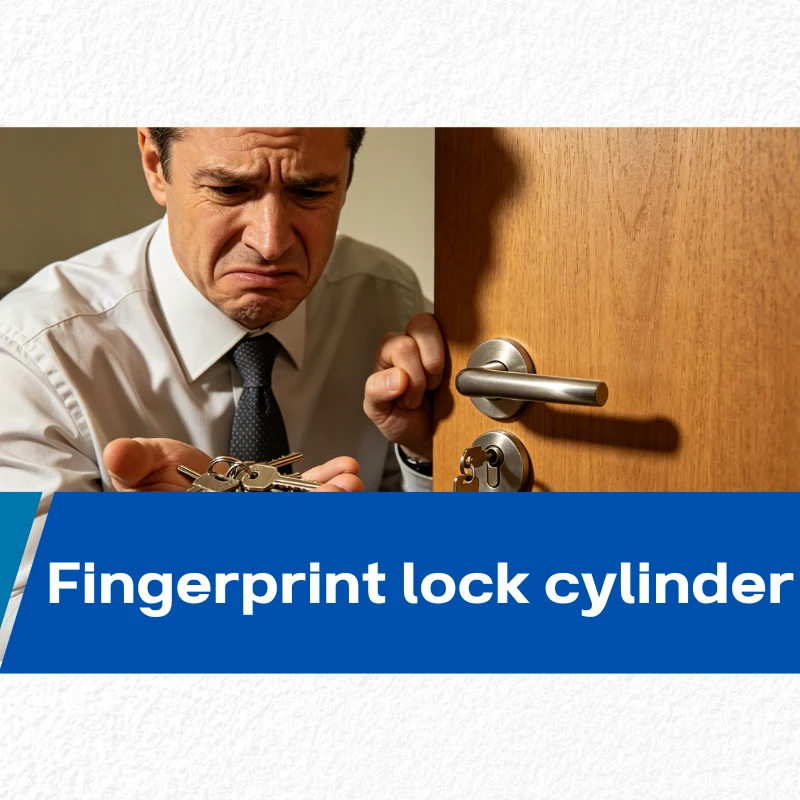
Most businesses still rely on physical keys or basic keypad locks to control entry. These methods seem simple, but they create hidden risks over time. Lost keys, duplicated copies, and shared PIN codes lead to uncontrolled access that cannot be tracked or revoked efficiently.
As teams grow and access needs change, traditional lock cylinders become difficult to manage. A retail shop handling daily deliveries, or an office with rotating staff, cannot rely on physical keys without losing control over access. This is where the fingerprint lock cylinder becomes a practical upgrade.

Fingerprint Lock Cylinder — What It Does and Why It Matters
A fingerprint lock cylinder is a locking core that integrates biometric authentication directly into the cylinder structure. Instead of relying on a physical key, it uses a registered fingerprint as the primary credential.
Unlike full smart lock systems that require replacing the entire lock, a fingerprint lock cylinder fits standard formats such as Euro profile cylinders. This allows businesses to upgrade existing doors without changing the entire hardware setup, reducing cost and disruption.
Supported Access Methods
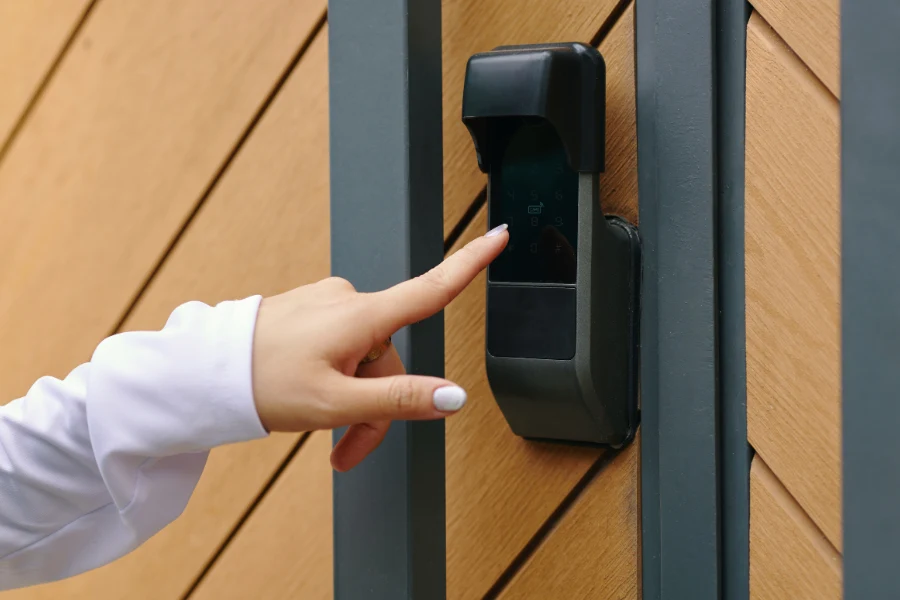
- Fingerprint recognition as the primary credential
- PIN codes for backup access
- Mobile app control via Bluetooth
- RFID cards for staff or guests
- Mechanical key override for emergencies
This approach turns the cylinder into an active access control point, giving businesses more control without replacing their infrastructure.
The Real Risks of Traditional Lock Cylinders in Daily Operations
Traditional lock cylinders were designed for simple, single-user environments. Modern businesses operate differently.
Physical Key Risks
- Keys can be lost or stolen, requiring urgent replacement
- Duplication is easy and often untraceable
- Over time, access spreads beyond intended users
This creates operational risk. For example, a warehouse manager may not know how many copies of a key are still in circulation.
Limited Control and Visibility
- No way to track who entered and when
- No ability to revoke access instantly
- No support for temporary or scheduled access
Without visibility, businesses cannot enforce accountability.
Weak Alternatives Like PIN Systems
- Users choose predictable codes
- Shared passwords remain active for long periods
- Worn keypads reveal frequently used digits
These limitations make traditional cylinders unsuitable for environments where multiple people require controlled access.
How Fingerprint Lock Cylinders Secure Access at the Core Level
A fingerprint lock cylinder combines identity verification with mechanical security. It ensures that only authorized users can activate the cylinder.
Biometric Authentication
Capacitive fingerprint sensors read sub-dermal patterns, making them difficult to replicate. Advanced systems include liveness detection to block fake fingerprints.
This reduces the risk of unauthorized entry without requiring users to manage physical credentials.
Secure Processing and Storage
- Encrypted fingerprint templates are stored locally
- AES-based encryption protects communication
- Secure chips prevent tampering or data extraction
This ensures sensitive data remains protected while maintaining fast authentication.
Mechanical Actuation
Once verified, the system engages the internal mechanism to allow rotation. The cylinder still provides physical resistance against forced entry.
Backup Systems
- Hidden mechanical key override
- Emergency power via USB
- Low-battery alerts
This hybrid design ensures businesses maintain access continuity while improving security control.
How Fingerprint Lock Cylinders Reduce Security Risks
Fingerprint lock cylinders address both physical and operational risks.
Eliminates Key-Based Vulnerabilities
- No keys to lose or duplicate
- No uncontrolled key distribution
- No need for rekeying after staff changes
This simplifies access management for growing teams.
Resists Physical Attacks
- Anti-drill and anti-pick structures
- Reinforced materials for durability
- Reduced exposure of keyways
This improves resistance against common intrusion methods.
Prevents Electronic Threats
- Encrypted communication blocks interception
- Anti-tamper systems prevent forced resets
- Secure storage protects biometric data
This is especially important for businesses managing multiple entry points.
Enables Accountability
- Access logs track user activity
- Permissions can be updated instantly
- Temporary access reduces long-term exposure
Access control becomes measurable and manageable, not just mechanical.
Fingerprint Lock Cylinder vs Traditional Locks — What Changes
The difference is not just convenience. It is about control.
Access Control
- Traditional locks rely on shared physical keys
- Fingerprint cylinders assign access to individuals
Scalability
- Keys require manual distribution and collection
- Digital credentials can be updated instantly
Security Management
- No audit trail with mechanical systems
- Full visibility with biometric systems
Maintenance
- Frequent rekeying increases cost and downtime
- Digital updates reduce operational effort
Traditional locks work for single-user scenarios. Fingerprint lock cylinders are built for multi-user environments.
Access Control Features That Improve Daily Operations
Fingerprint lock cylinders support real-world business workflows.
Multi-User Permission Management
- Assign access based on roles
- Separate permissions for staff, contractors, and visitors
- Remove access immediately when needed
This helps businesses maintain control without manual tracking.
Temporary and Remote Access
- Grant time-limited access to delivery staff or service providers
- Avoid sharing permanent credentials
- Manage access remotely through mobile apps
For example, a retail store can allow early-morning deliveries without staff being present.
Integration With Systems
- Connect with building systems and IoT platforms
- Sync access logs for compliance and reporting
- Automate access schedules
These features improve efficiency while reducing administrative overhead.
Upgrade Existing Doors Without Replacing Your Hardware
Fingerprint lock cylinders are designed for practical upgrades.
Direct Replacement
- Fits standard Euro profile cylinders
- Compatible with common door configurations
- No structural modification required
This reduces installation complexity.
Interchangeable Core Support
- Compatible with SFIC or LFIC systems
- Allows quick replacement using control keys
- Supports master key systems
This is valuable for facilities managing multiple access points.
Retrofit Solutions
- Adapts older lock systems without full replacement
- Maintains existing door design
- Minimizes downtime during installation
Businesses can modernize security without disrupting operations.
Built for Long-Term Use — Materials and Compliance That Matter
A fingerprint lock cylinder must perform reliably in real-world environments.
Structural Materials
- Stainless steel and hardened alloys for durability
- Anti-corrosion finishes for extended lifespan
Environmental Resistance
- Protection against dust and moisture
- Stable performance across temperature variations
Certification and Testing
- Compliance with EN1303 and SKG standards
- Tested for repeated use cycles
- Resistance to mechanical attacks
These factors ensure consistent performance in demanding environments.
Where Fingerprint Lock Cylinders Make the Biggest Impact
Fingerprint lock cylinders are widely used across industries.
Residential and Rental Properties
Landlords can manage tenant access without replacing locks after each lease.
Short-Term Rentals
Temporary credentials eliminate key handovers and reduce operational friction.
Offices and Co-Working Spaces
Access can be assigned by role, improving internal security and flexibility.
Hotels and Hospitality
Staff and guest access can be managed with full traceability.
Warehouses and Logistics
Shift-based access ensures only authorized personnel enter restricted areas.
These use cases show how access control directly supports operational efficiency.
When Should You Upgrade to a Fingerprint Lock Cylinder
Not every business needs advanced access control immediately. However, certain situations indicate it is time to upgrade.
You should consider a fingerprint lock cylinder if:
- You manage multiple users or staff rotations
- Keys are frequently lost, copied, or shared
- You need to track access for security or compliance
- You want to reduce manual key management
- You operate across multiple locations
If access control is becoming difficult to manage, upgrading the cylinder is often the most efficient first step.
How to Choose the Right Fingerprint Lock Cylinder for Your Business
Selecting the right solution depends on practical requirements.
Key Factors to Evaluate
- Capacitive fingerprint sensor with liveness detection
- High-security mechanical core for backup protection
- Strong encryption for communication security
- Compatibility with existing doors
- Support for multi-user access management
For Commercial Applications
- Interchangeable core compatibility
- Audit logging and system integration
- OEM customization for scalability
The right choice should align with both current needs and future growth.
A Practical Upgrade for Better Access Control
Fingerprint lock cylinders redefine how businesses manage entry. By combining biometric authentication with mechanical security, they remove the risks associated with physical keys while improving control and efficiency.
As businesses move toward keyless and scalable access control systems, upgrading the lock cylinder becomes a logical first step. It allows organizations to improve security without replacing existing infrastructure, making it both practical and cost-effective.
EOS SECURE delivers precision-engineered mechanical and electronic lock cylinders backed by more than a decade of manufacturing expertise. Established in 2011, our factory operates under ISO9001 and ISO14001 certifications, ensuring every product meets rigorous international standards including EN1303 and SKG. With over 50 advanced Swiss-type CNC automatic lathes and integrated machining centers, we manufacture high-quality lock cylinders trusted by clients across industries worldwide. Whether you need small-batch customization or large-scale production, EOS SECURE provides reliable performance, consistent quality, and dependable technical support. Explore EOS SECURE solutions to strengthen your business security.