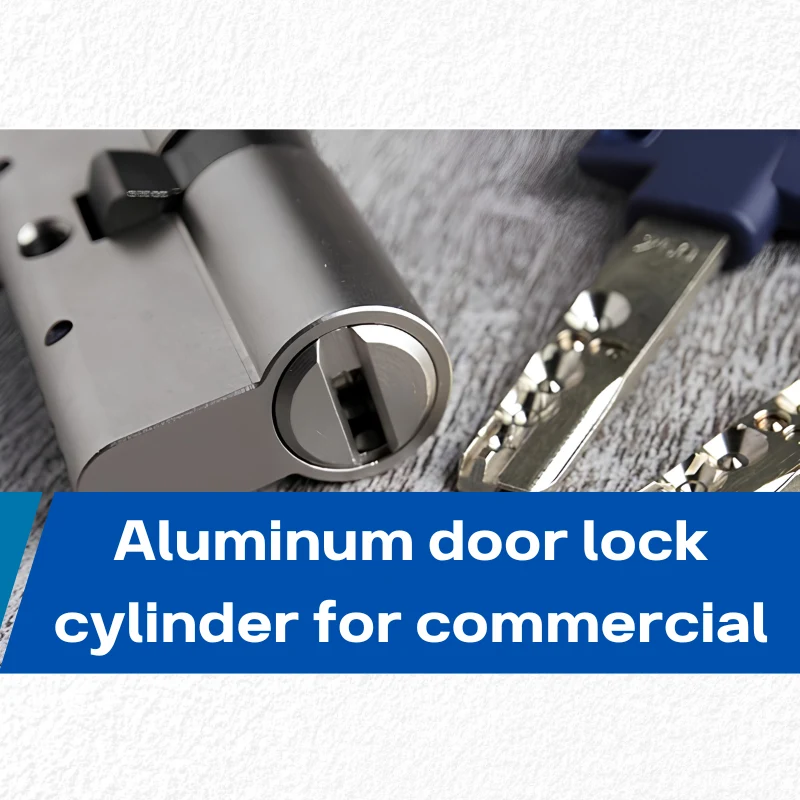
Why Aluminum Door Locks Fail in Real Business Use
Many businesses install strong lock bodies but overlook the cylinder, which is where most security failures actually occur. In real-world use, access control breaks down long before the hardware does.
Common issues include:
- Lost or duplicated keys with no tracking or control
- Staff turnover without updating access permissions
- Low-grade cylinders vulnerable to snapping or manipulation
- Costly full lock replacements for minor security changes
These gaps create operational risk and inefficiency. A properly selected lock cylinder gives businesses controlled access, easier upgrades, and long-term flexibility without replacing entire systems.
What an Aluminum Door Lock Cylinder Does for Your Security
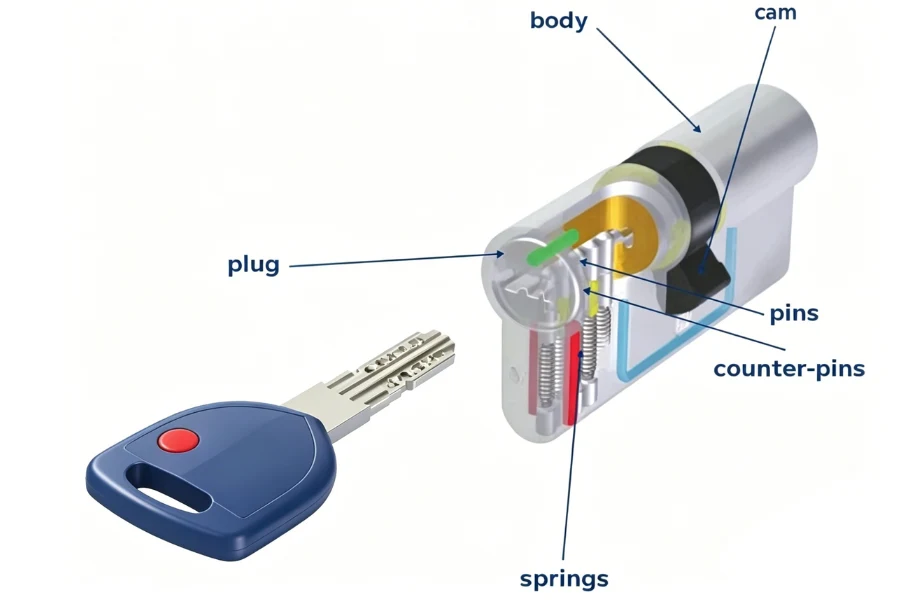
An aluminum door lock cylinder is the component that determines who can access your space. It acts as the decision point in your door system, verifying credentials and controlling entry.
The lock body handles mechanical movement, but the cylinder controls access.
Key takeaway:
The cylinder defines access control, which directly impacts business security and daily operations.
Because the cylinder is replaceable, businesses can upgrade security, reassign access, or respond to key loss without changing the entire lock. This is especially useful in offices, rental properties, and retail environments where access needs change frequently.
How a Lock Cylinder Controls Access in Your Door System
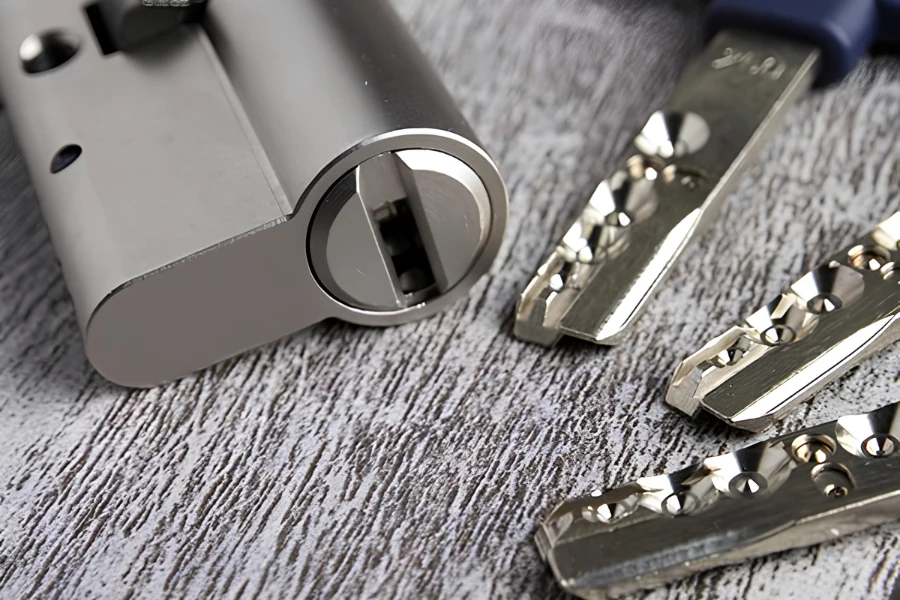
A lock cylinder works as part of a complete door system, connecting user input to mechanical security.
Basic Operation Flow
- A key is inserted into the cylinder
- Internal pins align with the key profile
- The cylinder rotates
- The cam or tailpiece activates the lock body
- The bolt extends or retracts
This process is standard in aluminum door systems such as multipoint locks and Euro-profile configurations commonly used in commercial buildings.
Important insight:
In most door systems, the cylinder is the primary attack point. If it fails, the strength of the lock body becomes irrelevant.
Which Lock Cylinder Types Work Best for Aluminum Doors
Choosing the right cylinder type depends on how the door is used and how access needs to be managed.
Euro Profile Cylinder
Widely used in aluminum doors and multipoint locking systems. It allows quick replacement and supports scalable access control, making it ideal for offices and multi-unit properties.
Modular Cylinder
Designed for flexibility. Length and configuration can be adjusted without replacing the full unit, which helps reduce maintenance costs in large projects or buildings with multiple door types.
High-Security Cylinder
Includes anti-snap, anti-drill, and anti-pick protection. Recommended for storefronts, warehouses, and any location exposed to higher security risks.
Smart Cylinder
Supports app-based access, fingerprint entry, and audit logs while retaining mechanical backup. This allows businesses to manage access remotely and track entry activity without issuing physical keys.
A small retail store can grant temporary access to a delivery driver through a smart cylinder, then revoke it without needing to collect keys. Solutions like these are increasingly supported by modern cylinder systems, including those offered by EOS SECURE.
How Cylinder Materials Impact Durability and Security
Material choice directly affects how a cylinder performs under daily use and environmental exposure. It also determines long-term maintenance requirements.
Zinc Alloy
Suitable for low-cost applications, but may require surface treatment to maintain performance in humid or outdoor environments. Best used where traffic is low and risk is limited.
Aluminum Alloy
Lightweight and corrosion-resistant. With proper surface treatment such as anodizing, it performs reliably in aluminum door systems and reduces wear on door structures over time.
Stainless Steel
Offers the highest resistance to force and corrosion. Ideal for high-traffic areas, coastal regions, and commercial settings where durability and security are critical.
Choosing materials based on environment and usage reduces failure rates, minimizes maintenance, and extends the service life of the entire door system.
Key Compatibility Rules You Must Get Right
Even the best cylinder will fail if it does not match the door system. Compatibility errors are one of the most common causes of security issues.
Key Factors to Verify
- Cylinder length matches door thickness and hardware
- Protrusion stays within safe limits to prevent forced attacks
- Cam or tailpiece aligns correctly with the lock mechanism
- Cylinder type matches the lock system
An incorrectly sized cylinder can protrude from the door, making it easier to snap or break during an attack. For projects involving multiple doors or custom installations, working with manufacturers that provide technical drawings and engineering support helps ensure correct selection and long-term reliability.
How to Choose the Right Lock Cylinder for Your Door
Selecting the right cylinder is a business decision, not just a hardware choice. A structured approach helps avoid security gaps.
Step 1 — Identify the Door System
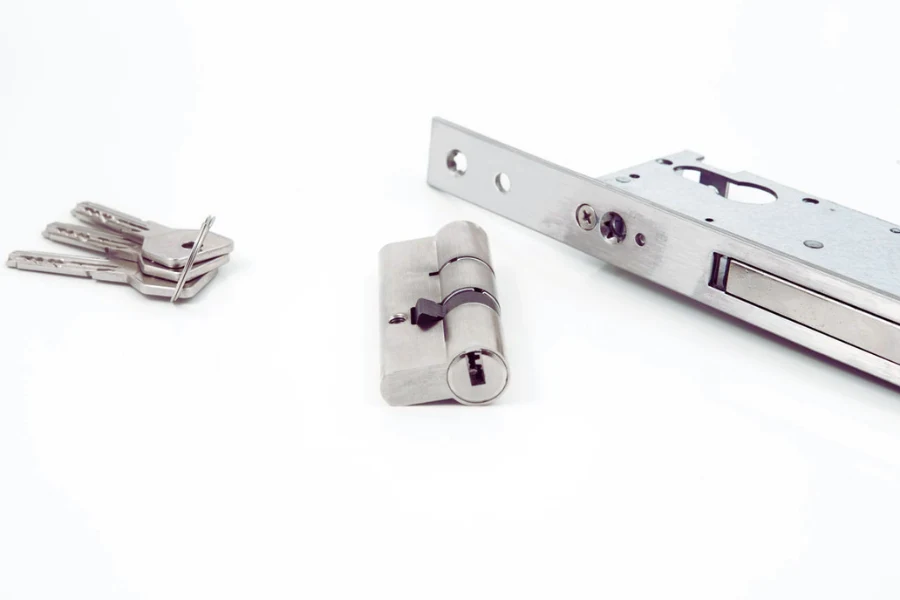
Determine whether the door uses a multipoint lock, mortise lock, or another configuration.
Step 2 — Define Security Requirements
Match the cylinder to the level of risk:
- Low risk → standard cylinder for controlled environments
- Medium risk → anti-pick and anti-drill protection
- High risk → anti-snap, reinforced, high-security cylinder
Step 3 — Choose the Right Material
Consider environment, usage frequency, and exposure to weather or corrosion.
Step 4 — Plan the Key System
Define how access will be managed:
- Single key systems for small offices
- Keyed alike systems for convenience across multiple doors
- Master key systems for layered access control
Step 5 — Confirm Dimensions and Compatibility
Measure accurately and verify alignment with the lock body before installation.
A structured selection process improves security, reduces maintenance issues, and supports scalable access control.
Common Lock Cylinder Mistakes That Reduce Security
Many businesses invest in hardware but overlook simple mistakes that weaken overall protection.
- Using residential-grade cylinders in commercial environments
- Ignoring compatibility between cylinder and lock body
- Installing cylinders with excessive protrusion
- Skipping maintenance, leading to wear and failure
- Not updating access after employee or tenant changes
Each of these issues creates vulnerabilities that can be avoided with proper planning and product selection.
What Security Certifications Matter for Lock Cylinders
Certifications provide a reliable way to evaluate cylinder performance and resistance to attack.
Common Standards
- EN 1303 — European standard covering durability and mechanical strength
- SKG — Security grading system with increasing resistance levels
- ANSI/BHMA — Performance grading system widely used in North America
Key Protection Features
- Anti-snap protection against forced break-in
- Anti-drill resistance for mechanical attacks
- Anti-pick mechanisms to prevent manipulation
- Anti-bump features to block impact-based unlocking
Choosing certified cylinders helps ensure consistent performance and verified security levels across different applications.
Choosing the Right Cylinder for Long-Term Security
Aluminum door security depends on more than the lock body. The cylinder plays a central role in access control, risk management, and system flexibility.
Businesses that treat the cylinder as an upgradeable component gain better control over who enters their space and how access is managed over time. This approach reduces long-term costs and supports operational efficiency.
Understanding how cylinders function, how they integrate with door systems, and how to select the right configuration allows businesses to build reliable, scalable security systems.
For businesses that require reliable, scalable lock cylinder solutions, working with an experienced manufacturer makes a measurable difference. EOS SECURE delivers precision-engineered mechanical and electronic lock cylinders backed by more than a decade of manufacturing expertise. Established in 2011, our factory operates under ISO9001 and ISO14001 certifications, ensuring every product meets rigorous international standards including EN1303 and SKG. With over 50 advanced Swiss-type CNC automatic lathes and integrated machining centers, we manufacture high-quality lock cylinders trusted by clients across industries worldwide. Whether you need small-batch customization or large-scale production, EOS SECURE provides reliable performance, consistent quality, and dependable technical support. Secure your business with solutions built for long-term stability — contact us today.