Managing access across multiple doors, departments, or locations quickly becomes complex. A grand master key system provides a structured way to control entry while reducing operational friction.
This guide explains how the system works, when to use it, and how it supports scalable business security.
What Is a Grand Master Key System and Why Businesses Use It
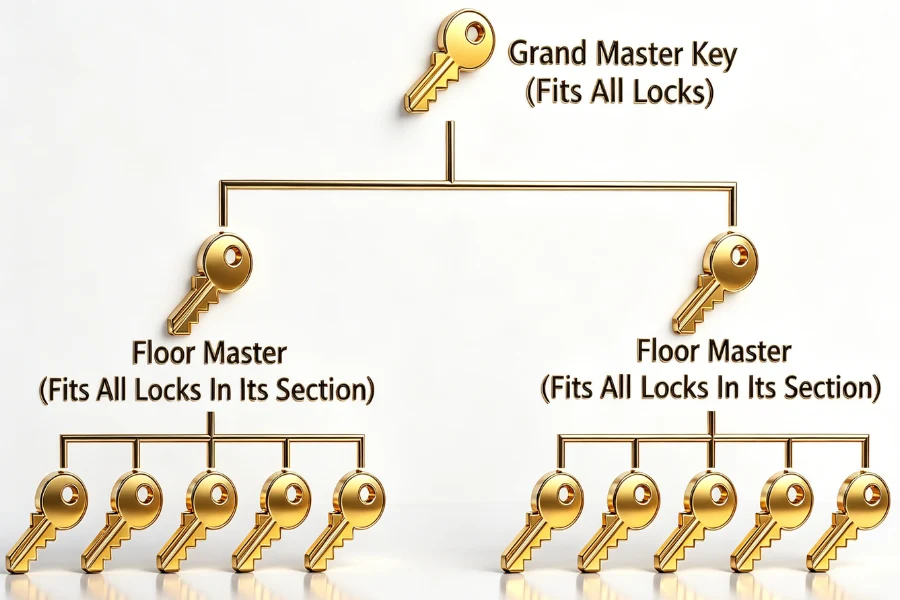
A grand master key system is an advanced version of a master key system designed for multi-level access control.
It organizes locks and keys into a hierarchy, allowing different users to access different areas based on their role. This allows businesses to assign permissions clearly without increasing management complexity.
Typical hierarchy includes:
- Great grand master key – opens all locks across the system
- Grand master key – opens multiple groups or locations
- Master key – opens a specific building or department
- Sub master key – opens a smaller zone such as a floor
- Change key – opens a single lock
This structure gives businesses centralized control while keeping access restricted and predictable.
How Grand Master Key Systems Control Access Across Multiple Doors
The system relies on how the lock cylinder is configured, not the key itself.
In a standard lock, pins align at one position to allow rotation. In a master key system, additional components create multiple alignment points, allowing different keys to operate the same lock at different permission levels.
This allows:
- One key to open a single lock
- Another key to open multiple locks
- Higher-level keys to open entire groups
For businesses, this means access can be assigned without increasing the number of keys staff must carry.
The more access levels you create, the more complex the internal configuration becomes. This is why system design matters more than the key shape itself.
In practice, working with a manufacturer that can support precise cylinder configuration is critical to ensure both functionality and long-term system stability.
Understanding Key Levels and Who Should Have Access
A grand master key system works through clearly defined access levels that mirror organizational roles.
- Top level – full system access for ownership or executive roles
- Mid level – regional or departmental access for managers
- Lower level – limited access for staff or tenants
Example in a multi-location business:
- Store staff – access to one location only
- Store manager – access to all rooms in one store
- Regional manager – access to multiple stores
- Owner – access to all locations
This alignment between access and responsibility reduces risk while keeping operations efficient.
Grand Master Key vs Standard Systems – What’s the Difference
Not all master key systems are designed for the same scale.
A standard master key system is typically used within a single building. It provides layered access but becomes difficult to manage as the number of locations increases.
A grand master key system is designed for:
- Multiple buildings
- Multiple departments
- Multi-site operations
For growing businesses, this difference directly impacts how easily security can be managed over time.
When a Grand Master Key System Makes Sense for Your Business
A grand master key system becomes valuable when manual key management starts to slow down operations or introduce risk.
Consider this system if your business has:
- Multiple locations or branches
- Several departments with different access needs
- Frequent staff movement or turnover
- A need for centralized security control
It is especially useful when consistency across locations matters, such as in retail chains or managed properties.
However, businesses that require real-time access tracking or frequent permission changes may benefit from combining mechanical systems with electronic access control.
How a Grand Master Key System Improves Daily Operations
A well-designed system improves both security and efficiency in day-to-day operations.
Simplified key management
One key can replace dozens, reducing confusion and saving time during daily tasks.
Controlled access
Permissions are assigned by role, which reduces the risk of unauthorized entry and improves accountability.
Faster operations
Maintenance, cleaning, and management teams can access required areas without delays or coordination issues.
Cost efficiency
Rekeying a specific level is more efficient than replacing entire lock systems.
Scalable structure
New doors or locations can be added without disrupting existing operations.
These improvements directly reduce operational friction while strengthening access control.
Common Business Scenarios Where This System Works Best
Grand master key systems are most effective in environments with layered access needs.
- Franchise and retail chains
- Office buildings and corporate campuses
- Educational institutions
- Multi-tenant residential properties
- Healthcare and care facilities
In these environments, structured access control improves both security and operational consistency.
Security Risks and What to Watch Before You Implement One
A grand master key system improves control, but its effectiveness depends on proper planning and hardware selection.
More access levels increase complexity
Additional shear points can reduce resistance to manipulation if not properly engineered.
Key control is critical
If high-level keys are duplicated without authorization, the entire system is compromised.
Planning is essential
Poor initial design limits future expansion and increases long-term costs.
Best practices include:
- Limiting the number of high-level keys
- Using restricted keyways to prevent duplication
- Applying high-security cylinders to critical areas
- Maintaining clear records of key ownership
Choosing high-security lock cylinders with certified protection standards helps maintain system integrity even in multi-level configurations.
Mechanical vs Electronic Access Control – Which One Fits Your Setup
Businesses often compare mechanical key systems with digital access control when planning security upgrades.
Mechanical systems offer:
- Simplicity and reliability
- No dependency on power or networks
- Lower upfront investment
Electronic systems offer:
- Remote access management
- Real-time permission updates
- Access tracking and audit logs
A hybrid approach combines both:
- Mechanical hierarchy for structured access
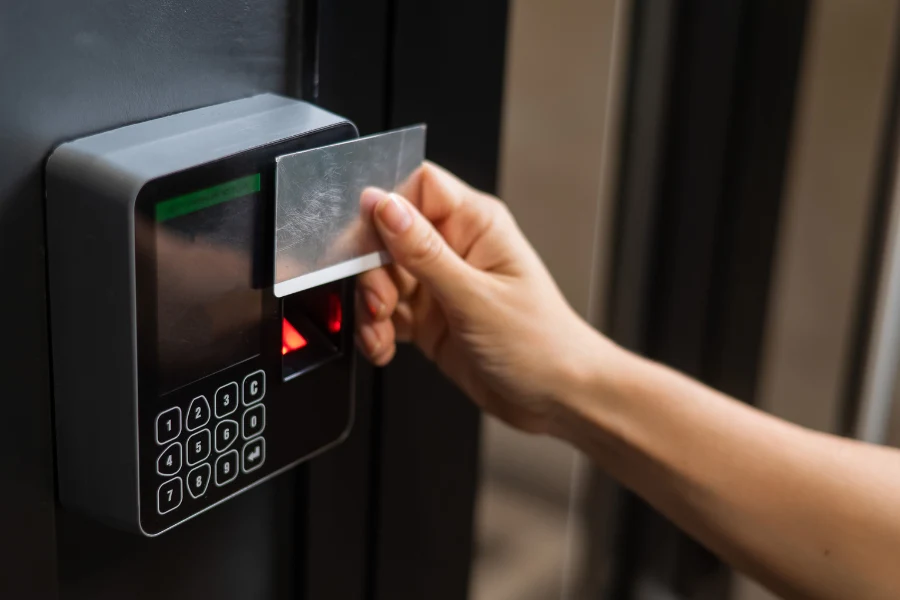
- Electronic control for flexibility and remote management
This approach allows businesses to maintain reliability while adding modern control capabilities as needed.
How to Plan a Key System That Can Grow With Your Business
A scalable system starts with clear planning rather than hardware selection.
Key steps include:
- Mapping all doors and locations
- Defining access levels by role
- Creating a key hierarchy diagram
- Reserving space for future expansion
- Selecting appropriate cylinder types
It is also important to:
- Decide who holds top-level keys
- Plan for lost key scenarios
- Track key distribution
Working with a supplier that supports both mechanical and future system upgrades can make expansion significantly easier over time.
A well-planned system prevents disruption and supports long-term growth.
Is a Grand Master Key System the Right Choice for You
A grand master key system provides a structured way to manage access across complex environments.
It simplifies operations, improves control, and supports long-term growth when designed correctly.
If your business is expanding across locations or requires structured access control, this system offers a practical and scalable foundation.
Explore how a well-designed key system can improve control, reduce risk, and support your operations.
EOS SECURE delivers precision-engineered mechanical and electronic lock cylinders backed by more than a decade of manufacturing expertise. Established in 2011, our factory operates under ISO9001 and ISO14001 certifications, ensuring every product meets rigorous international standards including EN1303 and SKG. With over 50 advanced Swiss-type CNC automatic lathes and integrated machining centers, we manufacture high-quality lock cylinders trusted by clients across industries worldwide. Whether you need small-batch customization or large-scale production, EOS SECURE provides reliable performance, consistent quality, and dependable technical support. Secure your business with solutions built for long-term stability — contact us today.