Why Lock Snapping Is a Real Security Risk for Businesses
Lock snapping has become one of the most common forced entry methods targeting euro cylinder locks. It is fast, quiet, and requires minimal tools, which makes it attractive for opportunistic break-ins.
For small businesses, the impact goes beyond stolen goods. A single breach can lead to operational downtime, insurance complications, and loss of sensitive information.
Upgrading door security is no longer optional, it is a necessary step to maintain control and continuity.
What Is Lock Snapping and How It Breaks Your Door Security
Lock snapping is a physical attack where force is applied to the exposed part of a euro cylinder until it breaks. Once the cylinder is snapped, the internal mechanism becomes accessible, allowing the intruder to unlock the door without a key.
This method is effective because:
- Many cylinders protrude beyond the door surface, creating a leverage point
- Standard cylinders are not designed to resist concentrated force
- The central fixing point is structurally weaker than other sections
In many cases, the entire process takes less than a minute and produces little noise, reducing the chance of detection.
Why Standard Euro Cylinders Are Easy to Break
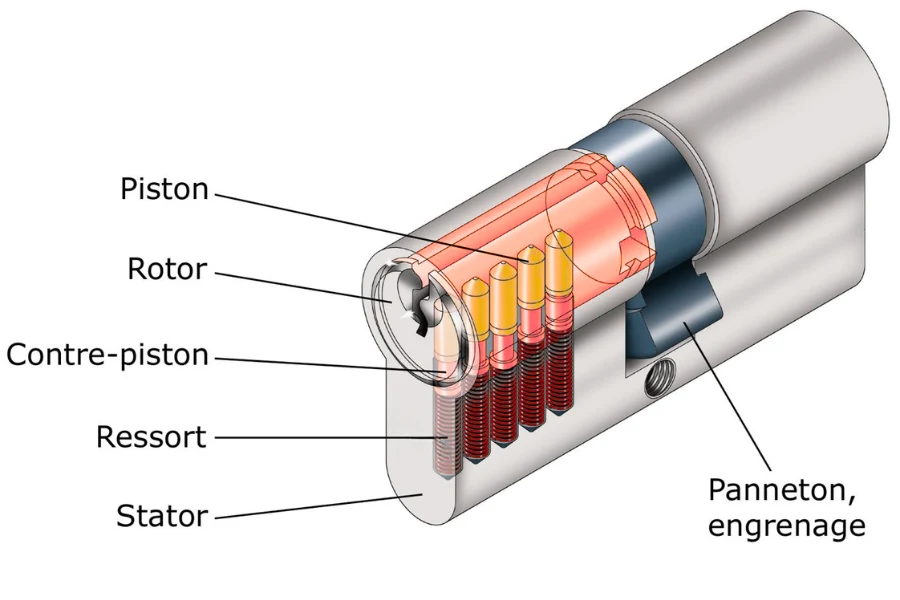
Traditional pin tumbler cylinders are designed to control access through key alignment, not to resist destructive attacks. This creates a gap between intended use and real-world threats.
In business environments, this gap becomes more significant:
- High traffic usage increases wear and structural fatigue
- Multiple key holders raise the risk of duplication and loss
- External exposure makes locks easier to access and manipulate
- Legacy hardware often lacks modern reinforcement features
A retail store with frequent deliveries, a warehouse with multiple access points, or a shared office with rotating staff all face higher exposure than a single residential door. These environments involve more users, more entry cycles, and less control over physical keys. Standard cylinders cannot provide the level of resilience or control required in these scenarios.
What Is an Anti-Snap Cylinder and How It Protects Your Door
An anti-snap cylinder is a high-security euro lock cylinder specifically engineered to resist lock snapping attacks. Instead of trying to prevent breakage entirely, it controls how the cylinder behaves under force.
The goal is simple, even if the cylinder is attacked, the door remains secure.
These cylinders are widely used in both residential and commercial doors, including uPVC, composite, wooden, and aluminum systems.
How Anti-Snap Cylinders Stop Break-In Attempts
Anti-snap cylinders use a combination of structural design and internal mechanisms to stop forced entry.
Controlled break design
A predefined snap point ensures that the cylinder breaks in a controlled way, away from the central mechanism.
Sacrificial section
The outer portion of the cylinder breaks first, absorbing the force and preventing access to critical components.
Reinforced core
The central section is strengthened to resist torque and maintain structural integrity.
Internal locking mechanism
Some designs include clutch systems or locking pins that activate under attack, preventing rotation even after damage.
This approach shifts the outcome of an attack, from immediate access to continued protection.
High-security cylinders developed by manufacturers like EOS SECURE are engineered to maintain structural integrity even under forced attack, which is especially important for businesses managing multiple entry points and shared access. Precision machining and validated material strength help ensure consistent performance in real-world conditions.
Which Security Standards Actually Protect Against Lock Snapping
Not all cylinders labeled as “high security” offer real protection against snapping. Verified certification is essential.
The following standards are widely recognized:
SS312 Diamond
- Highest level of testing
- Uses more aggressive tools and stricter conditions
- Offers strong resistance to snapping and other attack methods
TS007 3 Star
- Certified protection against snapping
- Recognized by the BSI Kitemark
- Suitable for most residential and commercial applications
TS007 1 Star + 2 Star Door Hardware
- Combined solution using a basic cylinder with reinforced handles or guards
- Effective only when both components are used together
Key takeaway
A 1 Star cylinder alone is not anti-snap. Certification must be verified through third-party markings such as Kitemark or Sold Secure.
EOS SECURE cylinders are engineered to meet internationally recognized standards such as EN1303, with options aligned to TS007 and advanced security requirements for commercial use.
How to Choose the Right Anti-Snap Cylinder for Your Business
Selecting the right cylinder depends on how the space is used, not just the door type.
Consider the following factors:
Usage frequency
- High traffic environments require durable internal mechanisms
- Low traffic areas may prioritize cost efficiency
Access control needs
- Multiple users require better key management or upgrade paths
- Single-user environments have simpler requirements
Risk level
- Retail stores, warehouses, and rental properties face higher break-in risks
- Internal office doors may require moderate protection
Integration potential
- Some systems may need compatibility with master key setups
- Others may transition toward electronic or smart access
Choosing the right cylinder is about aligning security level with real operational needs.
How Proper Installation Affects Your Lock Security
Even the best cylinder will fail if installed incorrectly. Proper installation is critical to maintaining anti-snap performance.
Flush positioning
The cylinder should not protrude more than 2 mm beyond the handle. A flush fit removes leverage points.
Protective hardware
Use security handles or cylinder guards to reduce exposure and prevent gripping.
Professional installation
Accurate alignment and secure fixing ensure the cylinder performs as designed.
Regular inspection
Locks older than 5–10 years or without visible certification should be replaced.
Manufacturers like EOS SECURE also support compatible hardware configurations, helping ensure that cylinders, handles, and guards work together as a complete system.
A Practical Security Upgrade Path for Businesses
Upgrading door security does not need to happen all at once. A structured approach helps businesses improve protection while managing cost and operational impact.
Step 1 – Replace vulnerable cylinders
Start by upgrading any standard euro cylinders to certified anti-snap models. This removes the most immediate physical weakness.
Step 2 – Reinforce exposed hardware
Install security handles or cylinder guards to reduce access to the lock body and eliminate gripping points.
Step 3 – Improve access control
Evaluate how keys are used. If multiple users are involved, consider controlled key systems or limited duplication options.
Step 4 – Plan for scalable access
For growing businesses, transitioning to smart lock cylinders or keyless entry systems can improve control, reduce key management risks, and support remote access.
This phased approach allows businesses to move from basic protection to a more controlled and scalable security system.
How to Build a Stronger Door Security System
An anti-snap cylinder is a critical upgrade, but it works best as part of a broader security strategy.
Physical reinforcement
- Cylinder guards
- Anti-pull security handles
Monitoring systems
- CCTV for visibility and deterrence
- Alarm systems for real-time alerts
Smart access upgrades
- Keyless entry systems remove physical key risks
- Mobile credentials improve control and flexibility
Layered security reduces dependency on a single point of failure and improves overall resilience.
EOS SECURE supports both mechanical and smart locking solutions, allowing businesses to combine physical protection with modern access control when needed.
Why Upgrading to an Anti-Snap Cylinder Is a Smart Security Move
Lock snapping is a fast and effective attack method, but it targets a specific structural weakness that can be eliminated with the right security upgrade. For businesses relying on standard euro cylinders, this risk is both predictable and preventable.
Upgrading to a certified anti-snap cylinder significantly reduces the risk of forced entry while improving operational stability and long-term security.
EOS SECURE delivers precision-engineered mechanical and electronic lock cylinders backed by more than a decade of manufacturing expertise. Established in 2011, our factory operates under ISO9001 and ISO14001 certifications, ensuring every product meets rigorous international standards including EN1303 and SKG. With over 50 advanced Swiss-type CNC automatic lathes and integrated machining centers, we manufacture high-quality lock cylinders trusted by clients across industries worldwide. Whether you need small-batch customization or large-scale production, EOS SECURE provides reliable performance, consistent quality, and dependable technical support. Secure your business with solutions built for long-term stability — contact us today.