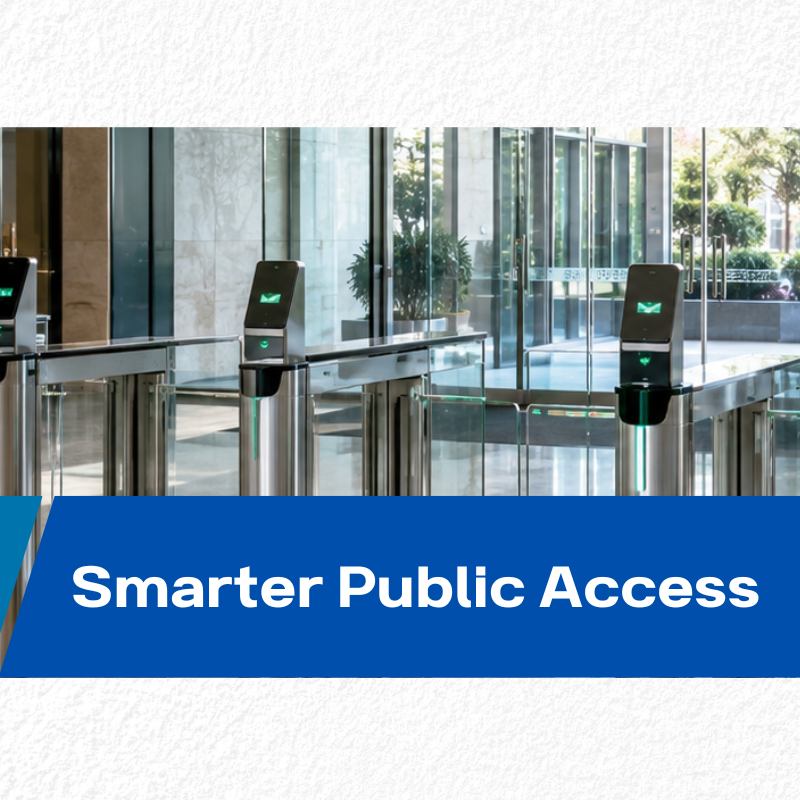
Public buildings are designed to stay open, accessible, and efficient. At the same time, they must protect staff, visitors, equipment, restricted areas, and sensitive information. Balancing openness with public building security becomes increasingly difficult as facilities manage larger visitor volumes, multiple user groups, and changing operational risks.
Traditional lock-and-key systems struggle in these environments. Physical keys can be copied, shared, or lost, and facility managers often have no visibility into who entered a building, when they entered, or which areas they accessed. Rekeying doors after lost credentials also increases maintenance costs and administrative workload.
Modern building access systems improve security in public facilities by combining identity verification, centralized permissions, real-time monitoring, and scalable lock management. Instead of simply locking doors, these systems help organizations manage how people move throughout a building while maintaining safety, efficiency, and operational control.
Even the most advanced digital entry platform still depends on secure physical locking hardware at the door level. Digital permissions only work effectively when paired with reliable commercial door security infrastructure.
Why Public Buildings Need Better Access Control
Security in public facilities is not only about preventing unauthorized entry. It is also about managing movement safely during daily operations.
Hospitals, government offices, universities, libraries, and transportation facilities often experience heavy traffic during shift changes, morning entry periods, public events, and service hours. During these periods, entrances must process large numbers of people quickly without creating bottlenecks or uncontrolled access points.
Public facilities also manage mixed user groups every day, including:
-
- Employees
-
- Visitors
-
- Contractors
-
- Delivery personnel
-
- Maintenance teams
-
- Temporary vendors
Each group requires different permissions, schedules, and movement restrictions.
In many public environments, the biggest security risk is not forced entry — it is unmanaged movement inside the building.
Modern entry management systems help facilities:
-
- Verify identities quickly
-
- Separate public and restricted zones
-
- Reduce tailgating risks
-
- Manage temporary visitor access
-
- Track entry activity through access activity records
-
- Support emergency evacuation procedures
-
- Improve visibility across multiple entrances
This is why many organizations now treat facility access management as part of overall building operations rather than a standalone security tool.
Common Public Building Entrances and Their Security Risks
Different entrances create different operational and security challenges. A busy hospital lobby does not require the same protection strategy as a government records room or a restricted research lab.
The right commercial access solution depends on:
-
- Traffic volume
-
- User type
-
- Building function
-
- Security level
-
- Emergency requirements
Sliding Doors — Managing High Traffic Safely
Sliding doors are commonly used in buildings designed for continuous public access.
Typical environments include:
-
- Hospitals
-
- Libraries
-
- Shopping centers
-
- Community centers
-
- Transit facilities
-
- Municipal buildings
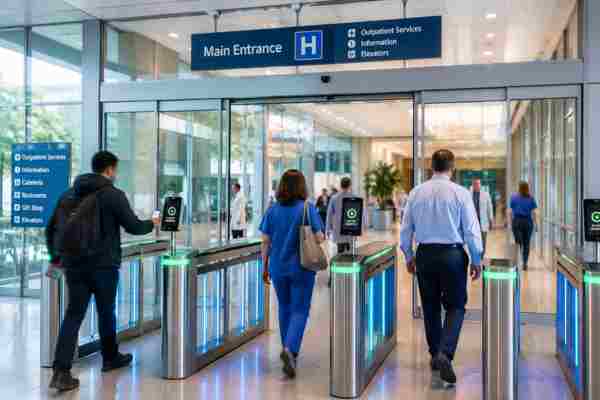
These entrances prioritize speed, accessibility, and efficient crowd movement. During morning rush periods or public events, hundreds of visitors may enter within short time windows.
The challenge is maintaining secure entry without slowing down operations or overwhelming reception staff.
Modern sliding door security systems often include:
-
- RFID credentials
-
- QR code verification
-
- Mobile credentials
-
- Speedlanes
-
- Infrared unauthorized entry detection
-
- Integration with fire alarm systems
Mobile credentials are becoming more common because they reduce the risks associated with lost access cards. Administrators can issue, modify, or revoke permissions remotely, which simplifies visitor access workflows and contractor management.
This is especially useful for public facilities that regularly manage temporary workers, after-hours cleaning crews, or scheduled deliveries.
Speedlanes also help reduce congestion while maintaining controlled entry. In busy public facilities, long queues at entrances can quickly create operational problems and reduce visitor satisfaction.
Sliding door systems are also commonly integrated with fire safety infrastructure so doors can automatically unlock or remain open during emergency evacuation procedures.
Swing Doors — Controlling Access to Staff and Restricted Areas
Swing doors are often used to separate public spaces from internal operational areas.
Common examples include:
-
- Staff corridors
-
- Office floors
-
- Financial departments
-
- Administrative offices
-
- Equipment rooms
-
- Research facilities
These areas require stronger identity verification because they contain sensitive information, operational systems, or restricted assets.
Unlike public entrances, internal security zones must support more detailed permission-based access management.
Modern swing door security systems often support:
-
- Role-based permissions
-
- Time-based schedules
-
- Multi-factor authentication
-
- PIN verification
-
- Smart card readers
-
- Biometric authentication
-
- Video surveillance integration
Permission-based access management is especially important in buildings with multiple departments and rotating staff schedules.
For example:
-
- Cleaning teams may only receive after-hours access
-
- Contractors may only access approved maintenance zones
-
- Administrative staff may only enter office areas during business hours
This level of control helps reduce unnecessary movement throughout the building while improving accountability.
Video integration also strengthens investigations and incident response. When a credential is used, nearby cameras can automatically record the event, helping security teams verify activity quickly.
This becomes especially valuable during incidents involving shared credentials, unauthorized movement, or restricted-area access attempts.
Revolving Doors — Stronger Security for Sensitive Buildings
Revolving doors are commonly used in facilities requiring higher levels of identity verification and controlled entry management.
Typical environments include:
-
- Government buildings
-
- Data centers
-
- Financial headquarters
-
- Research laboratories
-
- Corporate security lobbies
These entrances are designed to balance security, visitor throughput, and controlled single-person access.
Unlike standard door systems, revolving doors help limit unauthorized entry by controlling how individuals move through the entrance.
High-security revolving door systems may include:
-
- Single-person authorization logic
-
- Smart card authentication
-
- Biometric verification
-
- Tailgating detection
-
- CCTV integration
-
- Alarm integration
-
- Emergency override systems
Tailgating remains one of the most common security weaknesses in public facilities. During busy entry periods, unauthorized individuals may follow employees through secured entrances without triggering traditional credential systems.
AI-assisted unauthorized entry detection is becoming more common in high-security public facilities because it helps security teams identify abnormal entry behavior in real time.
This is particularly important in government buildings and critical infrastructure environments where a single unauthorized entry can create operational, legal, or security risks.
Emergency operation is also essential. During evacuation events or fire alarms, revolving doors must support fail-safe procedures that allow safe exit and emergency responder access without delaying evacuation flow.
Different Entrances Require Different Security Strategies
Every public facility does not require the same security model.
A library entrance and a restricted government archive face very different operational risks. Effective security access infrastructure helps organizations match the protection strategy to the operational role of each entrance.
Most commercial lock control strategies are built around three key areas.
Authentication Strength
Different environments require different identity verification methods.
Examples include:
-
- Single-factor authentication — card or mobile credential
-
- Two-factor authentication — card plus PIN
-
- Multi-factor authentication — biometric plus credential
Low-risk public entrances typically prioritize convenience and fast throughput. Restricted zones require stronger identity verification and tighter access policies.
Management Method
Modern systems may operate through:
-
- Local controllers
-
- Cloud-based access control
-
- Hybrid infrastructure
Cloud-managed entry systems are increasingly popular because they support centralized management across multiple buildings and departments.
Facility managers can:
-
- Revoke credentials instantly
-
- Monitor activity remotely
-
- Adjust schedules
-
- Review access activity records
-
- Manage contractors and visitors
-
- Control multiple buildings from one dashboard
This reduces administrative workload while improving overall operational visibility.
It also removes many of the costs associated with traditional key management, including rekeying doors after lost credentials or manually tracking physical keys.
Integration Capabilities
Modern building security systems rarely operate independently.
Many public facilities now integrate entry security infrastructure with:
-
- CCTV systems
-
- Fire alarm systems
-
- Visitor management platforms
-
- HR systems
-
- Emergency communication systems
This creates a connected security infrastructure with stronger visibility and faster incident response.
For example, when an employee badge is deactivated in the HR system, building permissions can automatically update across all access points.
What Makes a Modern Access Control System Effective
A reliable building entry security platform depends on more than readers and credentials. The lock control infrastructure behind the system plays a major role in long-term security, operational reliability, and day-to-day facility management.
Access Credentials and Verification Methods
Modern systems support several authentication methods, including:
-
- Proximity cards
-
- Smart cards
-
- Mobile credentials
-
- PIN codes
-
- Fingerprint scanners
-
- Facial recognition
-
- Iris recognition
The correct method depends on:
-
- Traffic volume
-
- Building type
-
- Security level
-
- Operational workflow
-
- User convenience requirements
Hospitals and transit facilities often prioritize fast throughput, while government or research environments may require stronger identity verification.
Lock Hardware That Supports Commercial Security
Lock hardware remains the physical foundation of every entry management platform.
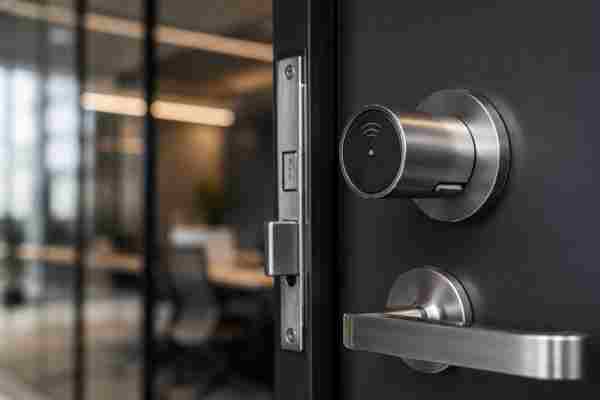
Even advanced cloud-managed entry systems still rely on durable mechanical and electronic locking components to maintain secure door control.
Commercial environments often require:
-
- Electronic lock cylinders
-
- High-security mechanical cylinders
-
- Electromagnetic locks
-
- Electric strike locks
-
- Door position sensors
-
- Panic hardware integration
The lock cylinder itself directly affects:
-
- Resistance to tampering
-
- Key control security
-
- Long-term durability
-
- System reliability
In public facilities with high daily usage, low-quality door security hardware can quickly become an operational problem due to wear, maintenance demands, or inconsistent performance.
Real-Time Monitoring and Audit Logs
Modern security access systems generate real-time records for every access attempt.
These records help organizations:
-
- Monitor activity
-
- Investigate incidents
-
- Identify unusual behavior
-
- Review contractor access
-
- Support compliance reporting
-
- Improve operational oversight
Searchable audit logs also reduce investigation time after security events.
For example, if unauthorized access occurs after business hours, facility managers can quickly identify which credential was used, which door opened, and whether video footage matches the recorded event.
Real-Time Alerts for Faster Response
Modern systems can automatically notify staff about:
-
- Forced door events
-
- Tailgating attempts
-
- Multiple failed credentials
-
- Doors left open
-
- Unauthorized access attempts
Real-time monitoring and alerts help security teams respond before small issues become larger operational problems.
In busy public facilities, delayed response times often increase both safety risks and operational disruption.
Why Emergency Access Planning Matters
Public facility security systems must continue operating during emergencies.
This includes:
-
- Fire alarms
-
- Power outages
-
- Lockdowns
-
- Emergency evacuations
Modern systems often use fail-safe or fail-secure configurations depending on the operational requirements of the building.
For example:
-
- Emergency exits may automatically unlock during fire alarms
-
- Restricted security zones may remain secured during lockdown events
-
- Backup power systems may keep critical doors operational during outages
Emergency planning is especially important in buildings with large visitor volumes where evacuation delays can quickly create safety risks.
Public facilities must also maintain accessibility for emergency responders during critical incidents. Well-designed physical security controls support both security and life safety requirements without creating operational conflicts.
How Cloud-Based Access Control Simplifies Building Management
Many public organizations manage multiple facilities at the same time.
Examples include:
-
- University campuses
-
- Healthcare networks
-
- Municipal offices
-
- Transportation systems
-
- Government departments
Cloud-managed entry systems allow administrators to manage permissions, schedules, and activity across all facilities from a centralized dashboard.
This creates several operational advantages:
-
- Faster credential updates
-
- Centralized reporting
-
- Consistent security policies
-
- Reduced front desk workload
-
- Simplified contractor management
-
- Scalable expansion across buildings
When employees leave an organization or contractors complete a project, permissions can be removed immediately across all locations.
This reduces the risks associated with outdated credentials, unmanaged access rights, and forgotten physical keys.
Common Access Control Mistakes in Public Buildings
Even advanced commercial security systems can become ineffective when security policies are poorly managed.
Common mistakes include:
-
- Shared employee credentials
-
- Unmanaged visitor access
-
- No contractor expiration schedules
-
- Unsecured side entrances
-
- No audit log reviews
-
- Overreliance on physical keys
-
- No tailgating prevention measures
-
- Poor integration between systems
-
- Outdated lock hardware
Public facility security works best when door access management is treated as an ongoing operational process rather than a one-time installation.
Modern public facility security depends on more than locked doors. Different entrances create different risks, and each access point requires a strategy that matches its operational role, traffic level, and security requirements.
Sliding doors, swing doors, and revolving doors each support different levels of traffic flow, identity verification, and security control. The most effective access control systems improve security in public buildings by combining intelligent access management, real-time monitoring, and reliable physical locking hardware.
Strong public building security depends on both intelligent access management and dependable lock hardware at every entry point.
EOS SECURE delivers precision-engineered mechanical and electronic lock cylinders backed by more than a decade of manufacturing expertise. Established in 2011, our factory operates under ISO9001 and ISO14001 certifications, ensuring every product meets rigorous international standards including EN1303 and SKG. With over 50 advanced Swiss-type CNC automatic lathes and integrated machining centers, we manufacture high-quality lock cylinders trusted by clients across industries worldwide. Whether you need small-batch customization or large-scale production, EOS SECURE provides reliable performance, consistent quality, and dependable technical support. Secure your business with solutions built for long-term stability — contact us today.