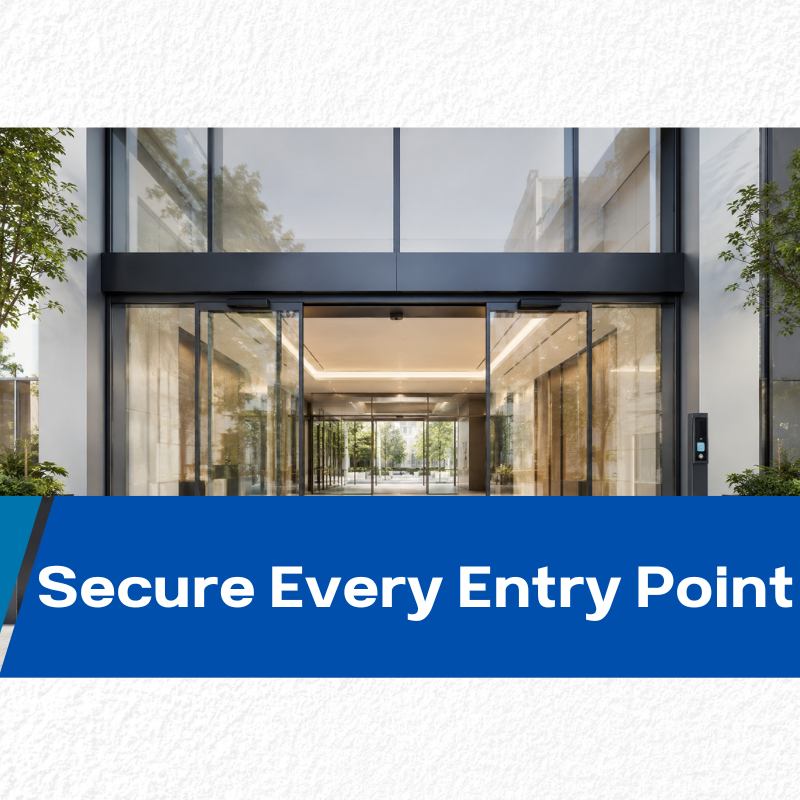
为什么不同的入口需要不同的安全控制措施
并非所有入口都面临相同的安全挑战。面向顾客的店面入口与员工入口、装卸货平台或限制进入的办公室大门截然不同。
许多小型企业在所有入口处都安装相同的安全系统。这往往会造成不必要的风险,尤其是在不同入口服务于不同的用户、使用时间安排和人流模式时。
繁忙的零售店入口可能需要快速通行和顺畅的交通流。仅供员工使用的入口可能需要预约通行和活动跟踪。仓库装卸区可能需要为送货司机提供临时通道,同时又不影响建筑物的其他部分。
现代准入管理系统可以帮助企业更有效地管理这些差异。
企业除了依赖实体钥匙之外,还可以:
-
- 控制谁可以进入特定的门
-
- 为员工或供应商设置访问权限时间表
-
- 远程监控活动
-
- 接收有关强行打开或开启门的警报
-
- 员工变动时立即撤销凭证
这既能增强安全性,又能减少日常管理问题。
主要入口——安全管理客流
建筑物的主要入口通常是人流量最大的出入口。零售商店、办公楼、诊所、健身房和酒店都需要兼顾便利性和安全性的入口。
传统钥匙无法有效应对日常高人流量。它们也无法提供人员进出建筑物或进出时间的相关信息。
现代建筑门禁系统既能提高安全性,又能改善日常运营。
常见解决方案包括:
-
- 移动凭证
-
- 读卡器
-
- 自动滑动门
-
- 访客访问管理
-
- 远程解锁
-
- 集中式管理平台
例如,小型办公室可以允许员工在工作时间内使用手机账号解锁主入口。下班后,该入口可以自动切换到限制访问模式。
零售企业通常会将自动入口门与仅供员工使用的仓库和现金处理区域入口结合起来使用。这样可以将公众通道与敏感的业务操作隔离开来。
快速认证还能改善客流。繁忙入口处的长时间延误会造成拥堵,并促使员工绕过安全程序。
硬件可靠性与软件功能同等重要。主入口每天都要承受频繁的使用,尤其是在零售商店、诊所和共享办公空间等场所。商用级电子锁具和锁芯有助于防止因人流量大和反复开合而导致的故障。
员工入口——简化员工日常出入
员工入口需要比面向公众的入口更严格的管控。
企业通常管理:
-
- 轮班工人
-
- 清洁人员
-
- 临时工
-
- 交付团队
-
- 承包商
-
- 下班后工作人员
在这种情况下,实体钥匙会带来持续的管理问题。当员工离职时,企业可能需要回收钥匙、更换锁芯或重新配置多扇门的钥匙。
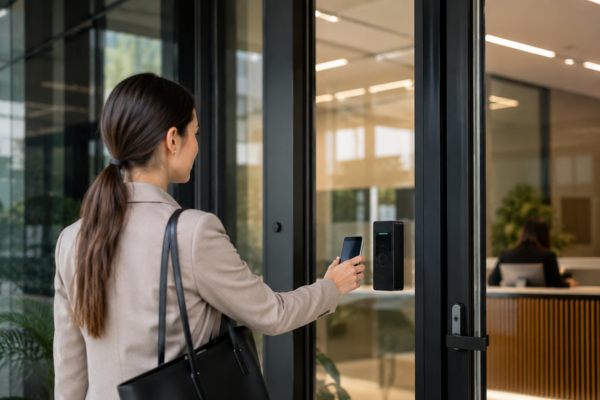
Centralized entry systems simplify these processes through remote permissions management.
Managers can:
-
- Grant or remove access remotely
-
- Limit entry by time or day
-
- Create different permission levels
-
- Track staff activity through audit logs
-
- Restrict access to certain rooms or entrances
A local gym, for example, may allow cleaning crews to enter only after business hours. A warehouse operator may allow delivery access only during scheduled unloading windows.
This improves accountability without increasing administrative work.
Mobile credentials also reduce the cost of lost keys or replacement cards. Staff can receive temporary or permanent credentials directly on their smartphones, which simplifies onboarding for growing businesses.
Service Entrances and Loading Areas – Controlling Temporary Access
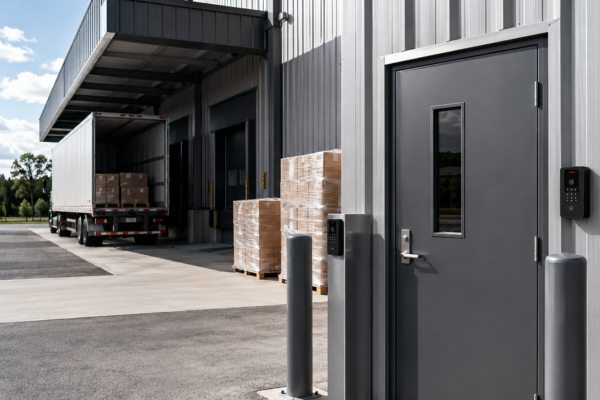
Service entrances are one of the most overlooked security risks in business properties.
These areas often handle:
-
- Deliveries
-
- Vendors
-
- Maintenance contractors
-
- Third-party service providers
-
- Waste collection teams
Without proper controls, businesses may leave service doors unlocked for convenience during busy periods. This creates unnecessary exposure to theft or unauthorized access.
Modern entry systems allow businesses to manage temporary access without sharing permanent keys.
For example, a small warehouse can issue time-limited mobile credentials to delivery drivers for scheduled access windows only. Once the delivery period ends, the credential automatically expires.
This approach improves both operational control and security visibility.
Door status monitoring is also valuable at loading entrances. If a rear service door stays open too long, managers receive an alert immediately instead of discovering the problem hours later.
For businesses operating multiple locations, remote management platforms simplify oversight. Managers can monitor service entrances without remaining on-site all day.
Emergency Exits – Keeping Buildings Safe During Emergencies
Emergency exits must support both life safety and daily security.
During normal operations, these entrances help prevent unauthorized access. During emergencies, they must allow people to exit immediately.
Commercial entry security systems manage this balance through fail-safe hardware and fire alarm integration.
When alarms activate or power fails, fail-safe locks automatically unlock to support evacuation and emergency response.
This is especially important in:
-
- Schools
-
- Clinics
-
- Hotels
-
- Retail centers
-
- Office buildings
-
- Shared commercial spaces
Fire-rated doors and emergency exit hardware also help control smoke spread while maintaining safe evacuation routes.
Businesses should never treat emergency exits as isolated doors. They must operate as part of a complete building security and safety strategy.
Proper integration between entry management systems, fire alarms, and emergency hardware improves both compliance and occupant safety.
Restricted Areas – Adding Extra Layers of Security
Some areas require stronger security controls than standard entrances.
Examples include:
-
- Server rooms
-
- IT offices
-
- Medicine storage
-
- Cash rooms
-
- Inventory storage
-
- Management offices
These spaces often contain sensitive information, expensive equipment, or regulated materials.
Higher-security entrances typically use layered authentication methods such as:
-
- Mobile credential plus PIN
-
- Biometrics
-
- Multi-factor authentication
-
- Scheduled permissions
-
- Real-time access tracking
A healthcare clinic may restrict medicine storage access to approved staff only. A retail business may limit cash office access to managers during specific hours.
Audit logs become especially useful in these areas because they provide clear records of entry attempts and door activity.
Physical hardware also matters in high-security environments. Strong credentials alone cannot secure a door if the locking hardware is not designed for commercial use.
High-cycle lock cylinders, electronic strikes, and commercial-grade electronic locking systems improve long-term reliability while supporting modern smart entry systems.
Choosing the Best Credential Type for Each Entrance
Different entrances often require different credential methods.
The best option depends on traffic flow, user behavior, and security requirements.
Key Cards and Fobs
Key cards remain common in offices, schools, and small commercial buildings.
They are:
-
- Cost-effective
-
- Familiar to employees
-
- Easy to issue
-
- Simple to deactivate
However, cards can still be lost or shared between users.
Mobile Credentials
Mobile access systems use smartphones instead of physical keys or cards.
These systems help businesses:
-
- Manage access remotely
-
- Reduce rekeying costs
-
- Simplify onboarding
-
- Support touchless entry
-
- Improve convenience for multi-site operations
A small business owner can remove access instantly when an employee leaves without replacing physical hardware.
PIN Codes
PIN systems work well for shared entrances or low-traffic restricted rooms.
Businesses should update PINs regularly to reduce credential sharing risks.
Biometrics
Biometric systems use fingerprints or facial recognition for high-security areas.
These systems are harder to duplicate and reduce the risk of shared credentials.
Businesses often use biometrics for:
-
- Server rooms
-
- Laboratories
-
- Executive offices
-
- Data centers
The most effective systems balance convenience, operational efficiency, and appropriate security controls for each entrance type.
Features That Improve Daily Security Management
Modern building security systems do more than lock and unlock doors.
They help businesses manage daily operations more efficiently while improving security visibility.
Real-Time Door Monitoring
Managers receive alerts when:
-
- Doors are forced open
-
- Entrances remain unlocked
-
- Unauthorized access attempts occur
A small retailer, for example, can receive an alert if a rear employee entrance remains open after closing time.
Audit Trails
Every access event is recorded automatically.
Businesses can review:
-
- Entry times
-
- Failed access attempts
-
- User activity
-
- Door status history
This information helps investigate incidents, improve accountability, and support compliance requirements.
Remote Management Platforms
Remote management tools allow businesses to manage permissions from anywhere.
This is especially useful for:
-
- Multi-location retailers
-
- Shared office operators
-
- Property managers
-
- Warehouse operators
Managers can lock entrances, update permissions, or review activity without traveling to the property.
Integration With Other Building Systems
Modern systems often integrate with:
-
- CCTV
-
- Fire alarms
-
- Elevator controls
-
- Visitor management systems
-
- Building management platforms
Integrated systems improve visibility while reducing the need to manage multiple disconnected security tools.
How to Choose the Right Access Control System
The best entry security system depends on how each entrance functions during daily operations.
Before choosing a system, businesses should evaluate:
Entry Point Types
Identify all access points, including:
-
- Public entrances
-
- Employee entrances
-
- Rear service doors
-
- Emergency exits
-
- Restricted rooms
Different entrances often require different security approaches.
User Groups
Most businesses manage multiple user types, including:
-
- Employees
-
- Managers
-
- Vendors
-
- Contractors
-
- Visitors
-
- Cleaning staff
Not every user should access every room or entrance.
Daily Traffic Patterns
Busy entrances often require faster authentication methods such as mobile credentials or automatic entrance systems.
Restricted areas may prioritize stronger authentication instead of speed.
Scalability
Businesses grow over time.
A scalable system allows businesses to:
-
- Add more users
-
- Expand to additional locations
-
- Integrate new hardware
-
- Support future security upgrades
Commercial Hardware Compatibility
Commercial entrances require durable hardware designed for constant use.
Businesses should confirm compatibility with:
-
- Automatic sliding doors
-
- Commercial lock cylinders
-
- Electronic strikes
-
- Fire-rated doors
-
- Emergency egress systems
Residential smart locks are often designed for low-traffic home environments. Many lack the durability, permission management, and integration capabilities business properties require.
Better Building Security Starts at the Entrance
Every entrance creates different operational and security challenges.
A public storefront, employee entrance, loading dock, emergency exit, and server room should not all use the same access strategy.
The right entry management system improves security while supporting smoother operations, better accountability, and stronger control over daily building activity.
Businesses that evaluate entrances individually can build security systems that are easier to manage, more scalable, and better aligned with real operational needs.
Modern entrance security is no longer just about restricting entry. It helps businesses manage people, entrances, schedules, and security risks more efficiently.
Improve Commercial Entrance Security With EOS SECURE
EOS SECURE 提供精密设计的机械和电子锁芯,适用于商业建筑、零售空间、办公楼、医疗机构和其他人流量大的场所。我们的解决方案支持现代智能门禁系统、自动门禁硬件和商业电子锁应用,在这些应用中,长期耐用性和稳定性能至关重要。
EOS SECURE 成立于2011年, 是一家按照ISO9001和ISO14001认证的生产企业。我们的产品符合EN1303和SKG等国际标准,能够帮助企业加强实体和电子安全基础设施建设。
EOS SECURE拥有 50 多台先进的瑞士型 CNC 自动车床和集成加工中心, 为全球商业安防项目提供可扩展的生产、一致的质量控制和灵活的定制。
无论您需要用于零售店面的高强度锁芯、用于限制进入的办公室的安全电子锁组件,还是用于多门商业设施的可靠硬件, EOS SECURE 都能提供专为实际商业应用而设计的解决方案。了解 EOS SECURE 解决方案,提升您的楼宇安防水平。