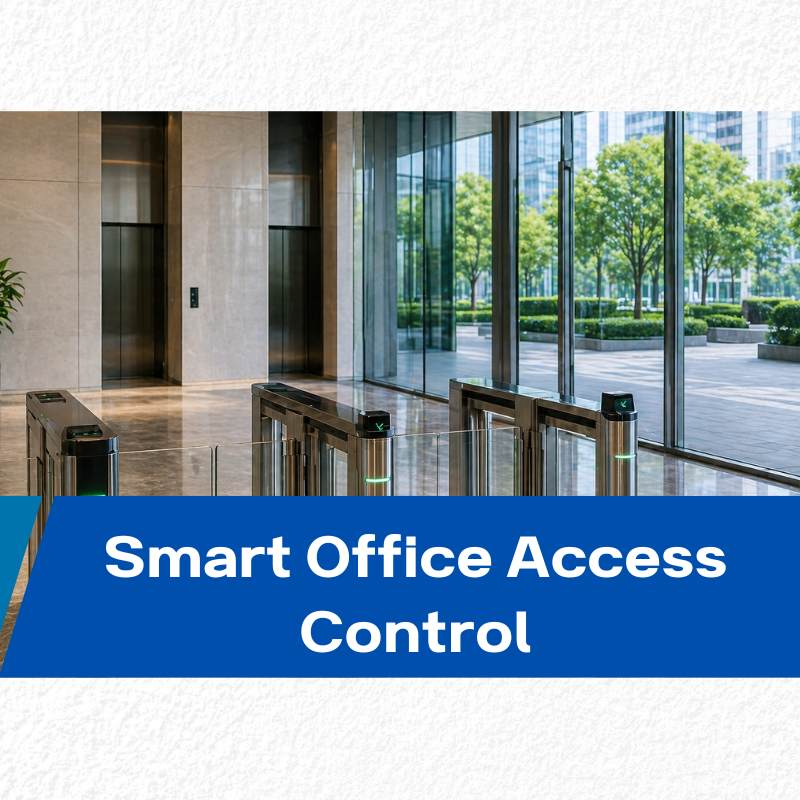
Why Modern Office Buildings Need Better Access Control
Modern office buildings operate differently than they did a decade ago. Hybrid work, flexible schedules, and shared spaces have increased the number of people moving through the same environment each day.
This creates a clear challenge. Businesses must manage employee access, visitor entry, and sensitive areas without slowing down operations. Traditional keys and manual checks cannot keep up with this level of complexity.
These solutions combine security with efficiency, giving businesses clear control over who enters, when, and where.
What an Access Control System Does in an Office Building
This type of system defines who can enter a space, when they can enter, and which areas they can access, using centralized management instead of physical keys.
A typical setup includes:
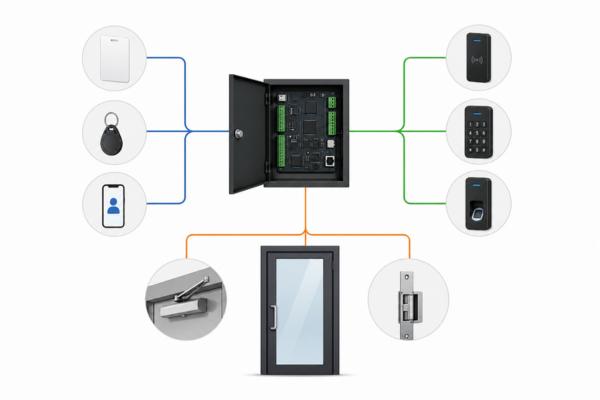
- Credentials — key cards, mobile access, or biometrics
- Controllers — systems that verify permissions
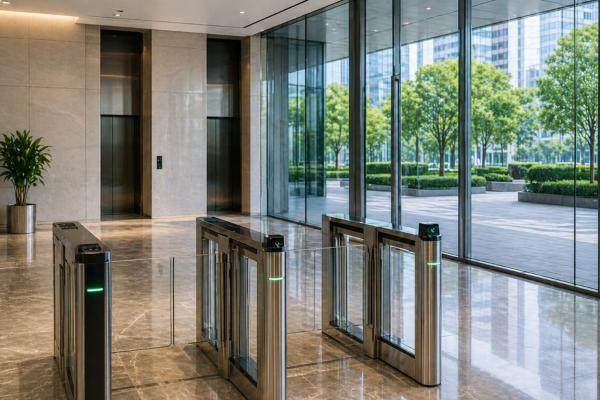
- Entry devices — readers, speedlanes, or turnstiles
- Locking mechanisms — hardware that physically secures the door
Each component supports a specific function, but together they create a scalable structure that reduces manual work and improves visibility across the building.
Why Traditional Locks Fall Short in Office Security
Mechanical locks provide basic protection, but they lack flexibility and control in modern office environments.
This creates practical business risks:
- Lost keys cannot be disabled, creating ongoing exposure
- Access rights cannot be updated without changing hardware
- No audit logs, making it difficult to track incidents
- Managing multiple users becomes time-consuming
Modern entry management replaces these limitations with real-time permissions, centralized oversight, and clear tracking records. This allows businesses to respond quickly to staffing changes, visitor access, and security incidents.
How Office Access Systems Work in Practice
Understanding how these solutions function helps businesses make better decisions when selecting or upgrading security.
How Users Are Identified and Verified
Credentials confirm identity before access is granted.
Common options include:
- RFID cards or key fobs
- Mobile credentials via smartphone apps
- Biometric verification such as fingerprint or facial recognition
Mobile credentials simplify entry. They remove the risk of lost keys and allow administrators to issue or revoke access remotely, which is especially useful for small teams and shared offices.
How Access Permissions Are Managed
The controller determines whether entry should be granted based on predefined rules.
These rules typically include:
- User role
- Time schedules
- Area restrictions
This allows businesses to control access without constant manual oversight. For example, a small office can allow staff entry during working hours while restricting access to storage or equipment rooms.
How Entry Points Control Movement
Entry devices regulate how people move through the building.
Common options include:
- Speedlanes for high-traffic office lobbies
- Turnstiles for controlled, single-entry access
- Access gates for wider entry needs, including deliveries or accessibility
These devices reduce congestion during peak hours and help maintain controlled entry without increasing staffing costs.
Why Locking Mechanisms Matter More Than You Think
Even the most advanced setup depends on one critical factor, the door must physically lock and unlock when required.
This is where many implementations fail. If the locking mechanism is weak, access decisions cannot be enforced reliably.
In real business scenarios, this leads to risks such as:
- Forced entry despite valid restrictions
- Unauthorized access to sensitive rooms
- Security gaps between digital control and physical protection
This is why the locking layer should be treated as part of the overall solution, not an afterthought.
Many office environments address this by combining:
- Electronic access systems
- High-security lock cylinders
- Reinforced door hardware designed to resist tampering
Solutions like those developed by EOS SECURE are designed with this integration in mind, ensuring that access permissions are not only managed digitally, but also enforced physically with consistent reliability.
Speedlanes, Turnstiles, and Access Gates — Choosing the Right Entry Control
At the building entrance, security becomes visible and directly impacts daily operations.
Different devices serve different purposes:
| Device Type | Best Use Case | Business Benefit |
|---|---|---|
| Speedlanes | Main lobby, high traffic areas | Faster entry, reduced waiting time |
| Turnstiles | High-security zones | Controlled single-person access |
| Access Gates | Accessibility, deliveries | Flexible entry for all users |
Choosing the right device helps businesses balance security with user experience, especially during busy periods.
How Access Control Improves Security and Daily Operations
A well-designed access setup improves both protection and efficiency.
Improved Security
Only authorized users can access specific areas, reducing both internal and external risks.
Better Operational Efficiency
Automated entry reduces the need for manual checks, allowing staff to focus on core tasks.
Real-Time Visibility
Managers can track entry and exit activity, supporting better decision-making and incident response.
Scalable Access Management
Permissions can be updated instantly as teams grow, roles change, or new locations are added.
This flexibility is especially valuable for small and growing businesses that need systems to adapt quickly without major upgrades.
Where Access Control Is Used in Office Buildings
Access management supports a wide range of real-world scenarios:
- Main entrance — manage employee flow during peak hours
- Office suites — restrict access by department or team
- Server rooms — protect critical infrastructure
- Meeting rooms — allow access based on schedules
- Visitor areas — grant temporary, limited permissions
For example, a small business can grant a delivery driver access only to a designated area for a limited time, without exposing the rest of the workspace.
How to Choose the Right Access Control System for Your Office
Selecting the right solution depends on business size, operational needs, and security priorities.
A practical approach:
- Small offices or startups — cloud-based solutions for easy setup and remote management
- Growing teams — systems with scalable user permissions and centralized control
- High-security areas — hybrid setups combining digital access with reinforced locking
The goal is not to choose the most complex system, but the one that matches daily operations while remaining easy to manage.
Common Access Control Mistakes Businesses Should Avoid
Many businesses invest in security solutions but overlook key factors that affect long-term performance.
Avoid these common issues:
- Choosing solutions that cannot scale as the business grows
- Overlooking the importance of physical lock security
- Failing to integrate access control with existing systems
- Selecting overly complex setups that staff cannot use effectively
A reliable solution should be secure, simple to manage, and adaptable over time.
Final Thoughts on Office Access Control Systems
Access control has become essential for managing modern office environments. It provides more than entry restriction, it supports how businesses operate, grow, and stay secure.
By combining digital access management with strong physical locking, businesses can reduce risk, improve efficiency, and maintain consistent control over their workspace.
Explore EOS SECURE solutions to strengthen your business security.
In any office access control setup, the final layer of protection depends on how well the door is physically secured. Digital permissions define who should have access, but the locking mechanism ensures those decisions are enforced in real conditions.
EOS SECURE delivers precision-engineered mechanical and electronic lock cylinders designed to integrate seamlessly with modern access solutions. Backed by more than a decade of manufacturing expertise and certified under ISO9001 and ISO14001, each product meets rigorous standards such as EN1303 and SKG. With advanced CNC production and strict quality control, EOS SECURE provides reliable, high-security solutions that support long-term stability, consistent performance, and scalable business security.