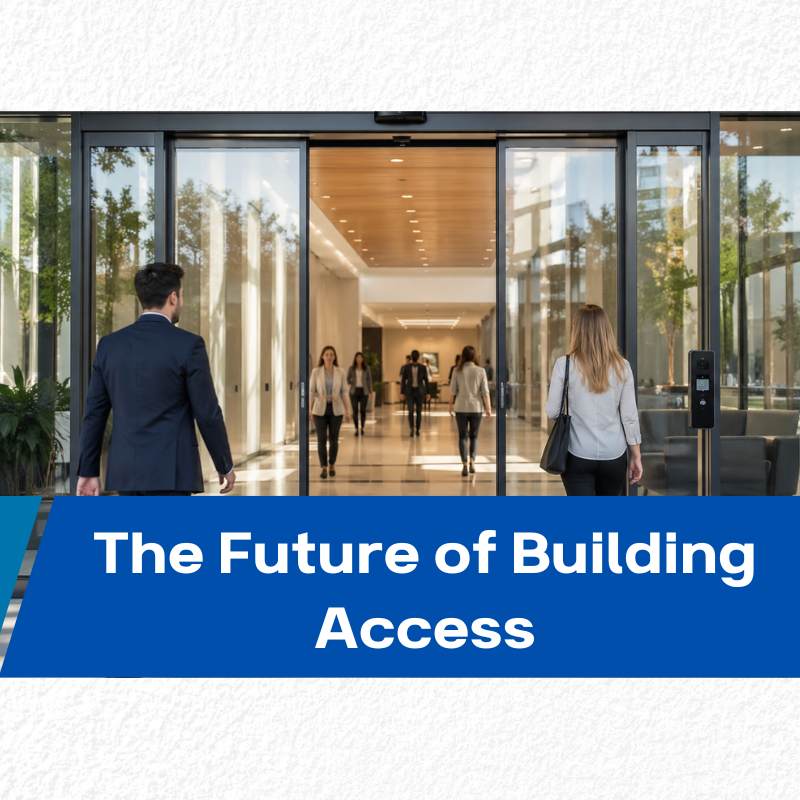
Why Building Security Systems Are Changing
Many small businesses still rely on physical keys or outdated entry security systems. Lost credentials, shared access, and limited visibility over who enters a building can quickly create security risks. Managing employees, contractors, and multiple locations often becomes inefficient without a modern solution in place.
Modern building security is no longer just about locking and unlocking doors. It is now a central part of how businesses manage operations, safety, and user experience. Understanding current trends helps business owners choose systems that are secure, scalable, and practical for daily use.
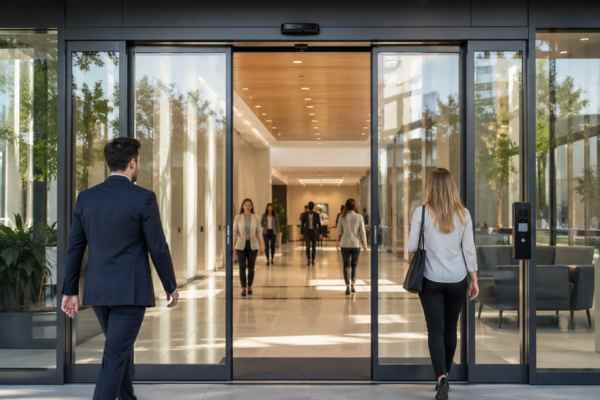
Building access solutions are evolving because business needs have changed. Traditional locks and standalone setups cannot support modern operational demands.
Key drivers include:
- Hybrid work environments that require flexible permissions
- Higher expectations for convenience and seamless entry
- Increased focus on hygiene and contactless interaction
- Integration between IT systems and physical security
- The need for centralized, multi-site management
These changes are pushing security systems toward solutions that are easier to manage, more reliable, and better aligned with daily business operations.
5 Access Control Trends Every Modern Building Is Adopting
Biometric Access for High-Security Areas
Biometric systems use unique physical traits such as fingerprints or facial recognition to verify identity. These systems are often used in environments where access must be tightly controlled.
For businesses, this means:
- Higher identity accuracy, reducing unauthorized entry
- Elimination of shared credentials, improving accountability
- Support for multi-factor authentication in sensitive areas
A data center or research facility can restrict entry to verified individuals only, ensuring credentials cannot be transferred or duplicated. This helps businesses protect sensitive areas where identity verification is critical.
Contactless Entry for Faster and Safer Movement
Contactless solutions use motion sensors or proximity detection to allow entry without physical interaction. These systems are increasingly used in shared environments where hygiene and efficiency matter.
In practice, they provide:
- Faster movement through entry points, reducing congestion
- Reduced physical contact, supporting cleaner environments
- Compatibility with both new and existing buildings
For example, a healthcare facility or busy office can allow staff and visitors to move efficiently without touching shared surfaces. This improves workflow and reduces friction in high-traffic environments.
Mobile Access Replacing Keys and Access Cards
Mobile-based entry systems allow smartphones to act as digital keys using Bluetooth, NFC, or cloud-based authentication.
This trend delivers clear business benefits:
- Lower risk of lost or stolen credentials, since phones are rarely shared
- Instant access updates, allowing permissions to be granted or revoked remotely
- Reduced operational cost, eliminating the need to issue and replace cards
A retail store can grant temporary access to delivery staff and remove it immediately after the job is complete, without collecting physical keys. This gives small businesses better control over access without increasing administrative effort.
Cloud-Based Access for Remote Control and Visibility
Cloud-managed systems allow businesses to manage permissions from anywhere through a centralized platform. These solutions reduce reliance on on-site infrastructure and simplify updates.
Key advantages include:
- Remote management across multiple locations
- Real-time visibility through audit logs and activity tracking
- Scalable deployment, allowing systems to grow with the business
A small business owner managing several locations can control permissions from a single dashboard without being physically present. This reduces operational complexity while improving oversight.
Smart Building Integration with IoT Systems
Modern entry systems are increasingly connected with other building technologies such as surveillance, lighting, HVAC, and alarms.
This integration enables:
- Automated responses, such as unlocking doors when authorized users arrive
- Energy efficiency, adjusting lighting or temperature based on occupancy
- Improved awareness, combining entry data with video and alerts
For example, when an employee enters a building, the system can automatically adjust lighting and temperature while logging the event. This turns security infrastructure into a tool for both protection and efficiency.
What Actually Unlocks the Door in Modern Buildings
While these trends focus on authentication and management, every access event still depends on one final action, the physical locking and unlocking of the door.
Many businesses assume entry management is purely software-driven. In reality, systems only send instructions. The actual outcome depends on the locking hardware that executes those commands.
A complete locking system typically includes:
- Electronic locks, which respond to digital credentials
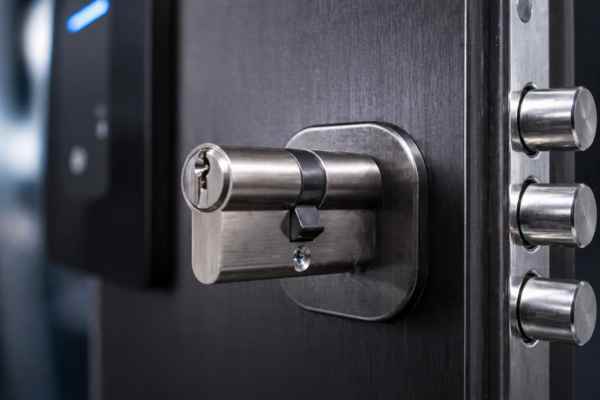
- Mechanical lock cylinders, which provide a secure fallback
This physical layer is essential because:
- Power outages can disable electronic systems, requiring mechanical access
- Emergency situations require manual override, especially for safety compliance
- Cyber incidents may affect digital systems, while mechanical components remain independent
For example, during a network failure, a warehouse or retail location still needs controlled entry. A reliable mechanical cylinder ensures operations continue without compromising security.
Why the Locking System Is Critical to Security
A modern security system is only as strong as its physical execution layer. High-frequency use, system integration, and emergency scenarios all place demands on locking hardware.
A reliable locking solution should provide:
- Consistent performance under frequent use
- Compatibility with electronic systems
- High resistance to physical tampering
- Dependable backup access during failures
This is where manufacturers like EOS SECURE play a critical role. By focusing on precision-engineered lock cylinders and integrated locking solutions, they support the foundation that modern building security depends on.
How to Choose the Right Access Control System for Your Business
Selecting the right solution requires more than choosing the latest technology. Businesses need systems that match their operational needs and risk profile.
Before making a decision, consider:
- Can you manage permissions remotely across locations
- How quickly can you grant or revoke access
- What happens if the system loses power or connectivity
- Is there a reliable mechanical backup in place
- Can the system scale as your business grows
A balanced approach combines digital flexibility with physical reliability, ensuring both convenience and security.
Building a Secure and Scalable Access Control System
Modern building security is evolving from simple entry management into a system that supports safety, efficiency, and daily operations. Trends such as mobile credentials, cloud platforms, and IoT integration are reshaping how access is managed.
However, every system depends on the reliability of its physical components. Without a strong locking foundation, even the most advanced technology cannot deliver consistent protection.
Businesses that combine modern systems with dependable locking hardware are better positioned to manage risk, improve efficiency, and support long-term growth. Explore EOS SECURE solutions to strengthen your business security.
This is where reliable locking hardware becomes essential in real-world applications. EOS SECURE delivers precision-engineered mechanical and electronic lock cylinders backed by more than a decade of manufacturing expertise. Established in 2011, our factory operates under ISO9001 and ISO14001 certifications, ensuring every product meets rigorous international standards including EN1303 and SKG. With over 50 advanced Swiss-type CNC automatic lathes and integrated machining centers, we manufacture high-quality lock cylinders trusted by clients across industries worldwide. Whether you need small-batch customization or large-scale production, EOS SECURE provides reliable performance, consistent quality, and dependable technical support. Secure your business with solutions built for long-term stability — contact us today.