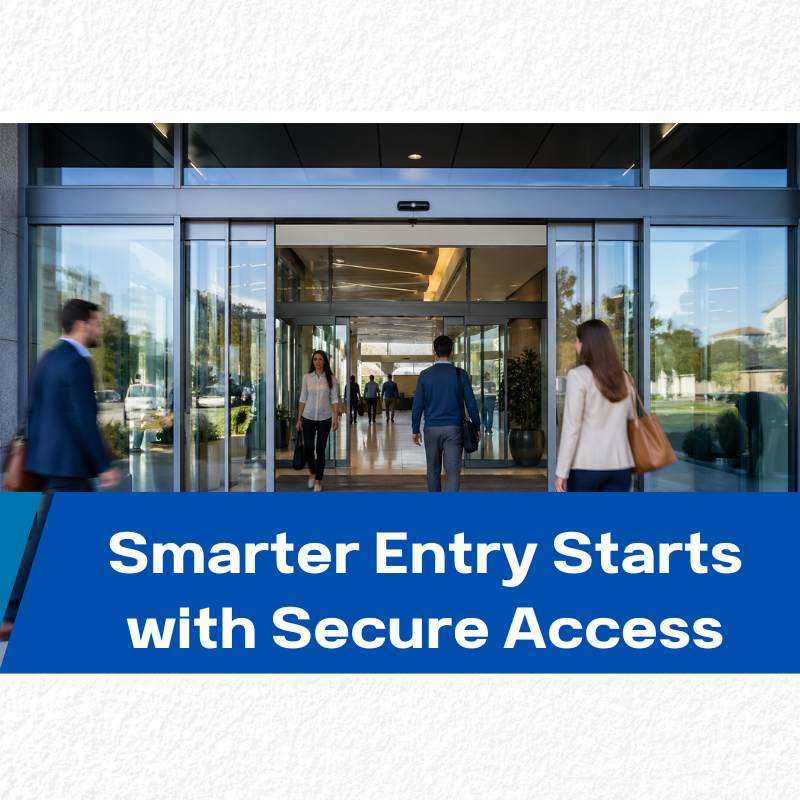
Why Businesses Are Choosing Automatic Doors Today
Many businesses are upgrading their entrances to improve accessibility, hygiene, and operational efficiency. Automatic doors reduce physical contact and simplify entry, which is especially valuable in high-traffic environments.
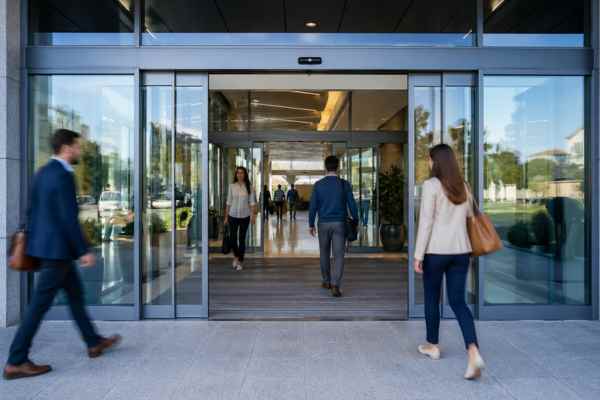
However, convenience alone is not enough. For retail stores, offices, and warehouses, the real challenge is controlling who enters, when they enter, and how access is managed across different users.
Key Features That Make Automatic Doors Work Efficiently
Automatic door systems operate through sensors, control units, and mechanical components that enable smooth, contactless entry.
Motion and Presence Sensors
Sensors detect movement and trigger automatic opening. This helps reduce congestion at entrances, especially in retail stores during peak hours or office buildings during busy entry periods.
Adjustable Speed and Sensitivity
Door settings can be adjusted based on user needs. A clinic may use slower speeds to improve safety, while a commercial entrance may prioritize faster response to maintain traffic flow.
Remote Control and Centralized Management
Doors can be monitored and controlled from a central platform. This allows business owners to manage multiple entry points without assigning staff to each door.
Energy Management Functions
Automatic closing reduces unnecessary opening time. This helps maintain indoor temperature, which is particularly useful for businesses that rely on climate control.
Safety Detection Systems
Sensors detect obstacles and prevent closing when something is in the way. This reduces injury risk and supports compliance with safety standards.
Common Types of Automatic Doors and Where to Use Them
Different entry systems are suited to different business environments.
Sliding Automatic Doors
Sliding doors are ideal for high-traffic areas such as supermarkets and hospitals. They allow continuous flow without requiring space for door swing.
Automatic Swing Doors
Swing doors are commonly used in offices and controlled environments. They are easier to integrate with access control systems for restricted entry.
Folding Automatic Doors
Folding doors work well in smaller retail spaces where entrance width is limited. They offer flexibility without requiring major structural changes.
Revolving Automatic Doors
Revolving doors are often used in hotels and office buildings. They help maintain indoor temperature and reduce energy loss.
How Automated Entry Systems Improve Daily Business Operations
Automated entry systems directly impact how efficiently a business operates.
Improved Accessibility
Automatic entry removes physical barriers. A retail shop can accommodate customers with carts or mobility aids without requiring assistance from staff.
Touchless Entry and Hygiene
Contact-free operation reduces surface contact. This is especially useful in healthcare settings or shared office spaces where hygiene is a priority.
Efficient Traffic Flow
Fast opening and closing reduce bottlenecks. In a busy office, this can prevent delays during peak entry and exit times.
Energy Efficiency
Automatic closing helps maintain indoor conditions. Businesses that rely on heating or cooling systems benefit from reduced energy loss.
Operational Visibility
When connected to monitoring systems, entry systems can provide usage data. This allows managers to identify peak hours and adjust staffing or security accordingly.
Why Automated Entry Systems Alone Are Not Enough for Security
Automated entry systems improve convenience, but they do not control access.
A motion-based system opens the door for anyone within range. It cannot verify identity, enforce permissions, or track entry activity. This creates several limitations:
- No control over who enters the building
- No way to prevent tailgating in busy environments
- No audit trail for security monitoring
- Doors may remain unsecured without proper locking integration
For businesses managing employees, visitors, or restricted areas, this level of control is not sufficient.
How Access Control Turns Entry Systems into Secure Access Points
Access control systems add identity verification and management to automated entry systems.
Credential-Based Access
Users present credentials such as cards, PIN codes, or mobile access. An office can allow employees to enter while restricting access for visitors.
Controlled Door Operation
Once access is verified, the system unlocks the door and triggers opening. This ensures that only authorized users can activate the entry system.
Audit Logs and Tracking
Access events are recorded automatically. Business owners can track who entered, when they entered, and which door was used.
Remote Management
Managers can control entry points remotely. A warehouse manager can unlock a delivery entrance without being physically present.
Time-Based Permissions
Access can be scheduled. A business can allow free entry during working hours and restrict access after closing time without manual intervention.
Key Security Factors to Consider When Installing Automated Entry Systems
A secure entrance requires both automation and reliable locking mechanisms.
Obstacle Detection and Safety Sensors
Sensors must respond quickly to prevent accidents. This is essential in environments with frequent pedestrian movement.
Emergency and Fail-Safe Operation
Entry systems should respond correctly during emergencies. They may unlock automatically during a fire event to support evacuation.
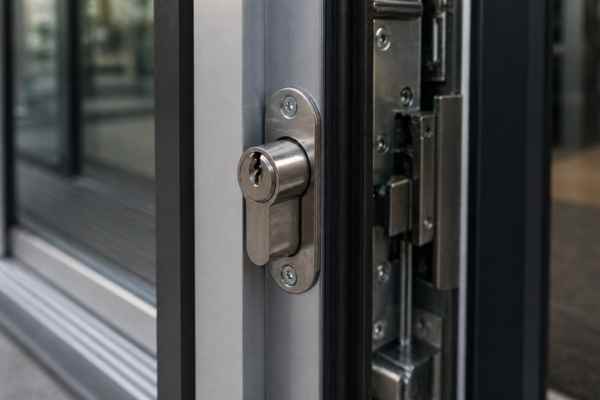
Locking Mechanisms
The locking component determines whether the door remains secure after closing. Without a reliable locking system, an automated entrance may become a weak point.
Door Status Monitoring
Monitoring door status helps detect issues such as forced entry or doors left open. This improves overall security awareness.
Power and Backup Systems
Backup power ensures that both safety and access control functions remain operational during outages.
How to Choose the Right Automatic Door System for Your Business Needs
Choosing the right system requires balancing convenience, security, and scalability.
Evaluate Traffic Flow
High-traffic entrances need fast response and durable systems. Lower-traffic areas may prioritize controlled access instead.
Define Security Requirements
A small office may only need basic access control, while a warehouse or multi-tenant building may require role-based permissions and audit tracking.
Consider Integration Capabilities
Ensure the system can connect with access control, surveillance, and management platforms.
Plan for Scalability
As your business grows, your access control needs will expand. Choose a system that can support additional users and locations.
Focus on Reliability and Maintenance
Reliable systems reduce downtime. Easy maintenance ensures long-term performance and cost control.
Conclusion
Automated entry systems improve accessibility and efficiency, but their full value comes from integration with access control and secure locking systems.
A well-designed solution allows businesses to manage entry, assign permissions, and maintain visibility across all access points. This is especially important for small and growing businesses that need scalable and reliable security.
EOS SECURE delivers precision-engineered mechanical and electronic lock cylinders backed by more than a decade of manufacturing expertise. Established in 2011, our factory operates under ISO9001 and ISO14001 certifications, ensuring every product meets rigorous international standards including EN1303 and SKG. With over 50 advanced Swiss-type CNC automatic lathes and integrated machining centers, we manufacture high-quality lock cylinders trusted by clients across industries worldwide. Whether you need small-batch customization or large-scale production, EOS SECURE provides reliable performance, consistent quality, and dependable technical support. Secure your business with solutions built for long-term stability — contact us today.