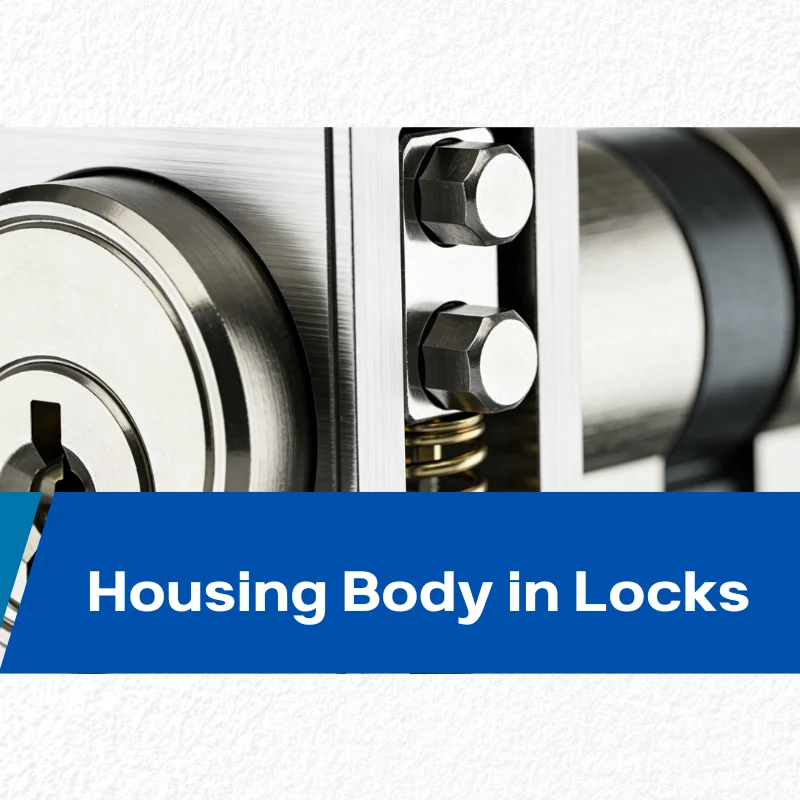
What Is a Housing Body and Why It Matters for Security
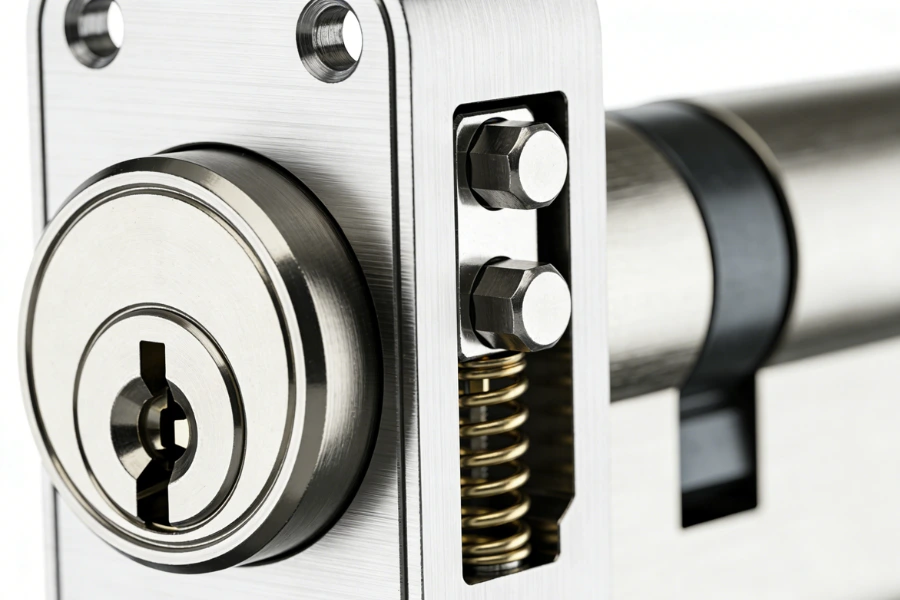
A housing body is the structural shell that holds the lock cylinder’s internal components and connects the cylinder to the lock mechanism. It surrounds the plug, pins, and springs while maintaining the shear line alignment that allows controlled rotation.
In practical terms, the housing body determines whether a lock operates reliably under daily use and physical stress.
For small businesses, this is not just a component choice. A poorly designed housing can lead to lock failures, access delays, and repeated service calls, especially in high-traffic environments such as retail stores or office entrances.
How a Housing Body Works Inside a Lock
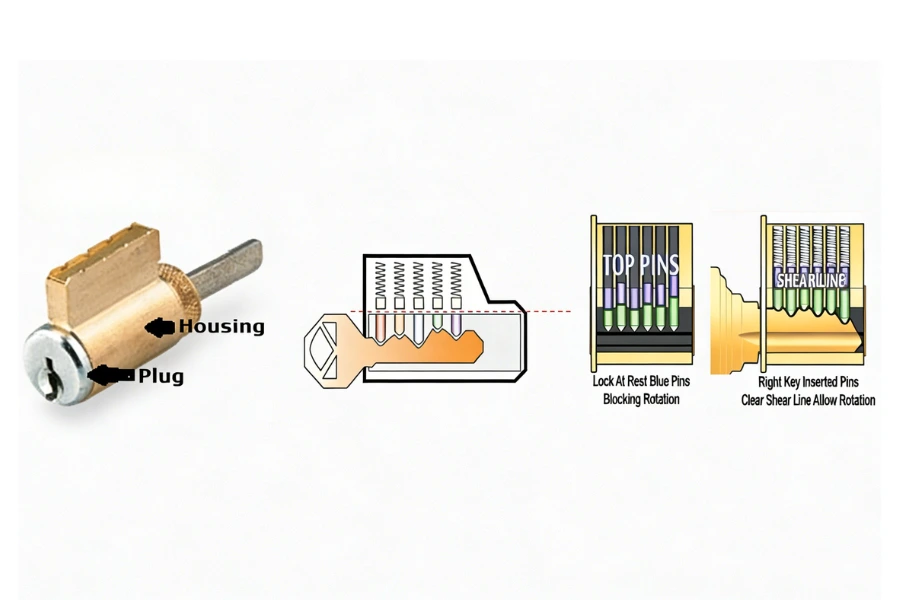
Core components inside the housing
- Plug – the rotating core that accepts the key
- Housing or shell – the fixed outer structure
- Pin stacks – key pins and driver pins
- Springs – reset the pins after use
- Shear line – the interface that enables or blocks rotation
What happens during operation
- Without a key – springs push pins into the plug, blocking rotation
- With the correct key – pins align at the shear line, allowing rotation
- The plug turns – the cam or tailpiece retracts the bolt
Why the housing matters here
The housing maintains precise alignment between all moving parts.
- Too loose – instability, increased wear, reduced security
- Too tight – friction, key resistance, user frustration
- Insufficient strength – deformation under force, leading to internal failure
In a busy office or shared workspace, even slight misalignment can cause frequent key turning issues, slowing down access and disrupting operations.
Why the Housing Body Is Critical for Business Security
Many lock failures are not caused by keys or cylinders. They originate from housing-related issues.
Common business risks linked to poor housing selection
- Misalignment leads to key jams during peak usage
- Incorrect compatibility causes installation delays and extra labor costs
- Weak housing increases exposure to drilling, snapping, or forced entry
- Wear in IC housings results in loose cores and potential security failures
Real-world example
In a retail store, a misaligned housing can cause staff to struggle with opening doors during busy hours. Over time, this leads to increased maintenance costs and potential security gaps if the lock fails to engage properly.
A reliable housing body ensures consistent operation, reduces downtime, and supports long-term security planning.
Common Types of Housing Bodies and Where They Are Used
By installation method
Mortise housing
- Installed inside the lock body using threaded mounting
- High strength and clean appearance
- Used in commercial buildings and high-traffic entry points
Rim housing
- Mounted on the door surface
- Suitable for retrofit projects or thin doors
- Easier to install but more exposed
Key-in-lever housing
- Designed for cylindrical lever locks
- Allows upgrade to interchangeable core systems
- Common in offices, hotels, and shared facilities
When to choose each type
- High-traffic office entrances → mortise housing for durability and stability
- Retrofit projects or metal doors → rim housing for easier installation
- Existing office locks needing upgrade → key-in-lever housing
Choosing the right type helps businesses avoid costly door modifications and ensures smooth integration with existing systems.
Interchangeable Core Housings – What You Need to Know
SFIC housing
- Compact format
- Suitable for cylindrical lock systems
LFIC housing
- Larger format
- Used in heavy-duty commercial applications
Choosing incorrectly leads to immediate incompatibility and operational failure.
For property managers or multi-tenant buildings, selecting the correct IC housing ensures faster rekeying and reduces long-term maintenance effort.
Housing Materials and Finishes – What Works Best
Common materials
Brass
- Good machinability and corrosion resistance
- Suitable for standard indoor commercial use
Stainless steel
- High strength and strong resistance to drilling
- Ideal for outdoor or high-security environments
Bronze
- Enhanced corrosion resistance
- Suitable for humid or coastal locations
Hardened steel alloys
- Strong resistance to impact and drilling
- Used in high-risk environments
Business impact of material choice
- High-traffic environments require wear-resistant materials to reduce replacement frequency
- Outdoor installations demand corrosion resistance to prevent failure over time
- Industrial or high-risk locations require reinforced materials to withstand attack
Surface finishes
- Satin chrome, polished chrome, satin brass, oil-rubbed bronze, satin nickel
- Selected based on durability and hardware consistency
In a warehouse or exterior entry point, poor material selection can lead to corrosion, lock failure, and unplanned downtime.
Key Security Features to Look for in a Housing Body
Anti-drill protection
Hardened inserts prevent drill penetration into critical areas.
Anti-pull and anti-wrench design
Reinforced mounting prevents forced removal from the door.
Anti-snap structure
Break-away sections protect internal components from exposure.
Anti-rotation flange
Prevents torque-based attacks on exposed housings.
Wear-resistant retention design
Hardened inserts extend lifespan in interchangeable core systems.
These features directly determine how long a lock can resist forced entry, giving businesses more time to respond and reducing risk exposure.
How to Choose the Right Housing Body for Your Application
Based on door thickness
- Standard doors → standard housing length
- Reinforced or thick doors → extended housing
Based on security level
- Interior spaces → standard brass housing
- Main entrances → reinforced housing with anti-drill features
- Commercial or industrial sites → stainless steel or hardened housing
Based on compatibility
- Match lock brand and model
- Confirm cam or tailpiece geometry
- Verify IC format where applicable
Based on environment
- Coastal or humid → stainless steel or bronze
- Industrial exposure → corrosion-resistant coatings
- Extreme climates → stable material properties
Based on usage frequency
- High traffic → wear-resistant housing with reinforced components
- Low traffic → standard configurations
Making the right choice reduces long-term maintenance costs and ensures consistent access control performance.
Installation and Maintenance Tips for Long-Term Performance
Installation guidelines
- Apply anti-seize compound on threaded housings
- Tighten within proper torque range
- Use secure mounting methods for rim installations
- Test smooth operation after installation
Maintenance practices
- Use graphite or dry PTFE lubrication
- Inspect for corrosion or deformation
- Check fastening stability regularly
Common issues and solutions
- Key resistance → clean, lubricate, or replace housing
- Rotation failure → check alignment or structural deformation
- Loose core → replace worn IC housing
Routine maintenance helps businesses avoid unexpected lock failures and ensures reliable daily operation.
Final Thoughts – Choosing a Housing Body That Lasts
The housing body is a critical interface that affects alignment, durability, and resistance to attack. It is not just a supporting component, but a key factor in how a lock performs over time.
For businesses, the right housing reduces maintenance, improves reliability, and strengthens overall security. The wrong choice leads to operational issues, increased costs, and potential vulnerabilities.
EOS SECURE delivers precision-engineered lock cylinders and housing components designed to maintain exact alignment, resist physical attack, and integrate seamlessly with commercial lock systems. With ISO-certified manufacturing, EN1303 and SKG compliance, and advanced CNC production, EOS SECURE supports businesses with reliable, scalable security solutions. Whether you are upgrading an office, securing a retail space, or managing a multi-site facility, EOS SECURE provides housing solutions built for long-term performance and operational stability.