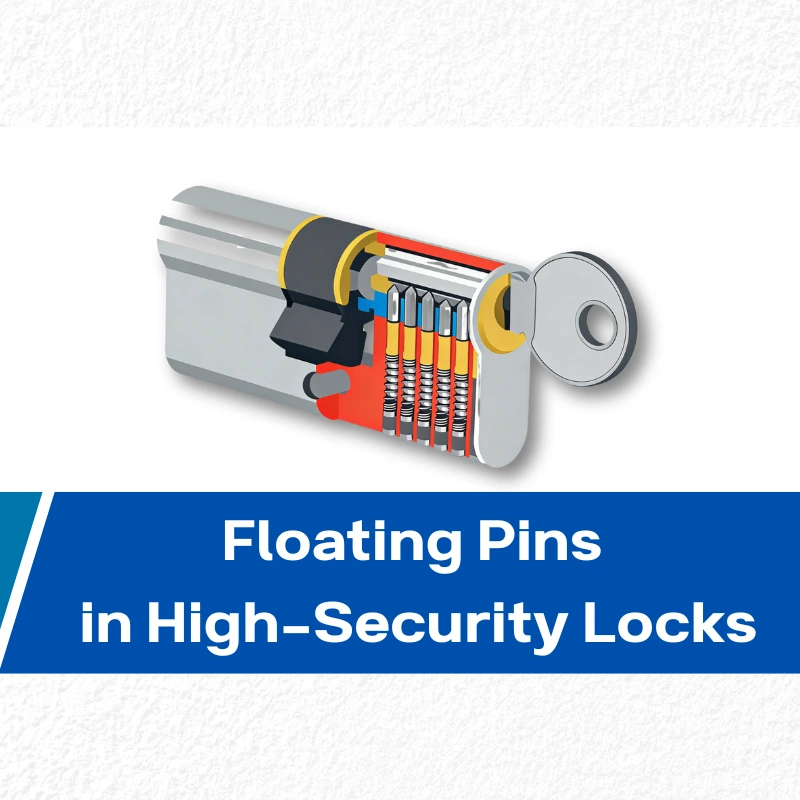
Introduction – Why Internal Lock Design Matters for Business Security
When evaluating door security, most businesses focus on visible protections such as anti-drill plates or reinforced housings. These features matter, but they are only part of the picture. In high-security lock cylinders, internal defensive components play an equally important role in preventing unauthorized access.
Floating pins are one of those internal mechanisms. They are rarely visible, often misunderstood, and frequently underestimated. Yet in high-security pin-tumbler systems, they form a critical layer of defense against technical opening attempts.
This article explains what floating pins are, how they work, why they matter, and where they are best applied. The goal is to help business owners and property managers understand how this internal mechanism contributes to long-term security and better access control decisions.
As a manufacturer focused on precision lock cylinder engineering, EOS SECURE treats internal mechanical defenses as the foundation of reliable security. Our high-security cylinder designs bring together carefully engineered internal components that work as a system, not as isolated features.
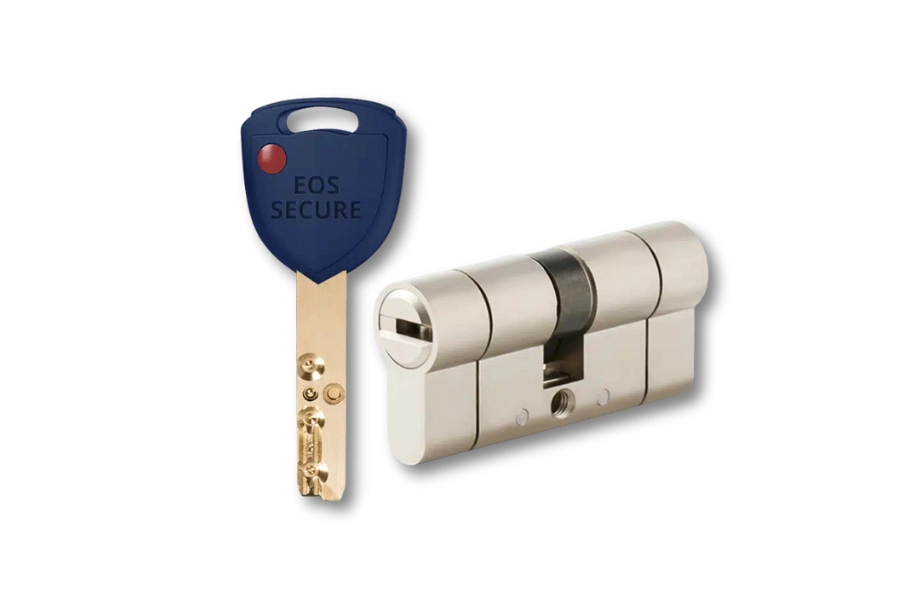
Part One – What Are Floating Pins
What Role They Play in Preventing Unauthorized Entry
Floating pins, sometimes referred to as active security pins, are specialized pin elements installed within the non-rotating housing of a lock cylinder. Unlike standard driver pins, they are not designed to participate in normal key authentication.
Their primary purpose is defensive. Floating pins remain inactive during legitimate use but are engineered to interfere with technical opening attempts such as lock picking.
The key distinction is this
Floating pins do not help the lock open – they help prevent it from opening when it should not.
When an unauthorized manipulation attempt occurs, floating pins can move into the shear line and physically block plug rotation. This happens even if all standard pin stacks appear correctly aligned. The result is a lock that refuses to turn under attack conditions.
In EOS SECURE high-security cylinders, floating pin placement, material hardness, and movement tolerances are carefully calculated and tested. These parameters ensure reliable activation during attacks without affecting everyday operation.
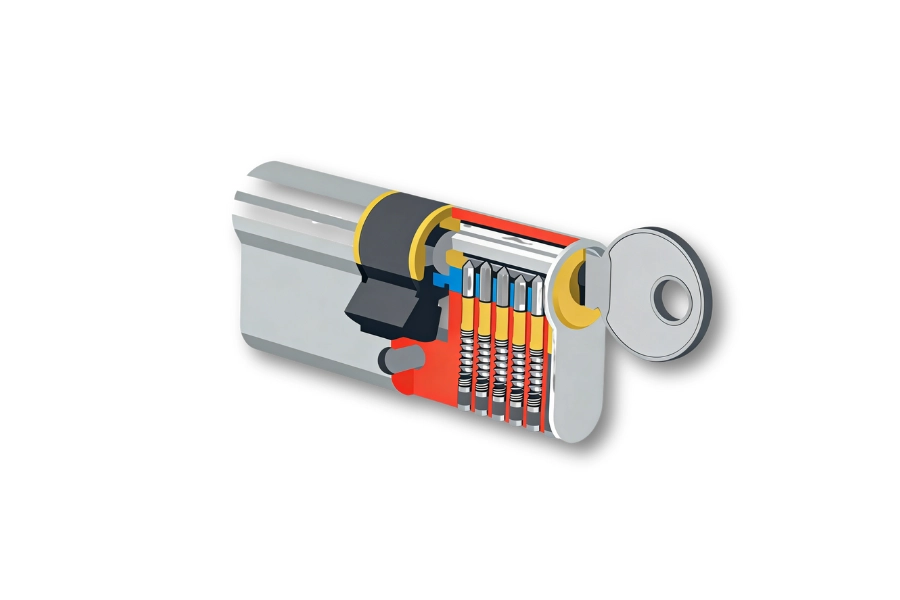
Part Two – How Floating Pins Respond to Picking Attempts
How the Mechanism Disrupts Unauthorized Manipulation
Normal Operation
Why Floating Pins Do Not Affect Everyday Use
When the correct key is inserted, standard key pins lift to their intended positions and driver pins retract fully into the housing. The shear line clears, allowing the plug to rotate smoothly.
Floating pins are designed to remain disengaged in this state. Due to their geometry, length, or light spring bias, they do not interfere with the aligned shear line. The user experiences normal, consistent key rotation with no added resistance.
This separation between authentication and defense is essential. A properly designed floating pin system does not compromise usability.

During an Attack
How Floating Pins Block Rotation Even When Pins Appear Aligned
During lock picking or similar manipulation attempts, the conditions inside the cylinder change. Tools cannot reliably detect or control floating pins because they do not behave like standard pin stacks.
As tools apply pressure or rotational force, floating pins may shift, rotate, or laterally move. Their shape and interaction with internal surfaces cause them to lodge between the plug and housing.
The effect is intentional
A physical obstruction forms at the shear line.
Even if an attacker successfully aligns all standard pins, the floating pin blocks rotation. The lock remains closed, and the attack fails.
EOS SECURE engineers validate floating pin behavior through simulation and real-world manipulation testing. The objective is consistent activation during unauthorized handling and predictable disengagement during legitimate use.
Part Three – Why Floating Pins Matter for Business Security
How They Improve Protection Compared to Standard Cylinders
Where Traditional Cylinders Fall Short
In conventional pin-tumbler locks, security relies on aligning all pins to a single shear line. Once that condition is met, the lock opens. Skilled attackers can exploit this predictability.
Floating pins introduce uncertainty into that equation.
Key Security Benefits
- Hidden resistance
Floating pins create an internal obstacle that cannot be easily detected or anticipated during manipulation. - Increased attack time
Failed rotation attempts force attackers to restart or abandon the effort, raising the likelihood of detection. - Layered protection
Floating pins work alongside hardened inserts, restricted keyways, and sidebars to form a multi-layer defense strategy.
For businesses, this translates to delayed entry attempts, reduced success rates, and better protection of assets and premises.
EOS SECURE integrates floating pin mechanisms across multiple security levels in our product range. This allows customers to select the appropriate balance between protection level and operational needs, from premium residential access to commercial and sensitive business environments.
Part Four – Where Floating Pins Make Sense
Applications and Practical Maintenance Guidance
Typical Business and Commercial Use Cases
Floating pin technology is most valuable in environments where technical opening poses a real risk:
- High-security residential entrances
- Commercial buildings and offices
- Financial institutions and data-sensitive facilities
- Master key systems that require strong individual lock integrity
Because floating pins can be designed to coexist with master key configurations, they do not require sacrificing system flexibility for security.
How to Choose a Cylinder With Floating Pin Protection
Floating pins are internal components and cannot be identified visually. Selection should be based on:
- Recognized security certifications such as EN 1303 ratings
- Manufacturer documentation specifying resistance to technical opening
- Proven brand expertise in high-security cylinder engineering
Maintenance Tips to Keep Floating Pins Working Properly
- Lubrication
Use dry graphite or PTFE-based lubricants. Oil-based products may attract dust and interfere with pin movement. - Key condition
Use original or high-precision duplicate keys. Excessively worn keys can cause unintended internal contact. - Operational feedback
Unusual resistance or inconsistent rotation should be inspected by a professional. Forced operation may damage internal components.
To support long-term performance, EOS SECURE provides clear maintenance guidance and compatible accessories. Our technical team can assist customers in maintaining consistent cylinder operation over time.
Conclusion – Making Smarter Security Decisions With the Right Cylinder Design
Floating pins represent a shift from passive resistance to active mechanical defense. They operate silently inside the lock cylinder, yet play a decisive role in stopping technical entry attempts.
For businesses evaluating security solutions, understanding internal mechanisms matters. Features like floating pins help distinguish basic locking hardware from systems designed for real-world risk scenarios.
EOS SECURE delivers precision-engineered mechanical and electronic lock cylinders built for long-term commercial security. Established in 2011, our manufacturing facility operates under ISO9001 and ISO14001 certifications, with products designed to meet international standards including EN 1303 and SKG. Internal mechanisms such as floating pins are engineered for consistent performance in real-world attack scenarios.
With over 50 Swiss-type CNC automatic lathes and integrated machining centers, EOS SECURE supports both small-batch customization and large-scale OEM and ODM production. Trusted across commercial and institutional applications, we provide reliable quality, stable supply, and dependable technical support. Explore EOS SECURE solutions to strengthen your business security.