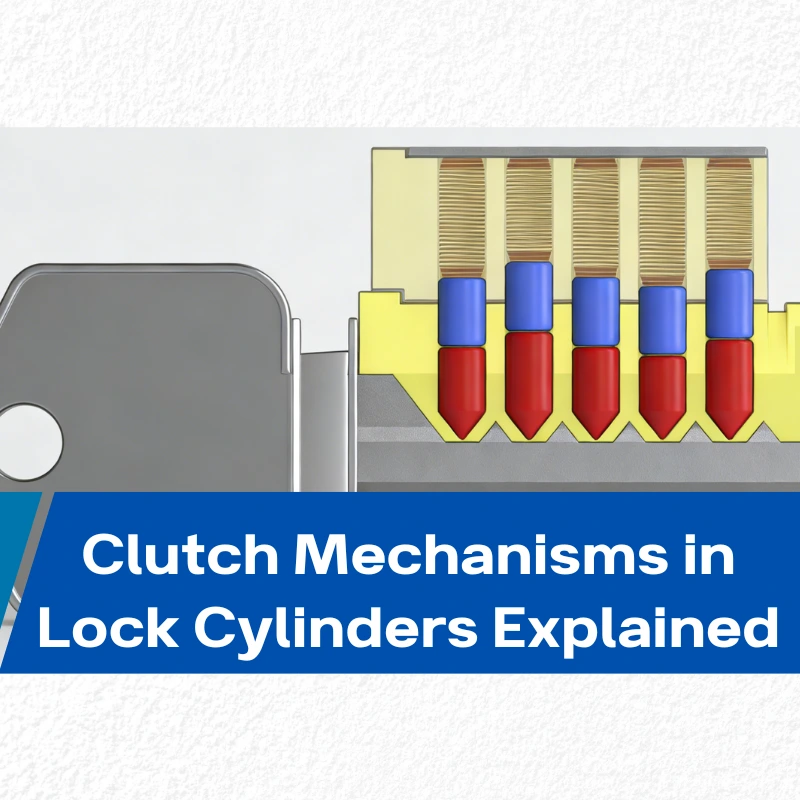
Modern business security depends on more than basic lock strength.
As doors face higher daily use and occasional misuse, lock cylinders must control how force is transferred inside the mechanism. This is where the clutch mechanism plays a critical role.
Understanding how a clutch mechanism works helps businesses choose lock cylinders that remain stable, predictable, and secure over time.
The Limits of Traditional Lock Cylinders in Commercial Use
In a traditional lock cylinder, external rotation is directly transmitted to the internal locking components. When abnormal force is applied, that force can still reach the core of the lock.
Over time, this creates several risks for businesses:
- Internal components experience unnecessary stress
- Damage accumulates even without a successful break-in
- Locks wear faster in high-traffic or shared environments
For commercial doors used by multiple people every day, this direct force transfer becomes a long-term reliability issue, not just a security concern.
How a Clutch Mechanism Controls Force Inside a Lock Cylinder
A clutch mechanism changes how force behaves inside the lock.
Instead of transferring rotation immediately, the clutch isolates the locking core until proper authorization occurs. External rotation alone does not engage the internal mechanism.
This means the lock responds only when valid input is present.
Without authorization, force is absorbed or disengaged rather than transmitted.
For businesses, this provides a more controlled and predictable locking behavior under real-world conditions.
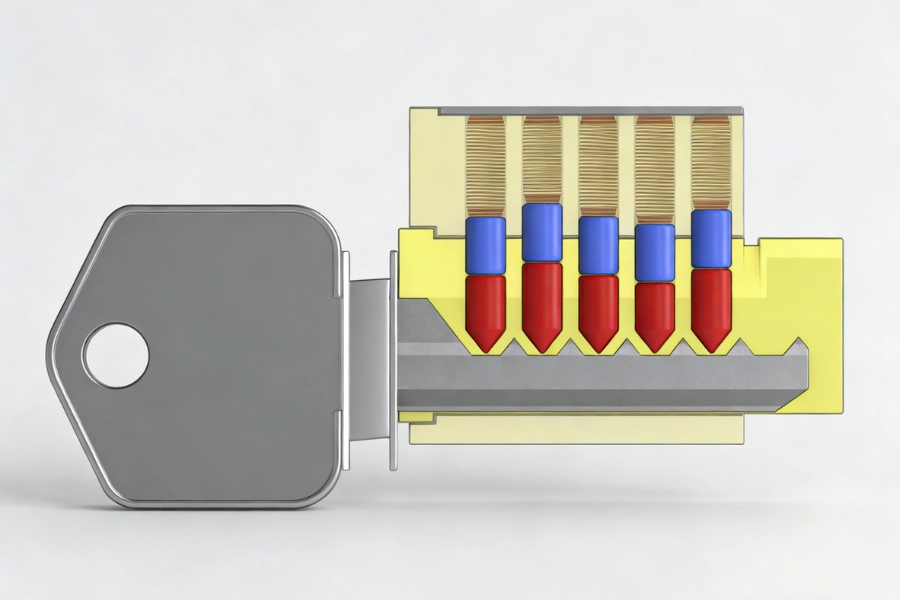
How Clutch Mechanisms Improve Security in Everyday Business Use
Prevents Forced Rotation From Driving the Lock
When abnormal torque is applied, the clutch prevents that movement from driving the internal components.
The result is a lock that resists forced operation without relying on excessive internal resistance.
This reduces the likelihood of damage during misuse or attempted manipulation.
Reduces Wear and Extends the Life of the Cylinder
Because internal parts remain disengaged during unauthorized handling, wear is significantly reduced.
For commercial users, this translates into:
- Longer replacement cycles
- Fewer service interruptions
- Lower long-term maintenance costs
Durability becomes a measurable benefit, not just a technical feature.
Keeps Daily Operation Smooth for Authorized Users
A properly designed clutch mechanism does not interfere with normal operation.
Authorized users experience consistent, smooth rotation with no added resistance.
This balance between protection and usability is essential in professional environments where reliability matters every day.
When Businesses Benefit Most From Clutch Mechanisms
Clutch mechanisms are widely used in environments where locks face frequent use or occasional misuse, including:
- Office buildings and shared workspaces
- Commercial entrances and internal access points
- Facilities with rotating staff or multiple tenants
- High-traffic doors requiring consistent performance
In these settings, the goal is not only preventing unauthorized access but also maintaining stable operation over time.
Mechanical and Electronic Clutch Mechanisms – Choosing the Right Approach
Mechanical Clutch Mechanisms for Reliable, Low-Maintenance Use
Mechanical clutch systems operate through internal disengagement without relying on electronics.
Key characteristics include:
- No power source required
- Reliable performance in demanding conditions
- Consistent protection against forced rotation
They are commonly used in applications where simplicity and durability are priorities.
Electronic Clutch Mechanisms for Access-Controlled Environments
Electronic clutch systems engage only after successful electronic authentication.
In these designs:
- The motor activates the clutch only when access is approved
- Internal components remain disengaged otherwise
- Energy consumption is reduced and component wear is minimized
This approach is often used in access-controlled environments where credentials and permissions are centrally managed.
How Clutch Mechanisms Support a Complete Door Security System
A clutch mechanism is most effective when it is part of a complete security strategy.
Lock performance depends on:
- Cylinder design and material quality
- Controlled key systems and credential management
- Proper door hardware and professional installation
Security is achieved through system balance, not a single feature. The clutch mechanism strengthens that system by controlling how force is handled at the core.
What to Look for When Selecting a Cylinder With a Clutch Mechanism
When evaluating lock cylinders for business use, consider:
- Door type and daily usage frequency
- Exposure to misuse or forced handling
- Compatibility with existing lock hardware
- Compliance with relevant commercial security standards
The right choice supports both security and long-term operational stability.
Why Many High-Security Cylinders Now Use Clutch Mechanisms
As business environments demand higher reliability and predictable performance, clutch mechanisms are increasingly seen as a standard feature rather than a premium option.
They address practical concerns such as durability, misuse resistance, and consistent operation. For commercial users, these outcomes matter more than technical complexity.
Making Smarter Choices for Business Door Security
A clutch mechanism helps ensure that a lock cylinder responds only when it should. By isolating internal components from unauthorized force, it improves reliability, protects the locking core, and supports long-term security.
For businesses, understanding this mechanism makes it easier to choose lock cylinders that perform consistently under real-world conditions and support secure, efficient operations.
EOS SECURE
Building lock cylinders that perform reliably under real-world use requires manufacturing precision, material control, and long-term commercial testing.
EOS SECURE delivers precision-engineered mechanical and electronic lock cylinders backed by more than a decade of manufacturing expertise. Established in 2011, our factory operates under ISO9001 and ISO14001 certifications, ensuring every product meets rigorous international standards including EN1303 and SKG. With over 50 advanced Swiss-type CNC automatic lathes and integrated machining centers, we manufacture high-quality lock cylinders trusted by clients across industries worldwide. Whether you need small-batch customization or large-scale production, EOS SECURE provides reliable performance, consistent quality, and dependable technical support. Explore EOS SECURE solutions to strengthen your business security.