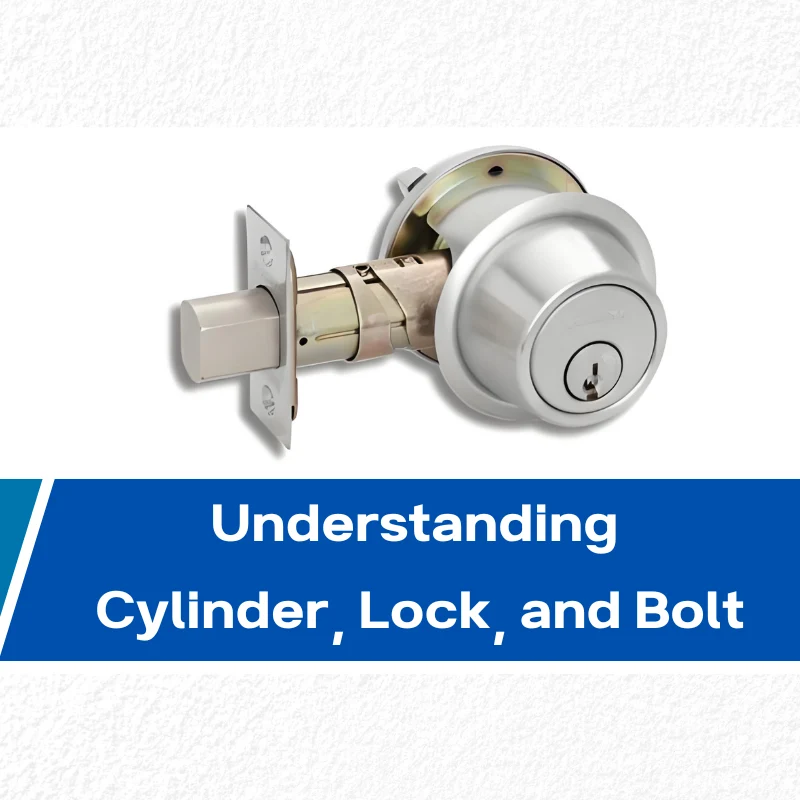
Why Cylinder, Lock, and Bolt Are Often Confused
In the lock and security industry, terminology is often used incorrectly. A common example is calling a cylinder a lock, even though they serve very different roles.
This confusion creates real problems. Misused terms can lead to communication errors, incorrect product selection, or security solutions that do not match the actual requirement. For businesses, these mistakes increase cost, complexity, and risk.
This article breaks down the core components of a locking system and establishes a clear whole–subsystem–component framework. The goal is simple—help decision-makers understand what each part does and why it matters.
The Lock – Your First Line of Defense in Commercial Security
What the Lock Actually Does
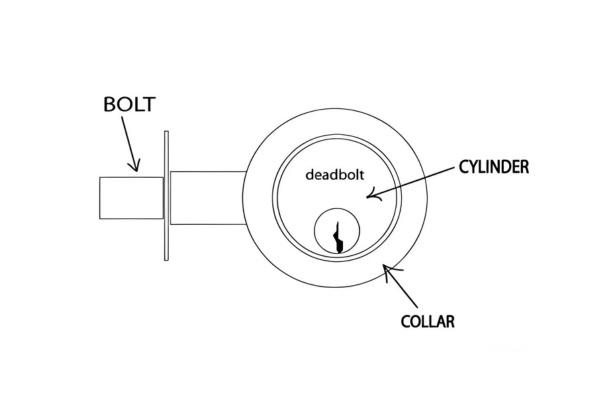
A lock is the complete mechanical or electronic unit installed inside the door leaf. Its purpose is to prevent unauthorized opening by controlling physical movement inside the door.
Core Components Inside a Lock
- Lock case
- Forend plate
- Latch and bolt
- Cylinder mounting position
The lock does not include the door handle or the cylinder itself. It serves as the structural carrier and execution unit that translates authorization into physical action.
Common Lock Types in Real-World Use
- Mechanical locks
- Electronic locks
- Mechatronic locks combining mechanical and electronic elements
In practical terms, the lock provides the platform. It holds components in place and ensures that movement happens reliably and consistently.
The Cylinder – Where Access Decisions Are Made
What the Cylinder Controls
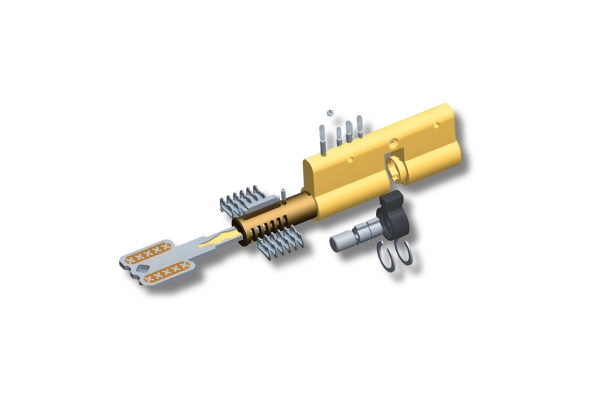
A cylinder is a replaceable verification component. Its role is to check whether the credential is valid and decide whether the lock can be activated.
The cylinder does not secure the door by itself. It authorizes movement.
Key Parts Inside a Cylinder
- Keyway
- Pins and springs
- Cylinder housing
- Coupling element that links to the lock’s bolt mechanism
How the Cylinder Allows or Denies Access
When the correct key or credential is inserted, internal elements align. This allows the cylinder to rotate and activate the lock mechanism, which then moves the bolt or latch.
Common Cylinder Types You’ll Encounter
- Single cylinder with key on one side and thumb turn on the other
- Double cylinder requiring a key from both sides
- Smart cylinders using electronic verification before mechanical rotation
For businesses, the cylinder determines who has access, how access can be changed, and how scalable the system is over time. Replacing or upgrading a cylinder is often far more efficient than replacing an entire lock system. For example, a small retail shop can replace the cylinder rather than replacing the entire lock system, allowing for easy upgrades without the cost and hassle of full system replacement. This approach improves security while maintaining budget control.
Bolt and Latch – What Actually Secures the Door
Latch – Keeping the Door Closed Day to Day
The latch is spring-loaded. It automatically extends when the door closes and retracts when the handle is pressed.
- Keeps the door closed under normal use
- Can be withdrawn using the handle or key
Bolt – Providing Real Break-In Resistance
The bolt is a solid metal component that moves only when deliberately activated by a key or authorized mechanism.
- Extends into the strike plate
- Provides higher resistance against forced entry
How Multi-Point Locking Improves Security
Multi-point locking systems use multiple bolts to secure the door at several positions. This increases resistance against prying and forced attacks.
In commercial settings, multi-point locking systems provide added protection for high-traffic doors like warehouse entries or back entrances, which can be crucial for reducing theft and improving overall facility security.
Related Terms That Often Cause Confusion
Master Key System vs. Access Control System
- Master key systems rely on mechanical keys with hierarchical permissions. They do not require power at the door.
- Access control systems use electronic credentials such as cards, Bluetooth, or codes and require power to operate.
Mortise Lock
A mortise lock is installed inside the door leaf and typically follows DIN standards. It is widely used in commercial and professional applications.
Security Fitting
A security fitting includes inner and outer escutcheons, handles or knobs, and optional cylinder protection covers. It supports both usability and attack resistance.
Reversible Key
A reversible key can be inserted in either direction. This improves convenience without reducing security.
How Cylinder Design Affects Security Performance
Lock Picking Security
This refers to how difficult it is to manipulate a cylinder without the correct key. It depends on pin layout, key profile design, and additional control elements.
Scanning Security
Scanning security measures resistance against unauthorized key duplication using digital or mechanical scanning. Multi-dimensional profiles and magnetic elements improve protection.
Key Security
Key security reflects how difficult it is to obtain key blanks or duplicate keys without authorization. Patented profiles and controlled distribution increase protection.
For commercial users, these factors directly affect access control integrity and long-term system reliability.
How EOS SECURE Approaches Lock System Design
EOS SECURE is a manufacturer and supplier focused on precision lock cylinders, mechanical locks, and electronic locking systems. Operating since 2011, the company develops high-accuracy, security-focused products for residential and commercial applications.
Product Coverage
Mechanical cylinders and locks
- Euro lock cylinders
- Master key system cylinders
- High-security cylinders
- Modular and oval cylinders
- Padlocks
Electronic and smart locking solutions
- Smart lock cylinders
- Smart lock handle sets
- Support for app control, fingerprint access, remote management, and keyless entry
Application Scenarios
- Residential security
- Commercial buildings
- Short-term rental and property management
- Access control and master key systems
EOS SECURE solutions emphasize flexibility, ease of use, and compliance with international security standards. OEM and ODM customization allows systems to be adapted to specific project requirements while maintaining consistent quality.
EOS SECURE delivers precision-engineered mechanical and electronic lock cylinders backed by more than a decade of manufacturing experience. Designed for long-term stability and scalable security, our solutions help businesses maintain control, simplify access management, and adapt as needs evolve. Explore EOS SECURE solutions to strengthen your security strategy.