Why Businesses Are Moving to Electronic Door Cylinders
Managing physical keys is one of the most common security gaps in small businesses. Keys get lost, copied, or shared without control, and there is no reliable way to track who accessed a space or when.
Electronic locking cylinders solve this problem by combining mechanical protection with digital access control. Instead of relying on physical keys, businesses can define who is allowed to enter, when access is valid, and how permissions are managed.
For offices, retail stores, rental properties, and shared workspaces, this shift is not just about convenience. It transforms door hardware into a controllable and trackable part of daily operations.
What an Electronic Door Cylinder Actually Does
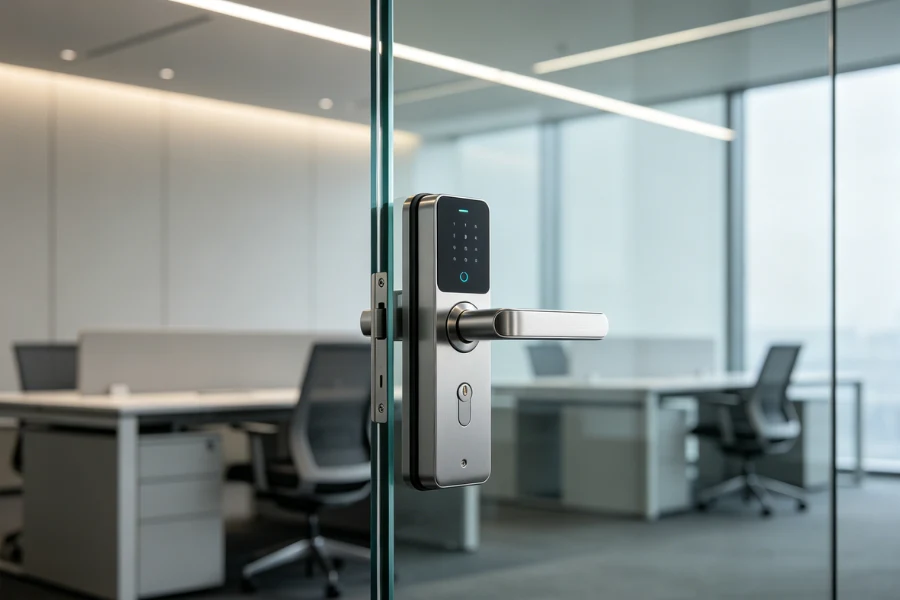
An electronic door cylinder is a mechatronic locking component that combines a traditional cylinder structure with a digital control system. It receives credentials such as PIN codes, RFID cards, mobile app commands, or biometric data and converts them into mechanical locking actions.
At a functional level, it still controls the rotation that locks or unlocks a door. The difference is that access decisions are no longer tied to a physical key.
Key role in modern access systems
- Replaces static keys with digital credentials
- Acts as the final execution point for access permissions
- Maintains mechanical backup for fail-safe operation
This shifts the cylinder from a simple locking device to a core part of a scalable access control system.
How Electronic Cylinders Improve Access Control
Traditional locks offer limited flexibility. Once a key is distributed, access cannot be easily restricted, tracked, or revoked without changing the hardware.
Smart cylinder systems introduce structured access control that aligns with how businesses operate.
What changes in practice
- Access becomes permission-based – assign credentials instead of copying keys
- Control becomes dynamic – update or revoke access instantly
- Visibility improves – track entry events in real time
Access is no longer tied to keys. It is defined by permissions, time schedules, and user roles.
For example, a retail store can grant evening access to cleaning staff and automatically disable it after the shift ends, without any physical interaction.
How Smart Cylinders Work in Real Use
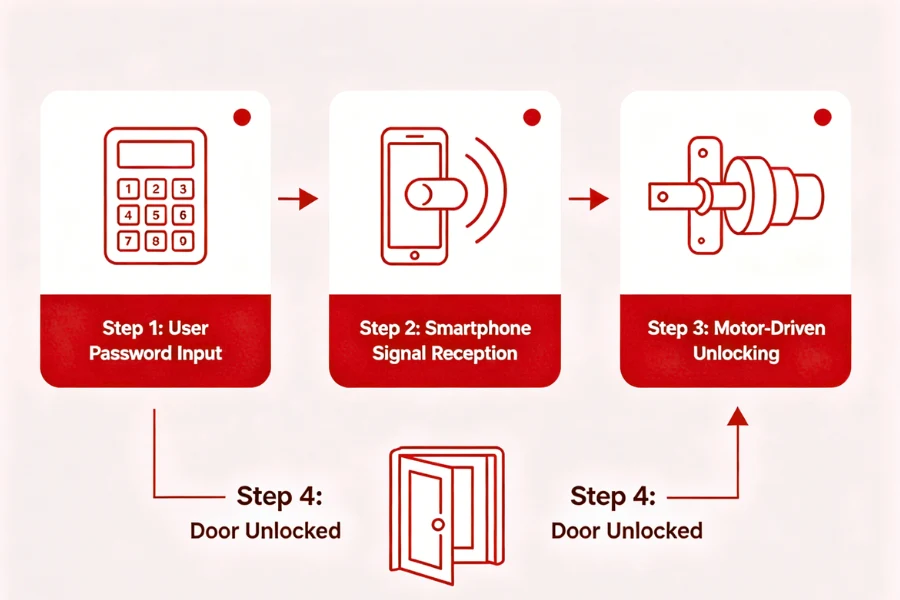
The system connects digital authentication with mechanical locking through a controlled workflow.
Step-by-step process
- A user sends an access request using a PIN, card, fingerprint, or mobile device
- The system verifies the credential against stored data
- A signal is sent to the internal motor
- The clutch engages to connect the motor with the locking mechanism
- The lock opens or closes based on the command
- The event is recorded and status feedback is provided
This structure ensures that every access attempt is verified, executed, and logged, which strengthens both security and accountability.
Key Components That Affect Performance and Security
Smart locking cylinders combine mechanical durability with electronic intelligence. Each component directly impacts reliability and resistance to misuse.
Core components
- Cylinder body – hardened materials resist drilling and forced entry
- Motor – delivers consistent actuation under frequent use
- Sensors – capture and interpret user credentials
- Control board – processes authentication and manages permissions
- Clutch mechanism – prevents forced rotation when access is denied
- Emergency override – ensures entry during power or system failure
Business impact
- The clutch blocks unauthorized mechanical force
- The motor ensures consistent operation across high-traffic environments
- The control system enables multi-user management and audit tracking
EOS SECURE designs its electronic cylinder systems for high-frequency commercial use, where stable performance and reliable access control are critical to daily operations.
Features That Make Daily Access Easier to Manage
Electronic cylinders introduce features that directly reduce operational friction and improve control.
Key capabilities
- Keyless entry – removes the need for physical key handling
- Remote management – control access without being on-site
- Temporary credentials – assign limited-time access for visitors or contractors
- Audit logs – record who entered, when, and how
- Multi-user support – manage teams without duplication
These features turn door access into a manageable system rather than a static setup.
Why Electronic Cylinders Outperform Traditional Locks
The shift from mechanical to electronic systems changes how security is managed at a business level.
Key advantages
- Reduced risk
Access can be revoked instantly without replacing hardware when credentials are compromised - Improved efficiency
No need to distribute, collect, or track physical keys - Scalable management
Multiple doors and users can be managed within a single system - Accountability
Every access event is recorded, supporting audits and incident reviews
For a small office, this means each employee can have individual credentials that can be adjusted without affecting others, improving both security and operational clarity.
Where Smart Lock Cylinders Work Best
These systems are adaptable across different business environments where controlled access is required.
Retail stores
- Control staff entry by shift
- Reduce unauthorized after-hours access
Offices and shared spaces
- Assign role-based permissions
- Restrict access to sensitive areas
Rental and short-term properties
- Issue temporary credentials to guests
- Eliminate key handover processes
Warehouses and storage facilities
- Track access events
- Integrate with monitoring systems for better oversight
In each case, access becomes flexible and responsive rather than fixed and manual.
Why Mechanical Backup Still Matters in Smart Locks
Even advanced digital systems require a physical fallback to ensure uninterrupted access.
Why hybrid systems are essential
- Power loss or battery depletion
- Network or communication failure
- External environmental conditions
A mechanical override ensures that access remains possible while maintaining system security.
In certain industries, such as storage or rental services, physical locks also define responsibility boundaries, while the electronic system manages access permissions.
EOS SECURE supports this dual-layer approach by combining precision mechanical cylinders with electronic control systems, creating a balanced and resilient security solution.
Security Features That Actually Protect Your Business
A reliable system must defend against both physical and digital threats.
Mechanical protection
- Anti-drill reinforcement
- Anti-pick pin configurations
- Anti-snap design for euro profiles
- Anti-bump resistance
Electronic protection
- Encrypted communication using AES standards
- Protection against replay attacks and signal interception
- Secure storage of credentials
Fail-safe design
- Hidden keyway for emergency use
- External power interface for temporary activation
This layered approach reduces vulnerabilities and improves resistance against both forced entry and unauthorized digital access.
How to Choose the Right Electronic Cylinder for Your Business
Choosing the right system depends on how your business manages access and security.
Key considerations
- Security certification
Select products tested under recognized standards such as EN 1303 or ANSI/BHMA - Compatibility
Ensure proper fit with existing door hardware and dimensions - Access control features
Look for multi-user management, remote access, and audit logs - Power management
Evaluate battery life, alerts, and emergency access options - Connectivity
Choose between Bluetooth, Wi-Fi, or integrated systems based on your setup - Scalability
Ensure the system can expand with your operations
EOS SECURE provides customizable electronic cylinder solutions designed to match different door systems, operational requirements, and access control strategies.
Installation and Maintenance Tips That Prevent Problems
Proper installation and maintenance are essential for long-term performance.
Installation
- Keep the cylinder flush with the door surface
- Use reinforced hardware to improve resistance
- Avoid excessive tightening during installation
Maintenance
- Use dry lubricants to prevent internal buildup
- Clean sensors regularly for consistent detection
- Monitor battery levels and replace as needed
Routine care ensures reliable performance and reduces the risk of failure.
What’s Next for Electronic Door Cylinder Technology
The evolution of locking systems is moving toward deeper integration with digital infrastructure. Mechanical reliability remains essential, while connectivity adds flexibility and visibility.
Future developments will focus on:
- Integration with building management systems
- Advanced biometric authentication
- Stronger cybersecurity frameworks
- Lower power consumption for extended operation
The direction is clear. Access systems are becoming more intelligent, more connected, and more aligned with real operational needs.
Final Thoughts on Upgrading Your Door Security
Electronic access cylinders provide a practical way to modernize business security without overhauling existing infrastructure. They simplify access management, reduce operational risks, and support scalable growth.
EOS SECURE delivers precision-engineered mechanical and electronic lock cylinders backed by more than a decade of manufacturing expertise. Established in 2011, our factory operates under ISO9001 and ISO14001 certifications, ensuring every product meets rigorous international standards including EN1303 and SKG. With over 50 advanced Swiss-type CNC automatic lathes and integrated machining centers, we manufacture high-quality lock cylinders trusted by clients across industries worldwide. Whether you need small-batch customization or large-scale production, EOS SECURE provides reliable performance, consistent quality, and dependable technical support. Secure your business with solutions built for long-term stability — contact us today.