Why drilling is still one of the easiest ways to break a lock
Drilling remains one of the fastest ways to defeat a standard lock cylinder. A basic electric drill can destroy the pin stacks and expose the shear line within seconds, allowing the plug to turn without a key.
For small businesses, this creates a direct operational risk. Forced entry often targets door hardware first, especially when locks lack reinforced components. If the cylinder fails, access control fails, regardless of how secure the rest of the system is.
What anti-drill pins actually do inside a lock cylinder
Anti-drill pins are hardened components installed inside a lock cylinder to resist drilling attacks. They are typically made from hardened steel or advanced materials designed to withstand cutting and abrasion.
They are not a standalone feature. Instead, they strengthen the physical layer of a broader security system that may include credentials, permissions, and controlled access points.
Their role is to protect the internal mechanism long enough to prevent fast forced entry, especially during off-hours when no staff is present.
How a lock cylinder gets drilled in real situations
Understanding the attack helps explain why protection matters.
A typical drilling attempt follows a simple pattern:
- The attacker creates a guide point below the keyway
- A drill bit is used to widen the hole step by step
- Internal pins and the shear line are destroyed
- A screwdriver is used to rotate the plug and unlock the door
This method bypasses key verification entirely. In a real scenario, this means a locked storefront, office, or storage room can be opened without triggering any credential-based control.
How anti-drill pins slow down forced entry attempts
Anti-drill pins change how the cylinder reacts under attack.
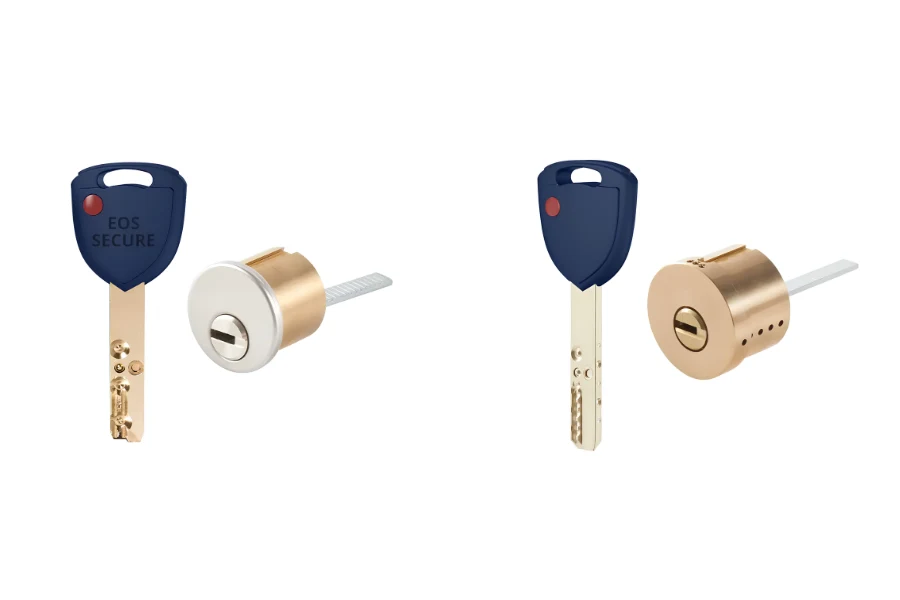
Instead of soft brass components, the cylinder includes hardened elements that interfere with drilling:
- Hardened steel pins resist cutting and slow penetration
- Reinforced inserts create multiple layers of resistance
- Some designs cause drill bits to slip or break under pressure
Each layer increases the time, noise, and effort required to break the lock. This delay increases the likelihood of detection, which is critical for businesses relying on physical security outside operating hours.
Why businesses can’t rely on standard lock cylinders anymore
For a business, forced entry is not just about access. It directly affects assets, operations, and accountability.

Without drill resistance:
- Inventory can be accessed quickly after closing
- Offices can be entered without triggering early response
- Physical keys become the only barrier, with no backup control
With anti-drill protection:
- Entry attempts take significantly longer
- Noise and resistance increase visibility and risk for attackers
- Attackers are more likely to abandon the target
This supports a more reliable security framework where physical protection works alongside access permissions and credential control.
Standard vs anti-drill cylinders — what really changes
The difference becomes clear under real conditions, not specifications.
- Standard cylinders rely on softer materials that fail quickly
- Anti-drill cylinders introduce hardened barriers that resist penetration
- Attack time increases from seconds to extended effort
- Tool wear becomes a limiting factor for the attacker
In practice, this means a retail shop, warehouse, or office becomes a less attractive target. Security improves not by making entry impossible, but by making it inefficient and risky.
Why anti-drill protection alone isn’t enough for real security
Anti-drill protection is only one layer of a complete security system.
A well-designed cylinder also includes:
- Anti-pick features that prevent manipulation of pins
- Anti-bump mechanisms that resist impact-based attacks
- Anti-snap reinforcement to prevent forced breakage
- Controlled key systems to prevent unauthorized duplication
For businesses managing multiple users, combining these features with access control systems allows better management of credentials, permissions, and entry points.
When it makes sense to upgrade to anti-drill cylinders
Not every door requires the same level of protection. The need depends on how the space is used.
Anti-drill cylinders are especially valuable in:
- Retail stores where inventory remains on-site overnight
- Offices where multiple employees require controlled access
- Warehouses with limited supervision after hours
- Rental or shared spaces with frequent key changes
In these scenarios, relying on standard cylinders creates avoidable exposure. Upgrading improves both physical security and the reliability of access control policies.
How to choose a lock cylinder that can resist drilling
Selecting the right cylinder requires more than checking product labels.
Look for:
- Certified standards such as EN 1303 or UL 437
- Clear mention of hardened steel or drill-resistant components
- Compatibility with your existing lock system
- Support for controlled key systems and scalable access setups
A strong cylinder should support your broader security strategy, especially if your business relies on structured access, user permissions, or future integration with electronic systems.
How to install and maintain your cylinder the right way
Even a high-security cylinder can underperform if installed incorrectly.
Follow these practical steps:
- Ensure the cylinder sits flush with the door surface
- Use reinforced escutcheons to protect exposed areas
- Avoid over-tightening during installation
- Use dry lubricants to maintain smooth operation
- Inspect regularly for wear or misalignment
Proper installation ensures that anti-drill features remain effective and consistent over time. This helps maintain stable security without unexpected failures.
What’s next for drill-resistant lock technology
Lock cylinder technology continues to evolve alongside modern access control systems.
Emerging developments include:
- Advanced materials that improve durability and resistance
- Integration with electronic and cloud based access systems
- Hybrid solutions combining mechanical strength with digital credentials
As businesses adopt remote management and scalable access control, the mechanical layer remains essential. A reinforced cylinder ensures that digital security is backed by reliable physical protection.
Final thoughts on choosing a more secure lock cylinder
Anti-drill pins are a small component with a significant impact. They transform how a lock responds under attack by slowing down intrusion and increasing resistance.
For businesses, this means more than stronger hardware. It means better control over access, reduced risk, and improved operational stability.
When evaluating lock solutions, focus on certified performance, layered protection, and real-world reliability. A well-chosen cylinder supports both physical security and access control efficiency.
Explore EOS SECURE solutions to strengthen your business security.
For businesses evaluating cylinder upgrades, working with a reliable manufacturer is just as important as selecting the right features. EOS SECURE delivers precision-engineered mechanical and electronic lock cylinders backed by more than a decade of manufacturing expertise. Established in 2011, our factory operates under ISO9001 and ISO14001 certifications, ensuring every product meets rigorous international standards including EN1303 and SKG. With over 50 advanced Swiss-type CNC automatic lathes and integrated machining centers, we manufacture high-quality lock cylinders trusted by clients across industries worldwide. Whether you need small-batch customization or large-scale production, EOS SECURE provides reliable performance, consistent quality, and dependable technical support. Secure your business with solutions built for long-term stability — contact us today.