Security used to mean resistance. A lock’s job was simple — prevent entry.
Today, prevention alone is not enough. Businesses and property owners need visibility. They need to know when a door was tested, when a lock was forced, and when credentials were misused.
That is where tamper detection becomes essential. It transforms a lock from a passive barrier into an active security component.
This guide explains what tamper detection is, how it works in both mechanical and smart lock systems, and why it matters for commercial environments worldwide.
What Tamper Detection Really Means for Modern Security
Tamper detection is the ability of a lock or access control system to recognize unauthorized interference and respond appropriately.
It differs from basic strength. A strong lock resists attack. A lock with tamper detection identifies attack attempts.
In modern security systems, tamper detection typically includes:
- Sensing forced rotation or drilling
- Detecting panel removal or internal access
- Identifying abnormal credential use
- Logging suspicious events for audit
Tamper detection provides awareness. Awareness reduces risk, strengthens accountability, and gives business owners documented proof of attempted intrusion.
Tamper Detection vs Tamper Resistance — Understanding the Difference
These terms are often confused. They serve different purposes.
Tamper Resistance
Structural design that makes forced entry difficult.
Examples include:
- Hardened steel pins
- Anti-drill plates
- Anti-snap cylinders
- Reinforced lock bodies
Certifications such as EN1303, SKG, and PAS 24 measure resistance levels. These standards also support insurance and compliance expectations in many markets.
Tamper Detection
The ability to sense interference in real time.
Examples include:
- Vibration sensors
- Forced rotation detection
- Panel removal switches
- Abnormal access attempts
Tamper Response
The automatic action taken after detection.
Examples include:
- Audible alarm
- App notification
- Automatic relocking
- Triggering integrated security systems
Tamper Evidence
The ability to document or physically reveal tampering after the fact.
Examples include:
- Internal scratch patterns
- Encrypted access logs
- Time-stamped event records
A complete security system integrates all four layers. Resistance without detection leaves businesses unaware of risk.
How Locks Are Commonly Attacked — And Why Detection Matters
Understanding tamper detection begins with understanding how locks are attacked.
1. Brute Force Attacks
Methods include:
- Lock snapping
- Drilling the cylinder
- Prying with crowbars
- Hammer strikes
Visible signs may include:
- Warped door frames
- Scratches around the keyway
- Deformed lock bodies
Without detection, these attempts may go unnoticed until damage occurs.
2. Technical Manipulation
Common techniques include:
- Lock picking
- Bump keys
- Master key misuse
- Unauthorized duplicate keys
Signs often include:
- Micro-scratches inside the keyway
- Deformed pins
- Abnormal wear patterns
High-precision lock cylinders reveal these marks clearly under inspection.
3. Electronic Attacks
In smart lock systems, threats expand.
These include:
- Replay attacks
- Relay attacks using Bluetooth or NFC
- Firmware downgrade attempts
- Credential cloning
Effective tamper detection systems identify abnormal signals, unauthorized firmware changes, or irregular access behavior.
For small businesses, unnoticed tampering creates operational blind spots. A forced attempt that goes undetected can lead to liability disputes, insurance challenges, or internal security concerns. Detection turns uncertainty into documented events.
How High-Security Lock Cylinders Reveal Tampering Attempts
Mechanical locks do not rely on electronics. Yet they can still provide tamper evidence.
High-security cylinders manufactured with tight tolerances create predictable wear patterns during normal use. When illegal tools enter the keyway, the contact surfaces leave irregular scratches.
Professional inspection may reveal:
- Non-uniform abrasion patterns
- Lateral deformation of pins
- Tool marks inconsistent with legitimate keys
Certifications such as EN1303 and SKG assess resistance to drilling, pulling, and snapping. Higher SKG star ratings indicate stronger protection.
Precision manufacturing improves both resistance and forensic clarity.
For property managers and facility operators, this clarity supports dispute resolution. When damage patterns are clearly identifiable, responsibility is easier to determine.
How Smart Locks Detect, Record, and Respond to Tampering
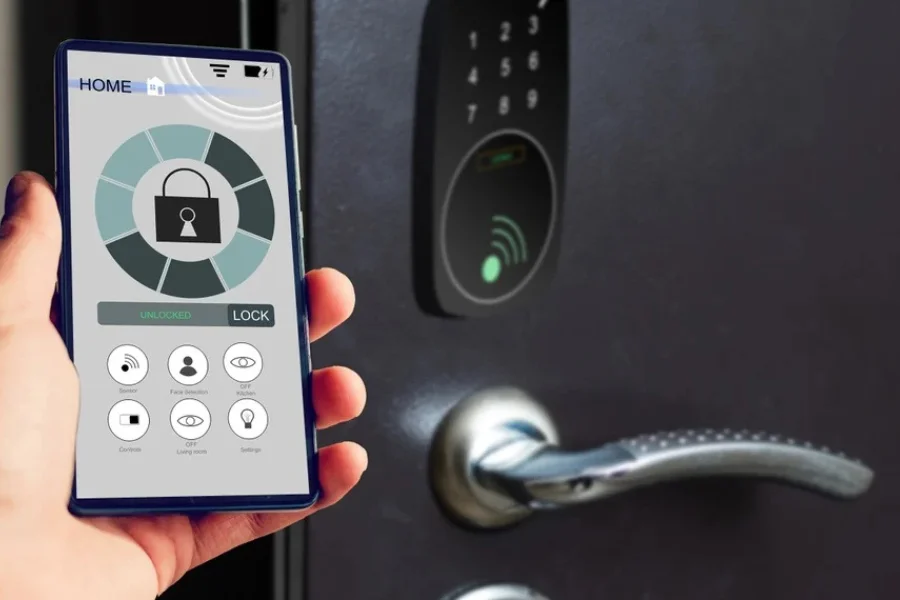
Smart locks add active monitoring capabilities.
Modern smart lock tamper detection systems may include:
Physical Sensors
- Accelerometers that detect drilling vibrations
- Anti-tamper switches that trigger if the panel is removed
- Magnetic sensors that verify door status
Digital Security Monitoring
- AES-128 or AES-256 encrypted communication
- TLS-secured cloud connectivity
- Digitally signed firmware updates
- Prevention of firmware downgrade attacks
Each communication event is validated. Abnormal patterns are flagged.
Credential Monitoring
- Failed PIN attempt thresholds
- Biometric authentication validation
- Time-limited access permissions
- Credential blacklisting
If a revoked credential is used, the system records and denies access.
Smart tamper detection shifts security from passive defense to monitored control.
For example, a retail store owner can receive an alert if someone attempts forced rotation after closing hours. A warehouse manager can review audit logs to verify whether entry attempts occurred outside approved schedules. Visibility improves operational control.
Why Tamper Detection Matters for Small Businesses
For businesses, the risk is not only break-ins. It includes liability, internal misuse, and operational uncertainty.
Without tamper detection, businesses face:
- No record of attempted entry
- Insurance disputes over forced access
- Undetected key misuse
- Uncontrolled credential sharing
With tamper detection:
- Entry attempts are documented
- Suspicious activity triggers alerts
- Audit logs provide accountability
- Access rights can be managed remotely
A retail store can receive immediate notification if a door is forced after closing hours. A property manager can verify whether an access code was used outside permitted times.
Detection supports scalable access control and reduces long-term operational risk.

How to Evaluate a Lock’s Tamper Detection Before You Buy
When assessing a lock system, decision-makers should consider:
Physical Protection Standards
- Does the cylinder meet EN1303 or SKG certification
- Is anti-drill and anti-snap protection included
Real-Time Alerting
- Does the lock include tamper alarm sensors
- Can alerts integrate with existing security systems
Encryption Strength
- Is communication encrypted with AES-128 or higher
- Are firmware updates digitally signed
Audit Logging
- Are logs encrypted and time-stamped
- Can reports be exported for compliance purposes
Manufacturer Support
- Does the manufacturer provide long-term firmware updates
- Is technical documentation transparent
Security is a lifecycle investment, not a one-time purchase. Businesses should evaluate not only resistance ratings but also how detection data integrates with their broader access control strategy.
The Future of Lock Monitoring — From Detection to Predictive Security
The next generation of tamper detection will combine AI-driven behavior analysis with integrated building systems.
Future systems may:
- Learn normal entry patterns
- Detect anomalies automatically
- Integrate with lighting, CCTV, and alarm networks
- Provide centralized monitoring dashboards
In large facilities, tamper alerts may appear directly within building management systems. Detection is evolving toward predictive awareness that improves response speed and reduces false alarms.
Conclusion — From Resistance to Visibility
Tamper detection represents a shift in how locks contribute to security. A lock is no longer just a mechanical obstacle. It becomes part of a monitored access control system.
For property owners, landlords, and businesses, detection reduces uncertainty. It strengthens accountability. It supports informed security decisions.
EOS SECURE integrates precision-engineered mechanical lock cylinders with intelligent tamper detection technologies, helping businesses move beyond simple resistance toward monitored security. Since 2011, our ISO9001 and ISO14001 certified manufacturing facilities have produced lock cylinders that meet rigorous international standards including EN1303 and SKG. By combining hardened mechanical protection with encrypted digital monitoring, EOS SECURE solutions provide real-time alerts, documented audit logs, and scalable access control designed for commercial environments. Whether you manage a single storefront or multiple facilities, EOS SECURE delivers reliable hardware, long-term firmware support, and consistent performance built for operational clarity and risk control. Explore EOS SECURE solutions to strengthen your business security.