1. What Are Spring Pins and Why Are They Important?
Spring pins are a type of security-driven pin commonly found in pin-tumbler locks. These pins typically feature a U-shaped groove or an annular indentation in the middle.
Their primary function is to prevent the lock plug from rotating unless the correct key is inserted. This adds an extra layer of security, preventing unauthorized access and improving the lock’s resistance to tampering.
Spring pins are one of the most common entry-level security pins due to their relatively low manufacturing cost, making them widely used across various locking systems.
2. How Do Spring Pins Work? A Simple Breakdown
Structure Characteristics
Spring pins are designed with a larger diameter at both ends and a narrow section in the middle. This profile resembles a spool or an inverted U-shape.
How They Work
When a correct key is inserted, the spring pin aligns cleanly with the shear line, allowing the plug to rotate. During picking attempts, the narrowed center catches at the shear line, creating a false set and counter-rotation. This feedback blocks rotation until every pin is properly aligned.
3. Different Types of Spring Pins: Which One Is Best for You?
Spring pins have evolved into multiple designs to increase resistance against picking.
- Standard Spring Pin – A single central groove, widely used.
- Threaded Spring Pin – Adds friction and control difficulty.
- Mushroom Pin – A tapered profile that disguises feedback.
- Barrel Pin – Dual spool sections for increased false sets.
- Gin Pin – An off-center spool that produces stronger counter-rotation.
- Christmas Tree Pin – Multi-step profiles designed for advanced anti-pick performance.
Each variation increases manipulation difficulty while maintaining mechanical reliability.
4. Materials and Manufacturing: What Makes a Quality Spring Pin
Common Materials
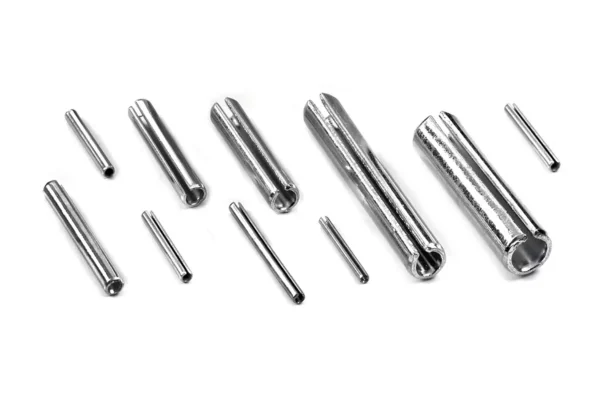
Spring pins are typically made from non-magnetic metals such as brass, titanium, or nickel-silver alloys. These materials balance durability, corrosion resistance, and stable tolerances.
Manufacturing Process
High-quality spring pins are precision-turned and polished to ensure smooth motion and long service life. Lower-grade pins are often stamped, which can introduce burrs, faster wear, and inconsistent feedback.
5. How to Identify and Handle Spring Pins
Identifying Characteristics
A lock that rotates slightly and then stops often indicates a spring pin false set. Counter-rotational tension is another common indicator.
Handling Approach
Controlled tension is critical. Resetting the plug, reducing torque, and lifting pins incrementally allows the spring pin to clear the shear line without dropping previously set pins.
6. Can You Replace Spring Pins? Here’s What You Need to Know
Spring pin replacement depends on cylinder design. Some systems allow pin-level servicing, while others require full cylinder replacement.
Maintenance Tips
Regular cleaning prevents debris buildup and ensures consistent pin movement. Proper maintenance extends both pin lifespan and overall cylinder reliability.
7. Where Are Spring Pins Used in Today’s Security Systems?
Spring pins are widely used across modern mechanical security applications.
- Automotive Locks – Support key validation in ignition systems.
- High-Security Cylinders – Used in commercial and critical infrastructure.
- Smart Lock Integration – Combined with electronics for layered protection.
EOS SECURE Insight
EOS SECURE designs mechanical and smart lock cylinders using multi-level spring pin and threaded pin combinations. These designs improve resistance to picking, bumping, and unauthorized manipulation while remaining scalable for residential, commercial, and access-control systems.