Why the Right Door Lock Choice Matters
Door locks are the first line of defense for any property. Choosing the right lock directly affects safety, daily convenience, and long-term reliability.
Modern locking solutions must do more than secure a door. They should balance protection, ease of use, and compatibility with real-world living and business environments. As lock technology evolves, cylinder design continues to improve, from traditional mechanical systems to electronic and smart solutions that support different access needs.
EOS SECURE has specialized in precision lock cylinders, mechanical locks, and electronic locking systems since 2011. We focus on developing high-accuracy, high-security products that support reliable access control across residential and commercial environments worldwide.
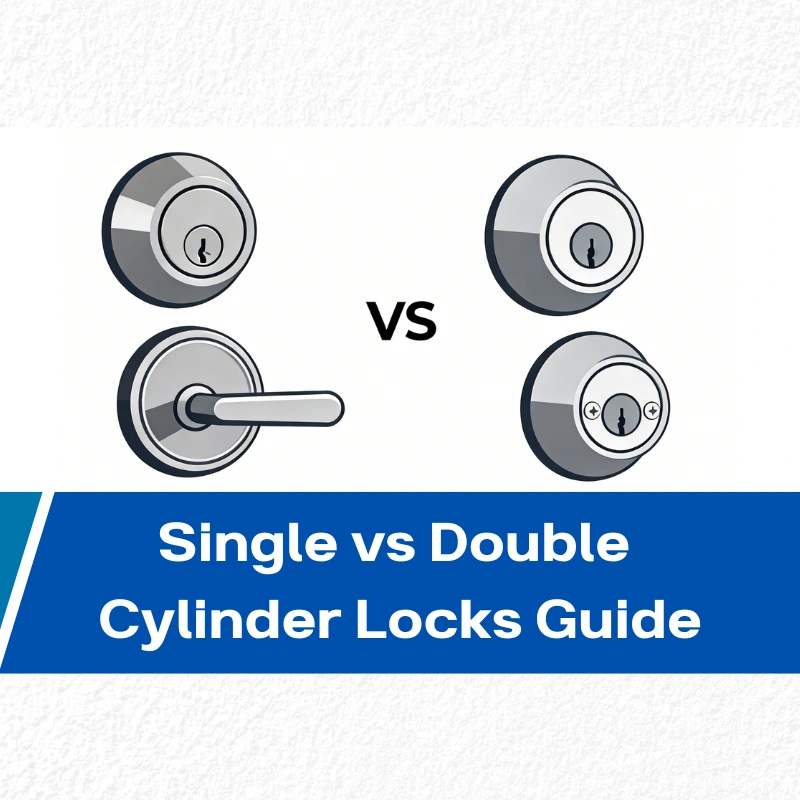
Single vs Double Cylinder Locks – What’s the Difference
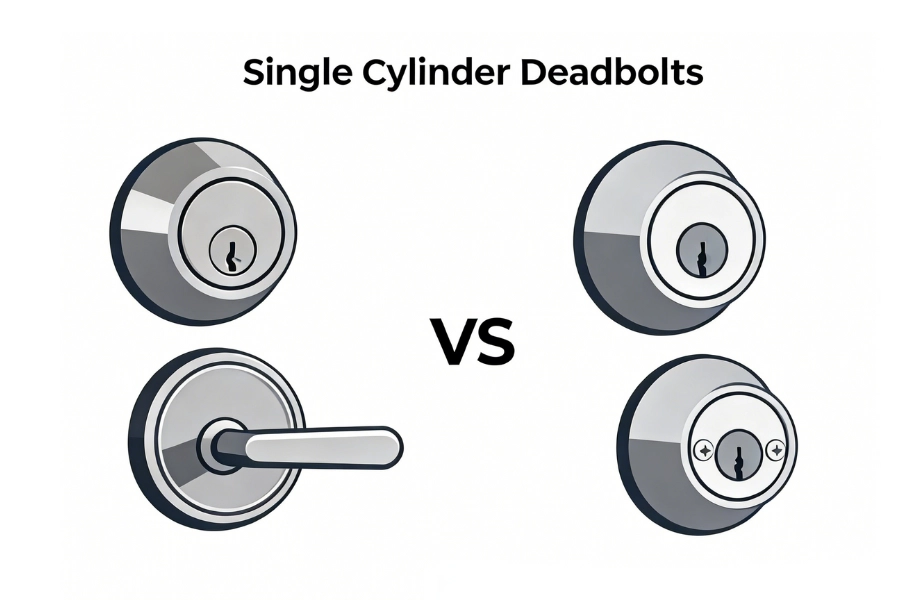
Understanding the difference between single and double cylinder locks starts with how they operate.
Single Cylinder Lock
- Uses a key on one side, typically the exterior
- Uses a thumb-turn or interior knob on the inside
- Allows quick locking and unlocking from inside without a key
Double Cylinder Lock
- Requires a key on both the exterior and interior sides
- Does not include a thumb-turn
- Increases security by limiting interior manipulation
The core difference lies in operation. Single cylinder locks prioritize convenience and emergency access. Double cylinder locks prioritize security by reducing reach-through risks.
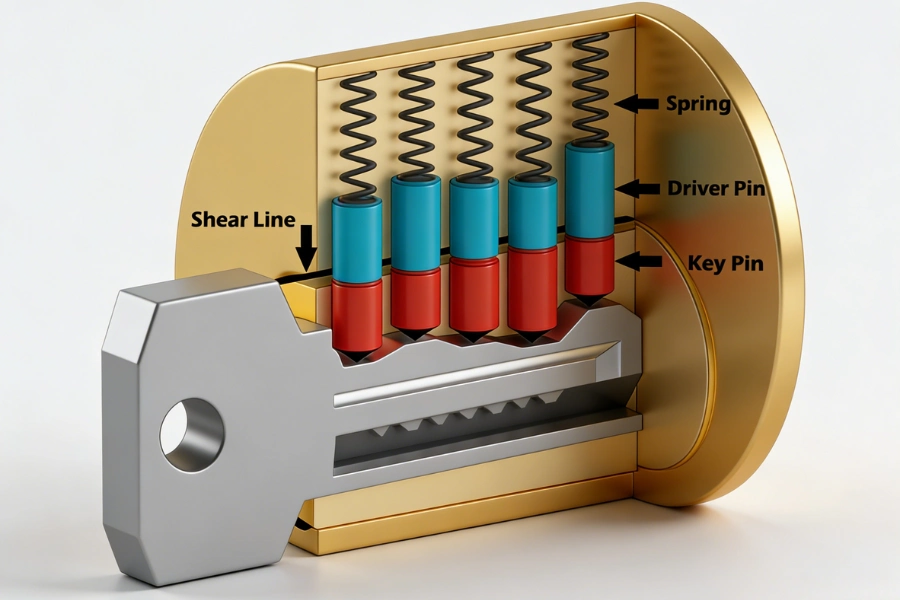
From a technical perspective, the cylinder is the core of the locking system. It contains pins, springs, and internal mechanisms that control bolt movement. EOS SECURE mechanical cylinders, including Euro profile and high-security series, are engineered to meet international standards such as EN1303, ensuring consistent performance and durability.
Single Cylinder Locks – Benefits and Limitations
Advantages
- High convenience – Interior thumb-turn allows fast operation
- Cost-effective – Typically lower purchase and installation costs
- Easy to use – Suitable for children, elderly users, and frequent access
- Broad compatibility – Commonly used on residential doors without glass panels
Disadvantages
- Lower security in specific layouts – Doors near glass panels may allow reach-through attacks
- Key control risks – Lost or copied keys can create unauthorized access
- Accidental operation – Children may unlock doors without supervision
Single cylinder locks work best where door and window placement does not introduce direct access risks.
Double Cylinder Locks – Strengths and Trade-Offs
Advantages
- Stronger protection – Prevents unlocking even if glass is broken
- Increased deterrence – Added complexity discourages casual intrusion
- Controlled access – Helps manage child and pet movement in high-risk areas
Disadvantages
- Emergency concerns – Exit requires a key, which can delay escape
- Reduced convenience – Keys are required for every entry and exit
- Higher cost – Typically more expensive with added maintenance needs
- Code limitations – Some regions restrict double cylinder locks on exits
EOS SECURE double cylinder solutions integrate anti-drill and anti-pick protection and support master key systems. These features improve security control while allowing customized access strategies for different environments.
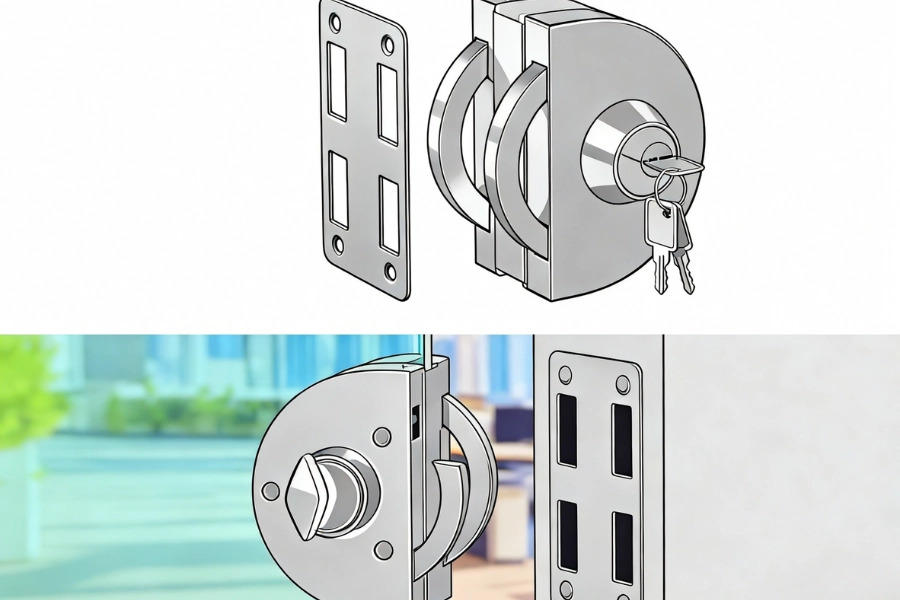
Single vs Double Cylinder – Key Differences That Matter
Operation
- Single cylinder – Key outside, thumb-turn inside
- Double cylinder – Key required on both sides
Security Level
- Single cylinder – Suitable for low-risk environments
- Double cylinder – Better for high-risk layouts or glass-adjacent doors
Convenience vs Security
- Single cylinder – Prioritizes ease of use and fast exit
- Double cylinder – Prioritizes protection over speed
Common Applications
- Single cylinder – Front doors, interior doors, residential entrances
- Double cylinder – Side doors, rear doors, glass-panel doors, short-term rentals
Smart cylinders extend these options by combining mechanical security with electronic access. EOS SECURE electronic locking solutions support app-based credentials, remote control, and flexible access management without removing mechanical reliability.
How to Choose the Right Lock for Your Door
Start by evaluating your priorities.
Security considerations
- High-crime areas or glass-adjacent doors may require double cylinder protection
Convenience considerations
- Homes with children, elderly occupants, or emergency exit concerns benefit from single cylinder designs
Balanced approach
- Use single cylinder locks on main entrances
- Use double cylinder locks on higher-risk secondary doors
Proper installation and maintenance are critical. Cylinders must match door thickness and material, and wear should be inspected regularly.
EOS SECURE offers OEM and ODM customization for residential, commercial, and rental environments. Our solutions are designed to match real access scenarios while ensuring long-term stability and support.
Safety Considerations When Using Double Cylinder Locks
Emergency planning
- Keep interior keys in a visible, reachable location
- Ensure all occupants know where keys are stored
- Practice basic exit procedures
Additional safety measures
- Consider smart cylinders with emergency access options
- Replace cylinders periodically to reduce key exposure risks
- Combine locks with alarms or monitoring systems for layered security
Understanding Lock Cylinders – Types and How They Function
Common cylinder types
- Single cylinder – Key outside, thumb-turn inside
- Double cylinder – Key required on both sides
- Euro cylinder – Standardized format used in multipoint systems
- Smart cylinder – Electronic access with Bluetooth, codes, or biometrics
How cylinders function
When the correct key is inserted, internal pins align at the shear line, allowing the cylinder to rotate and move the bolt. Incorrect keys fail to align pins, preventing rotation and access.
Why cylinder quality matters
High-quality cylinders improve resistance to drilling, picking, and bumping. The cylinder, not the lock body, determines the true security level.
EOS SECURE develops both mechanical and electronic cylinders with patented technologies and international certifications, allowing scalable upgrades as security needs evolve.
Final Thoughts on Choosing the Right Cylinder Lock
Choosing between single and double cylinder locks requires balancing security, convenience, and cost. Single cylinder locks suit most standard entrances, while double cylinder locks address specific risk conditions.
Modern cylinder technology continues to expand available options, combining mechanical reliability with electronic flexibility.
When choosing between single and double cylinder locks, cylinder quality plays a critical role in balancing security, emergency access, and long-term reliability. EOS SECURE designs precision-engineered mechanical and electronic lock cylinders that support different door layouts and risk levels across residential, rental, and commercial environments. Established in 2011 and operating under ISO9001 and ISO14001 certifications, our products meet international standards including EN1303 and SKG. EOS SECURE delivers stable, scalable locking solutions backed by consistent manufacturing quality and dependable technical support. Explore EOS SECURE solutions to support long-term security planning.