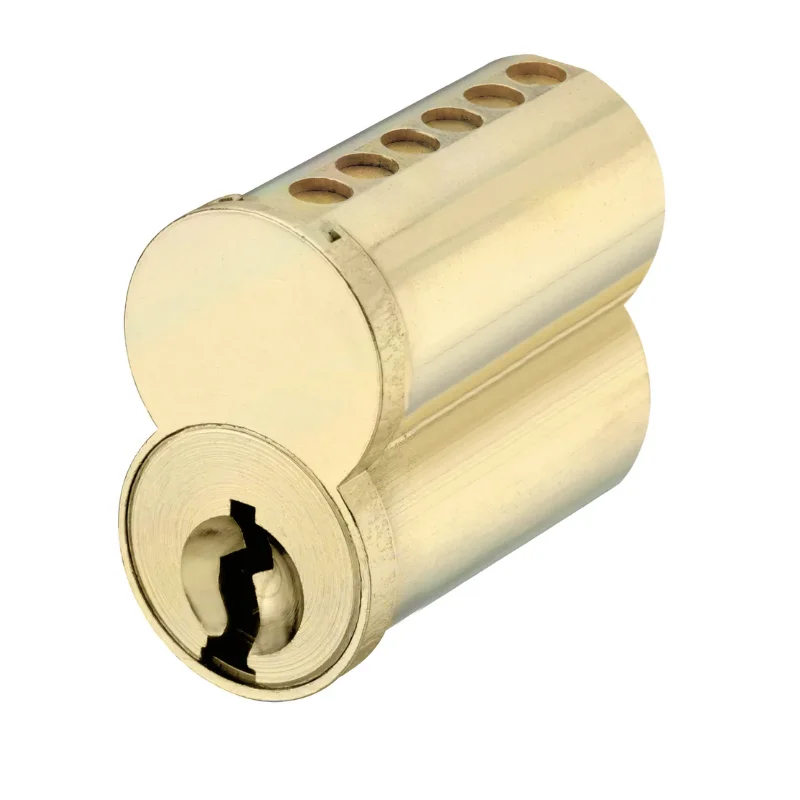
SFIC cores in complex commercial buildings
In large facilities, key control often grows more complicated than the hardware on the door.
Staff turnover, vendor access, and reorganized departments all create constant pressure on the key system.
Small Format Interchangeable Cores, or SFIC cores, give security teams a compact way to stay in control.
They focus on fast core changes at the door and stable cylinder footprints across many types of hardware.
Key management pressure in large organizations
A hospital, campus, or government building rarely stays static.
New rooms appear, tenants change, and contractors need access for limited periods.
Without a flexible core system, managers face problems such as
- Lost keys that force wide rekey projects
- Master key charts that no one fully trusts
- Night and weekend work just to keep doors secure
SFIC design grew around these realities, not just around one lock or one door.
Construction and operation of SFIC cores
An SFIC core is a small removable cylinder that holds the pins and keyway.
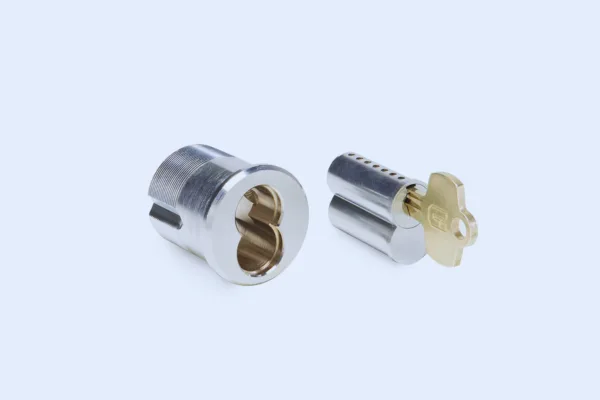
It sits inside a compatible housing, which then mounts in the lock body on the door.
The system works with two key types
- Operating keys for daily use
- Control keys that insert or remove the core
When a control key turns, the core disconnects from the housing.
Staff lift it out, insert a new core with a new key pattern, turn back the control key, and the door returns to service in minutes.
The lock case, strike, and door structure stay in place, which reduces labor and disruption.
Where SFIC cores deliver the most value
SFIC brings the largest gains when door counts and change frequency both run high.
Education and campus environments
Universities manage student rooms, labs, offices, and shared spaces.
Each term changes who should hold which keys.
With SFIC cores
- Housing and trim remain on the door
- Core swaps support end of term rekeys
- Key control shops handle changes in a structured way
Healthcare and clinical spaces
Hospitals depend on clear access rules for medication rooms, records storage, and staff only corridors.
Delays in rekey work can affect both safety and compliance.
SFIC helps teams
- Replace cores during shift windows, not long shutdowns
- Protect control keys inside security workflows
- Keep sensitive areas on tight master key trees
Corporate, industrial, and government sites
Large corporate campuses and public buildings often standardize on SFIC over many projects.
They ship prepared cores to remote sites and rely on local staff for simple changes.
One core format supports multiple lock bodies and door types, which simplifies stocking and planning.
Designing a key plan around SFIC
SFIC is a platform, the real security level comes from the way you design the key system on top of it.
Important design questions include
- How many master levels you truly need
- Which groups receive sub master keys
- How you document control key holders and core changes
A clear plan might use
- Change keys for individual rooms
- Area masters for departments or floors
- A small number of grand masters held by security leadership
Good recordkeeping around SFIC changes keeps the system clean as the building evolves.
SFIC and LFIC format comparison
Interchangeable cores come in more than one size.
SFIC and LFIC share the removable idea but differ in scale and compatibility.
SFIC cores
- Use a compact figure eight shape
- Fit many commercial housings that follow the same format
- Allow multi brand lock bodies to share one core family
LFIC cores
- Tend to follow brand specific shapes and dimensions
- Usually do not interchange between manufacturers
- Often appear in projects that locked into one hardware family early
When you pick a format, staying consistent across your portfolio avoids confusion and mixed inventories.
FAQ
What is an SFIC core
An SFIC core is a small removable lock core designed to fit a standard small format interchangeable housing. It contains the pins and keyway and comes out with a control key, so you can change keying at the door without replacing the entire lock body or cutting a new prep.
What is a small format interchangeable core
A small format interchangeable core uses a compact, standardized profile that many commercial locks can accept. The core drops into a housing and locks in place when you turn the control key. This format supports fast rekeying, strong key control, and consistent cylinder size across different hardware.
What is an interchangeable core
An interchangeable core is any lock core that you can remove and replace with a control key rather than tools. Both small format and large format versions exist. They all aim to simplify rekeying by moving work from changing lock bodies to swapping cores that carry new keying.
Are all SFIC cores interchangeable
SFIC cores share a common mechanical outline, but they are not all interchangeable in a security sense. Different systems use different keyways and pinning. To swap cores safely, you must match the core family, keyway, and housing, and you still need correctly cut keys that belong to that system.
Can burglars break anti snap locks
Anti snap designs make snapping attacks on cylinders harder, yet no hardware removes all risk. An intruder may target the door, frame, or nearby glass instead. The best defense combines secure cylinders, solid doors and frames, good lighting, and clear sight lines around entrances.
Is it cheaper to rekey a lock or replace it
Rekeying usually costs less than full replacement, especially in SFIC systems where you only change cores. Replacement makes sense when hardware is damaged, obsolete, or no longer meets security or code needs. Many sites rekey first, then plan gradual upgrades through routine maintenance budgets.
Can a locksmith open a file cabinet lock
Most locksmiths can open and service file cabinet locks with specialized tools. They often restore access with minimal damage. After entry, many organizations choose to rekey or replace the lock so that documents and sensitive items stay protected going forward.
How to tell the difference between SFIC and LFIC
SFIC cores are small, with a figure eight profile and a consistent size used by many brands. LFIC cores are larger and shaped according to each manufacturer. If you compare them side by side, SFIC looks more compact and standardized, while LFIC often varies and fits only specific hardware lines.
About EOS SECURE
EOS SECURE delivers precision engineered mechanical and electronic lock cylinders backed by more than a decade of manufacturing expertise. Established in 2011, our factory operates under ISO9001 and ISO14001 certifications, and our products meet rigorous international standards including EN1303 and SKG. With more than 50 advanced Swiss type CNC automatic lathes and integrated machining centers, we manufacture high quality interchangeable cores and cylinders trusted by commercial clients worldwide. Whether you need SFIC compatible cores for large institutions, small batch customization, or large scale production, EOS SECURE provides reliable performance, consistent quality, and dependable technical support. Secure your business with solutions built for long term stability, contact us today.