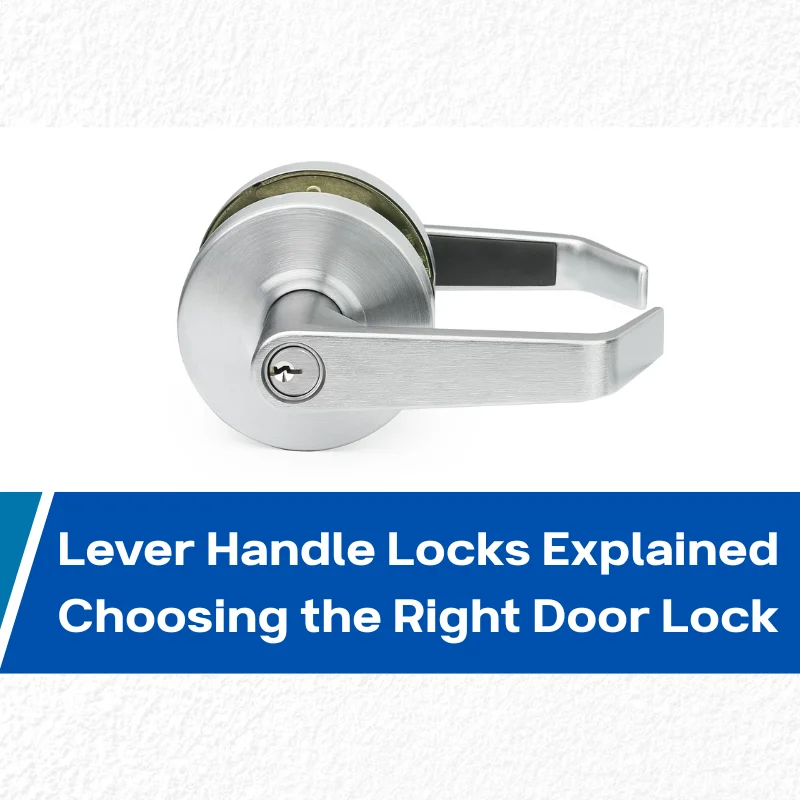
What a Lever Handle Lock Is and Why It’s Widely Used
A lever handle lock is a door locking mechanism operated by pushing down or lifting a lever handle. This motion retracts the latch inside the lock body, allowing the door to open or close smoothly.
Because lever handles require less grip strength and wrist rotation, they follow ergonomic design principles and are widely used in residential, commercial, and public buildings. They are especially suitable for accessibility-focused environments.
Compared with traditional knob locks, lever handle locks are easier to grasp and operate. This makes them a practical option for users of all ages, including people with limited hand strength or mobility challenges. For small businesses with frequent staff movement, lever handle locks reduce daily friction at entry points and support consistent, reliable access across shifts.
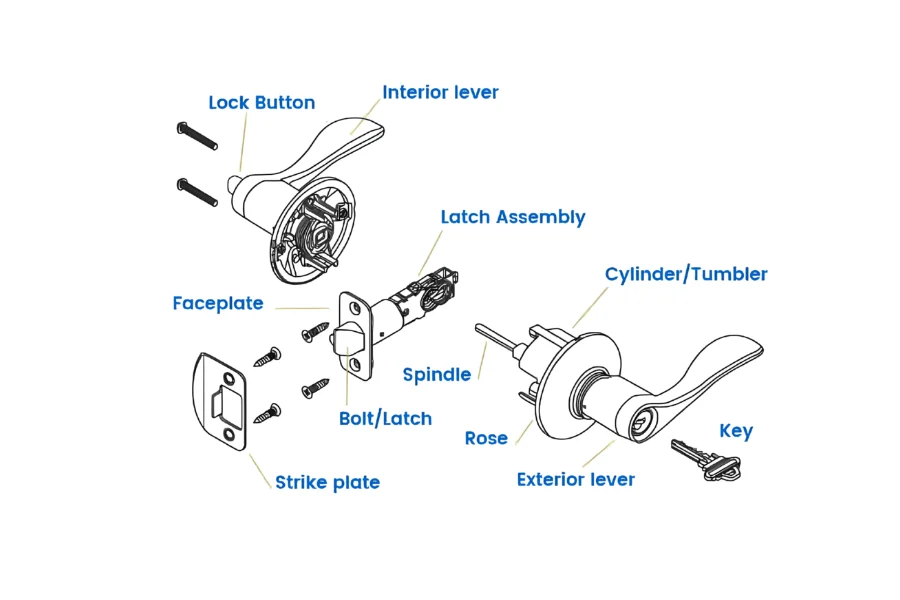
Common Types of Lever Handle Locks and Where They’re Used
Lever handle locks are available in several configurations, each designed for specific functional and security needs.
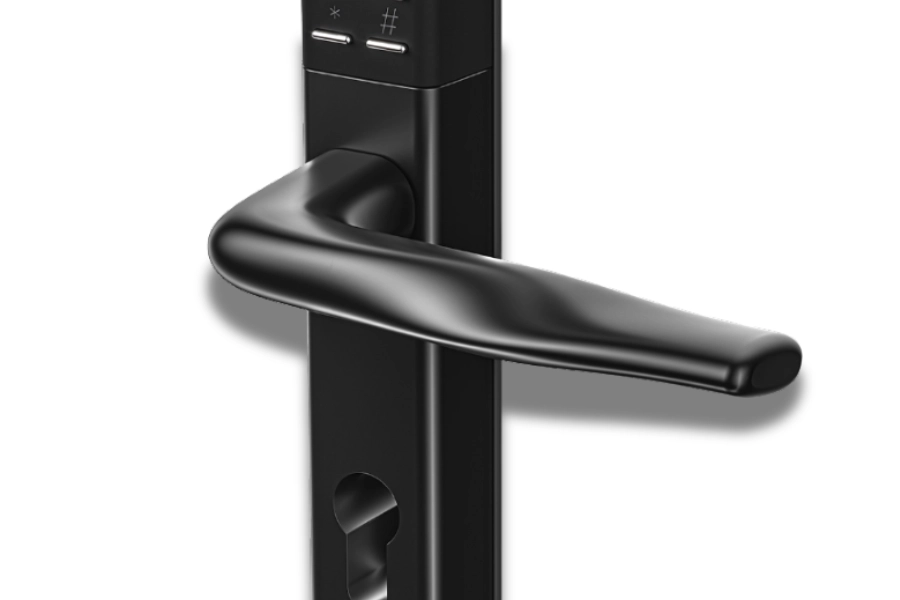
Privacy lever locks
These locks include an internal locking mechanism, often with a privacy button or emergency release. They are commonly used in bedrooms and bathrooms where temporary privacy is required.
Passage lever locks
Passage levers do not include a locking function. They control the latch only and are suitable for hallways, closets, and storage rooms where access restriction is not needed.
Dummy lever locks
Dummy levers are non-functional handles used purely for appearance. They are typically installed on double doors or decorative panels that do not require latching.
Keyed lever locks
Keyed lever locks combine lever operation with key-based locking. They provide higher security and are commonly used on exterior doors, offices, and restricted areas.
Mortise lever locks
Mortise lever locks use an embedded lock body and cylinder structure, offering improved resistance to forced entry. They are often selected for commercial entrances and high-traffic doors.
Cylindrical lever locks
Cylindrical lever locks use a unified cylinder mechanism that moves as a single unit. They provide smooth operation and are widely used in public buildings and accessibility-focused doors.
EOS SECURE note
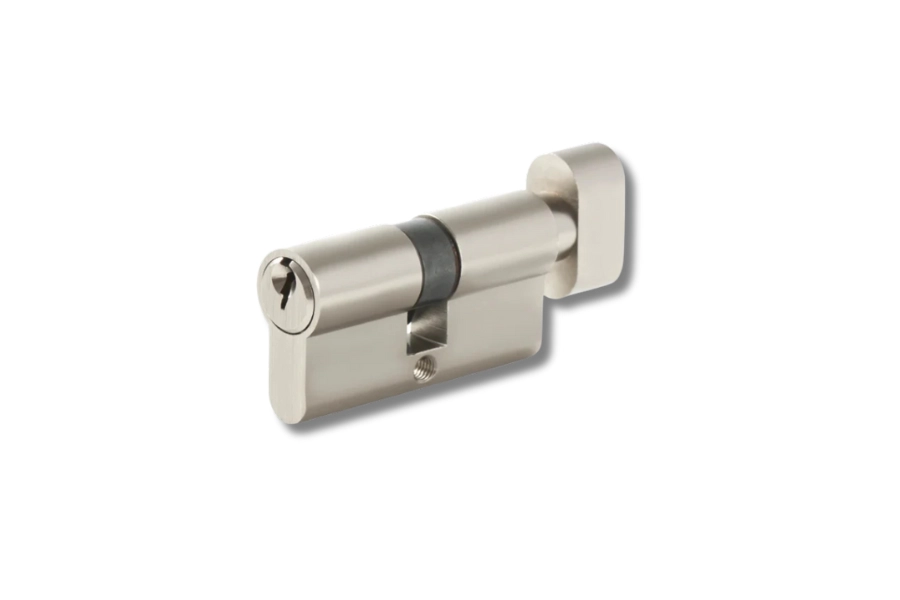
EOS SECURE supplies a wide range of high-security lock cylinders, including European profile cylinders and master key system cylinders. These solutions are designed to integrate with lever handle hardware, supporting different security levels for residential and commercial applications.
Lever Handle Locks vs. Knob Locks – Which One Fits Your Door and Use Case
When selecting between lever handle locks and knob locks, several practical factors should be considered.
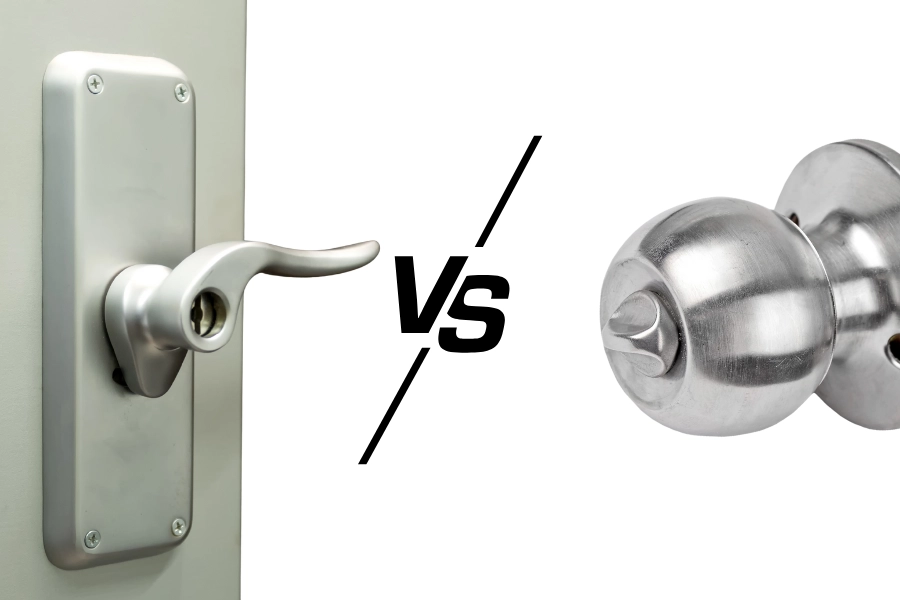
Operation
Lever handle locks require minimal force and support accessibility standards. Knob locks require firm grip and rotation, which may be challenging for some users.
Security
Lever handle locks typically use more complex internal structures and offer better resistance to forced entry. Knob locks are generally more vulnerable to picking and impact attacks.
Compliance
Lever handle locks are commonly used in ADA-compliant environments. Knob locks are more typical in standard residential applications.
Installation
Lever handle locks require attention to orientation and handle direction during installation. Knob locks are simpler and more universally interchangeable.
Design
Lever handle locks are available in modern and commercial-friendly styles. Knob locks follow more traditional design conventions.
Cost
Lever handle locks usually fall into a mid-to-high price range, especially when paired with high-security cylinders. Knob locks are typically more cost-effective.
Installing and Maintaining a Lever Handle Lock – What to Expect
Installation Steps
- Remove the existing lock and clean the door surface.
- Mark drilling points using the new lock template.
- Drill holes and install the lock body and cylinder.
- Attach the lever handles and adjust orientation.
- Test latch movement and locking performance.
Maintenance Recommendations
- Clean the handle surface regularly and avoid corrosive cleaners.
- Lubricate the cylinder and moving components every six months.
- Check mounting screws and handle stability.
- Inspect latch alignment if resistance or jamming occurs.
EOS SECURE service support
EOS SECURE provides customized lock solutions through OEM and ODM services. Based on door type, material, and security requirements, we help configure compatible lever handle lock systems and offer installation guidance and after-sales support.
How Secure Are Lever Handle Locks in Real-World Use
Advantages
- Stronger resistance to forced entry compared with standard knob locks.
- Availability of models certified to standards such as EN1303 and SKG.
- Compatibility with smart lock cylinders allows businesses to upgrade from mechanical keys to managed credentials without replacing existing door hardware.
Limitations
- Not suitable for extremely thick or specialized door materials.
- Installation requires drilling, which may affect door structure.
- Entry-level models may still be vulnerable to professional tools.
EOS SECURE security solutions
EOS SECURE high-security cylinders and smart lock systems use patented mechanical structures and encrypted designs. Features include resistance to drilling, picking, and impact attacks, making them suitable for commercial buildings and rental properties with higher security demands.
What’s Next for Lever Handle Locks and How to Plan Ahead
Lever handle locks continue to evolve alongside access control systems.
- Smart integration is increasing, linking mechanical locks with digital credentials.
- Accessibility-focused design is becoming standard as populations age.
- High-security cylinders and anti-destruction features are gaining priority.
EOS SECURE outlook
EOS SECURE continues to develop lock cylinders and mechanical lock systems that meet international standards. Our focus is delivering secure, practical, and scalable locking solutions for residential, commercial, and rental environments.
EOS SECURE – Lock Solutions Built for Long-Term Security
EOS SECURE delivers precision-engineered mechanical and electronic lock cylinders backed by more than a decade of manufacturing expertise. Established in 2011, our ISO9001 and ISO14001 certified factory produces lock cylinders compliant with international standards such as EN1303 and SKG. With advanced CNC manufacturing and strict quality control, EOS SECURE supports both small-batch customization and large-scale production. Explore EOS SECURE solutions to strengthen your business security with long-term stability.