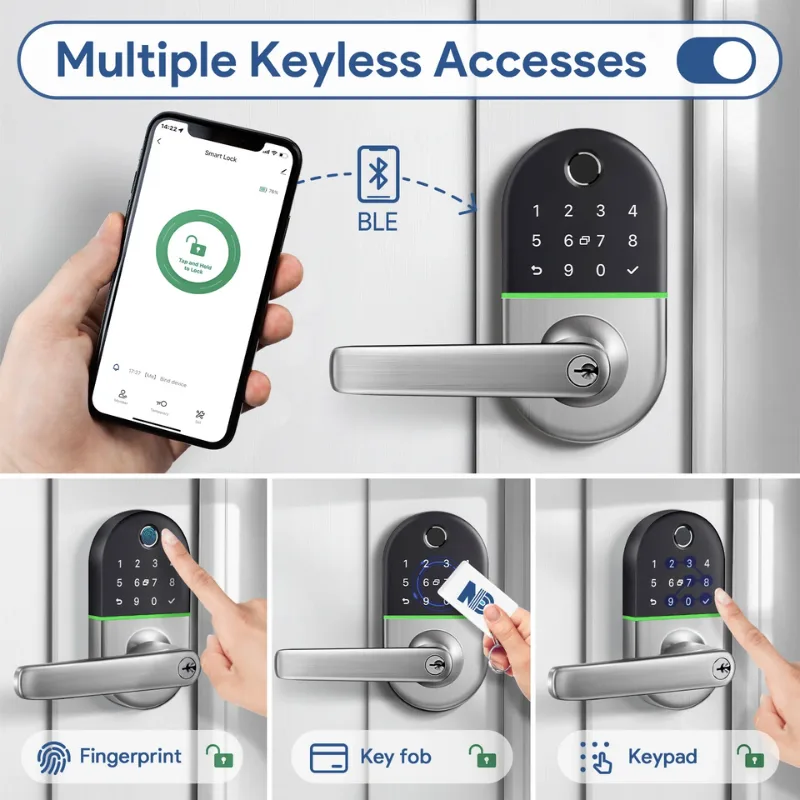
Life without metal keys at every door
In many businesses, the heaviest thing in the reception desk is still the key box.
Staff carry multiple keys, vendors wait for someone to unlock a door, and lost keys trigger urgent rekey work.
Keyless entry offers a different pattern.
People use codes, cards, or phones to unlock doors, while software handles who has access and when.
Keyless entry as a family of methods
Keyless entry does not mean one specific technology.
It describes any access method where a person opens a door without a traditional cut key in a mechanical cylinder.
For commercial doors, three approaches appear most often
- PIN and keypad systems
- Card and fob systems
- Mobile and app based credentials
Each method changes how users move, how managers work, and how the system grows over time.
Code based entry with PIN keypads
Many small sites start with keypads because they feel simple and familiar.
Users enter a PIN, the lock checks the code, and the door unlocks if the code matches stored rules.
Benefits for businesses
- No physical keys to issue or collect
- Easy self check in for staff, guests, or delivery partners
- Low entry cost for basic doors
Risks and limits
- People share codes when rules are unclear
- Old codes may stay active if no one removes them
- Short codes create security gaps if many people know them
Keypad systems work best when someone owns code hygiene, such as changing codes on a schedule and avoiding shared all staff codes.
Card and fob keyless entry
Cards and fobs move access from numbers to portable credentials.
Users tap the card or fob at a reader, the system checks permissions, and the lock releases when rules allow.
Benefits
- Credentials tie to people, not just doors
- Lost cards can be revoked without changing hardware
- Access rules follow staff as they move between doors or sites
Considerations
- Cards still need issuing, tracking, and replacement
- Simple low frequency cards offer less security than modern smart cards
- Readers, controllers, and cabling add project cost
Card based systems suit offices, schools, and light industrial sites that want clear role based access without jumping directly to mobile only setups.
Mobile credentials and phone based keyless entry
Phones now handle payments, tickets, and identity checks, so they fit naturally into access control.
Mobile keyless entry uses an app or wallet credential to open doors through NFC, Bluetooth, or cloud connections.
Benefits
- People rarely leave phones behind
- Credentials can arrive digitally without a face to face handoff
- Access updates reach users quickly when roles change
Points to manage
- Devices and apps need updates and basic security settings
- Not all users want to install new apps
- Backup options such as cards or codes remain important
For multi site businesses, mobile credentials reduce card logistics and simplify temporary access, especially for visitors and contractors.
Comparing methods in real business scenarios
Different methods shine in different environments.
A quick comparison framework helps owners choose combinations that fit their doors.
In a small retail shop, a keypad at the staff entrance may be enough, as long as codes change when staff leave.
In a multi tenant office, cards or mobile credentials offer better control across many suites and shared areas.
In short term rental and hospitality, codes and mobile access often work together, codes support simple check in, and mobile apps provide richer experiences when guests stay longer.
Many sites blend technologies so each entrance gets the method that fits its risk and traffic.
Mechanical foundations behind keyless entry
Removing keys does not remove the need for strong hardware.
Keyless systems still rely on cylinders, latches, bolts, and hinges that carry real force.
A good design keeps focus on
- Lock bodies that match door type and duty level
- Reinforced strikes with long screws
- Doors that close and latch reliably under daily use
EOS SECURE cylinders and locking components form this mechanical foundation.
They support both traditional and electronic cylinders, so keyless technologies can grow on top of proven hardware.
Practical planning tips for a move to keyless entry
A stepwise project keeps risk and cost under control.
Start with a door and user inventory.
Group openings by risk and traffic, such as perimeter doors, internal staff doors, and low risk storerooms.
Next, match methods to groups.
Use mobile or card based access on high value or shared entrances, and consider well managed PIN entry for lower risk internal doors.
Then, align everything with a clear policy.
Define who can create and revoke credentials, how long codes stay valid, and how you handle lost devices or cards.
Finally, plan for fallbacks.
Keep controlled mechanical options for emergencies, and confirm that smart locks still behave safely when networks or power have issues.
FAQ
What does keyless entry mean
Keyless entry means unlocking a door without using a traditional cut key. The person uses a code, card, fob, or mobile credential instead. The system checks that credential against stored rules and releases the lock when access is allowed.
What is the difference between keyless entry and remote entry
Keyless entry lets you unlock a door at close range with a code, card, or phone. Remote entry usually describes opening from a distance, such as a car fob that unlocks doors from several meters away. Both remove the need for a mechanical key, yet they use different ranges and control methods.
How do I know if my car is keyless entry
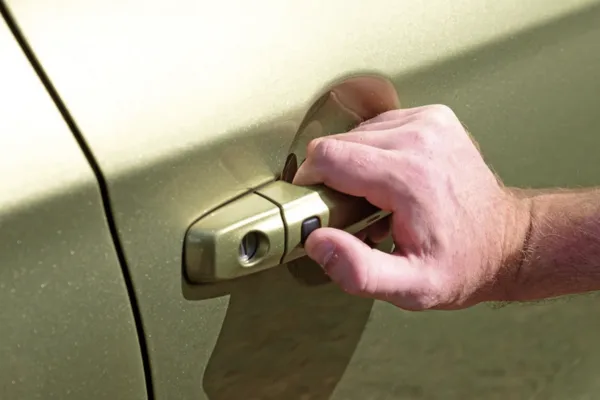
A car with keyless entry often unlocks when you press a button on a fob or when you touch the handle with the fob nearby. If you can open the doors without inserting a metal key into the lock, your vehicle likely has some form of keyless entry system.
What are the disadvantages of keyless entry cars
Keyless cars can face relay or signal attacks if owners and manufacturers do not follow good security practice. Fobs need batteries, and drivers must manage what happens when the fob is lost or damaged. As with any electronic system, software updates and safe storage habits remain important.
What happens if you drive a keyless car without the key
In many keyless cars, the engine keeps running if you move away without the fob, but you cannot restart it once you turn it off. The car may show a warning that the key is not present. Best practice is to stop safely and recover the fob so you keep control of who can start the vehicle.
What is the easiest car for an elderly person to get in and out of
Ease of entry depends on seat height, door opening size, and individual needs. Many people prefer vehicles with higher seating positions, wide door openings, and supportive seats. Test drives and careful review of accessibility features usually give better guidance than any single model list.
Do all cars have keyless entry
Not all cars have keyless entry. Many newer models include it as standard or optional equipment, while older or basic models may rely on traditional mechanical keys. When you review a specific vehicle, check the feature list or try the door locks and ignition method directly.
About EOS SECURE
EOS SECURE delivers precision engineered mechanical and electronic lock cylinders backed by more than a decade of manufacturing expertise. Established in 2011, our factory operates under ISO9001 and ISO14001 certifications, and our products meet rigorous international standards including EN1303 and SKG. With more than 50 advanced Swiss type CNC automatic lathes and integrated machining centers, we manufacture high quality cylinders and locking components that support keypad, card, and mobile keyless entry systems in commercial buildings worldwide. Whether you need hardware for a first keyless project or for large scale rollouts, EOS SECURE provides reliable performance, consistent quality, and dependable technical support. Secure your business with solutions built for long term stability, contact us today.