Why Unlocked Doors Are a Bigger Risk Than You Think
In many businesses, security issues are not caused by forced entry. They result from simple human error.
An employee unlocks a storage unit and forgets to secure it. A shared padlock is left open at the end of a shift. A contractor completes a task and leaves without locking access points.
These situations are common in:
- Warehouses
- Retail backrooms
- Shared office spaces
- Equipment storage areas
The real risk is not the lock itself. It is inconsistent locking behavior.
In environments with multiple users, relying on memory or training is rarely enough. Small oversights can lead to inventory loss, liability risks, and operational disruption.
This is where key retaining becomes a practical solution.
What Key Retaining Means and How It Works
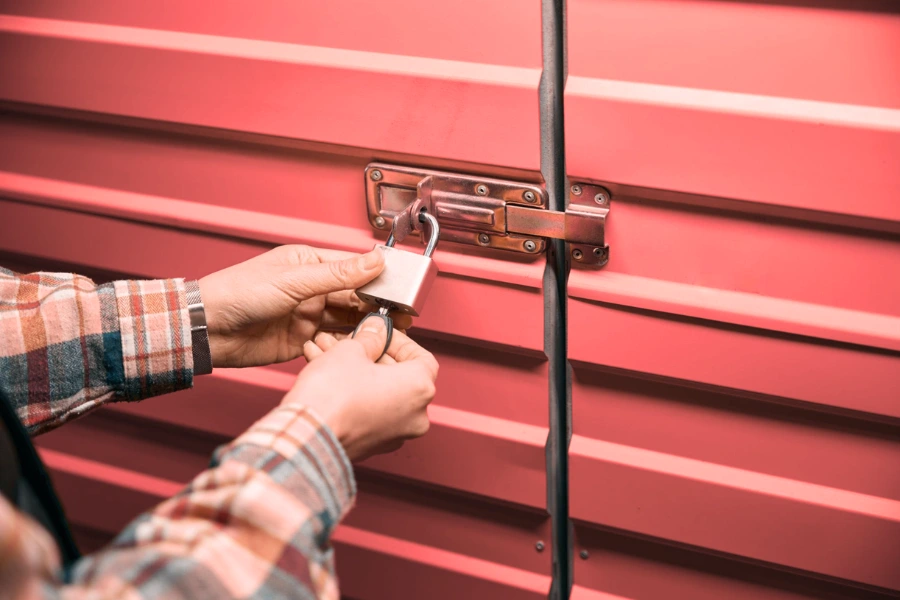
Key retaining is a lock function that controls when a key can be removed.
When the lock is open, the key remains trapped inside the cylinder. The key is only released after the lock is returned to the locked position.
This creates a simple workflow:
- Unlock → use → lock → remove key
The system ensures that the locking step cannot be skipped.
Traditional locks rely on user discipline, which is often inconsistent in shared environments. Key retaining introduces a built-in control that standardizes behavior without adding complexity.
How Key Retaining Actually Prevents Unlocking Mistakes
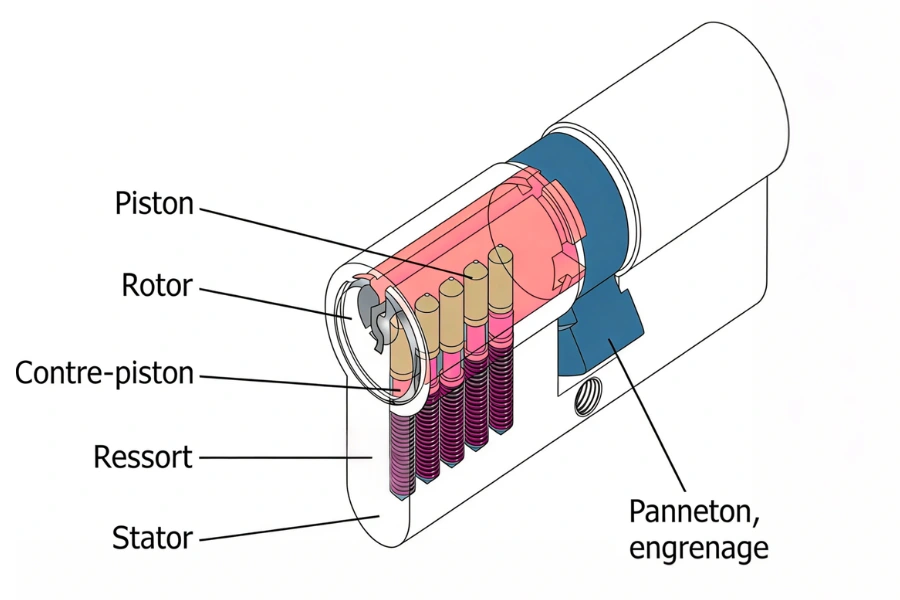
Key retaining is built into the internal structure of the lock cylinder.
Inside the mechanism:
- A component blocks key removal when the lock is open
- The key remains engaged with the locking system
- Once the lock is secured, the mechanism resets and releases the key
From a user perspective, the process is straightforward:
- The key cannot be removed unless the lock is secured
From a business perspective, the impact is measurable:
- Reduces missed locking steps across teams
- Improves accountability in shared access environments
- Maintains consistent security procedures without supervision
Mechanical features like key retaining help enforce correct usage patterns without requiring additional training or digital systems.
High-precision cylinder design ensures that this function remains stable over time, even in high-frequency use. This level of reliability is critical in commercial settings where hardware is used repeatedly throughout the day.
Key Retaining vs Snap-Shut – Which One Is Safer for Your Business
Two common lock behaviors serve different operational needs.
Key Retaining
- Key cannot be removed when unlocked
- Requires deliberate locking action
- Designed for control and accountability
Snap-Shut
- Lock can be closed by pressing the shackle
- Key can be removed at any time
- Designed for speed and convenience
Choosing Based on Business Needs
The right option depends on how your business operates.
- Choose key retaining when security consistency is critical
- Choose snap-shut when speed and frequent access are the priority
Snap-shut reduces effort, but it depends on user habits.
Key retaining reduces risk by enforcing correct behavior.
Where Key Retaining Improves Security in Real Business Scenarios
Key retaining is most effective in environments where multiple people use the same locking points.
Shared Workspaces
In offices and co-working environments, different users may access the same cabinets or storage areas.
Key retaining ensures that the lock is secured before the key leaves the user, reducing reliance on reminders or supervision.
Warehouses and Logistics
In warehouse operations, access points are used frequently throughout the day.
A warehouse manager can ensure every storage unit is locked before staff leave, because the key cannot be removed otherwise. This reduces exposure to inventory loss and improves operational control.
Retail and Back-of-House Areas
Retail staff often move quickly between tasks, especially during peak hours.
Key retaining helps ensure that stockrooms and restricted areas are not accidentally left open, even during busy periods.
Equipment and Industrial Environments
In industrial settings, unsecured equipment can lead to both safety and security risks.
Key retaining enforces correct locking procedures without requiring additional checks, helping maintain consistent safety standards.
How Key Retaining Supports Better Access Control
Key retaining is a mechanical feature, but it plays a role in broader access control strategies.
It complements:
- Key control systems
- Master key systems
- Access management policies
For example:
- A master key system defines who can access specific areas
- Key retaining ensures those areas are properly secured after access
Access control defines permissions. Key retaining enforces behavior.
Together, they improve:
- Accountability across users
- Consistency in daily operations
- Reliability in security processes
Modern business security is not only about access. It is also about ensuring that access points are consistently secured after use.
How to Choose Between Key Retaining and Standard Locks
Selecting the right lock setup depends on your workflow and risk level.
Choose Key Retaining if you need
- Consistent locking across multiple users
- Reduced reliance on staff training
- Stronger accountability in shared environments
Choose Snap-Shut if you need
- Fast, repeated locking
- One-handed operation
- Minimal interaction with keys
Consider Flexible Configurations
Some high-security locks allow switching between both modes.
This flexibility supports:
- Changing operational needs
- Different user groups
- Evolving security policies
The best solution aligns with how your business actually operates, not just the features of the lock.
Why Key Retaining Is a Smart Choice for Business Security
Key retaining is a simple way to improve security without adding complexity.
It shifts security from user-dependent behavior to system-enforced action. This reduces risk, improves consistency, and supports better operational control.
For businesses managing shared access, high-value assets, or multiple users, this feature provides a level of reliability that standard locks cannot guarantee.
For businesses that require consistent locking behavior and dependable cylinder performance, choosing the right hardware is essential.
EOS SECURE delivers precision-engineered mechanical and electronic lock cylinders backed by more than a decade of manufacturing expertise. Established in 2011, our factory operates under ISO9001 and ISO14001 certifications, ensuring every product meets rigorous international standards including EN1303 and SKG. With over 50 advanced Swiss-type CNC automatic lathes and integrated machining centers, we manufacture high-quality lock cylinders trusted by clients across industries worldwide. Whether you need small-batch customization or large-scale production, EOS SECURE provides reliable performance, consistent quality, and dependable technical support. Secure your business with solutions built for long-term stability — contact us today.