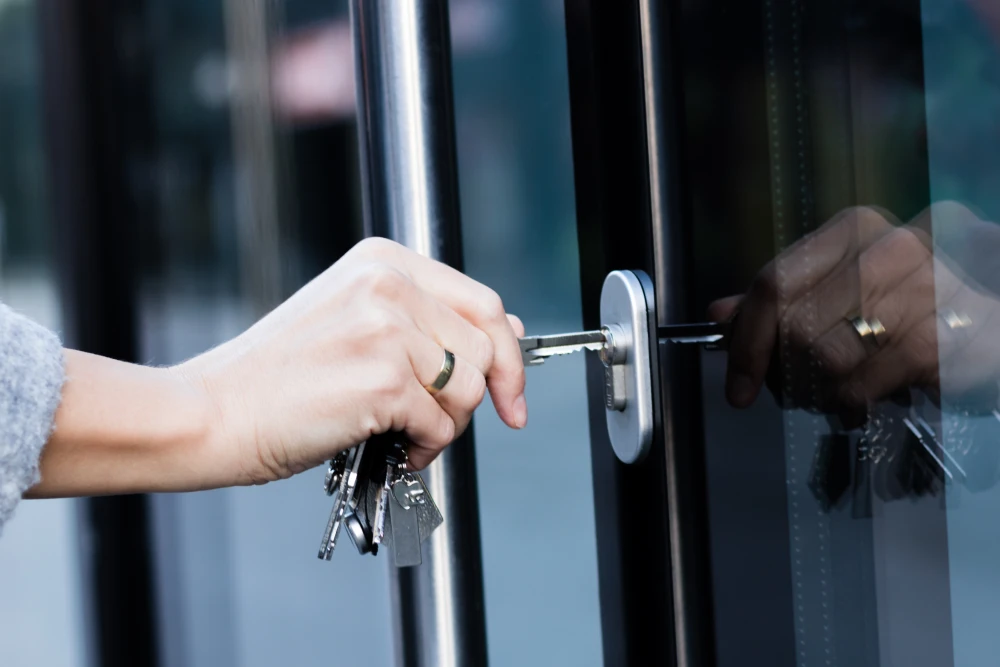
Why Your Lock Matters More Than You Think
Your lock is the most critical element of your door or window security. Even with reinforced frames or alarm systems, a weak lock often becomes the easiest point of entry during a break in. Most intruders enter through the front door, and many target unsecured windows, which makes it important to match your lock to the way your building operates.
There is no single lock that fits every situation. The right choice depends on the door or window structure, the surrounding frame, and how the space is used. A strong lock performs well only when paired with proper installation and solid hardware.
Start With Your Needs and the Space You Want to Protect
Before comparing lock types, focus on how your environment functions. This helps narrow your options and guides you toward a lock that protects your business without adding unnecessary complexity.
Identify the Location and Function
Different entry points face different risks.
- External doors need stronger break in resistance
- Internal doors benefit from simple operation and durability
- High traffic areas like offices or shared restrooms require hardware that withstands frequent use
Evaluate the Level of Security You Need
Security needs vary by business type and location. Consider the value of the assets you protect, how many people need access, and how much convenience matters in day to day operations.
A retail shop may need quick employee access at the front while keeping stockrooms restricted. A short term rental host may prefer digital codes that remove physical key turnover.
Seek Professional Assessment When Needed
A locksmith can inspect door materials, frames, and existing hardware. This is useful in older buildings or when the frame shows signs of wear, since reinforcement may be required for a lock to perform correctly.
A Clear Look at the Main Types of Locks
Once your needs are defined, you can review the major lock categories and how each one supports your security goals.
Mechanical Locks, Reliable and Traditional
How They Work
Mechanical locks rely on physical keys and simple internal mechanisms. They operate without power and offer predictable performance.
Advantages
- Reliable hardware for basic security
- No electrical power required
- Long lasting components
- Simple operation for all users
Limitations
- Limited resistance against modern intrusion methods
- Key management challenges when keys are lost or copied
- No audit trail for tracking entry
Electric Locks for Simple Remote Control
How They Work
Electric locks unlock when powered by a button, keypad, remote control, or intercom. They require wiring and are often used in building lobbies or gated entries.
Advantages
- Convenient remote release
- Easy integration with intercom systems
- Many models support automatic locking
Limitations
- Dependence on power
- Mechanical wear over time
- Still require key replacement when keys are lost
Electronic and Smart Locks for Flexible Access
How They Work
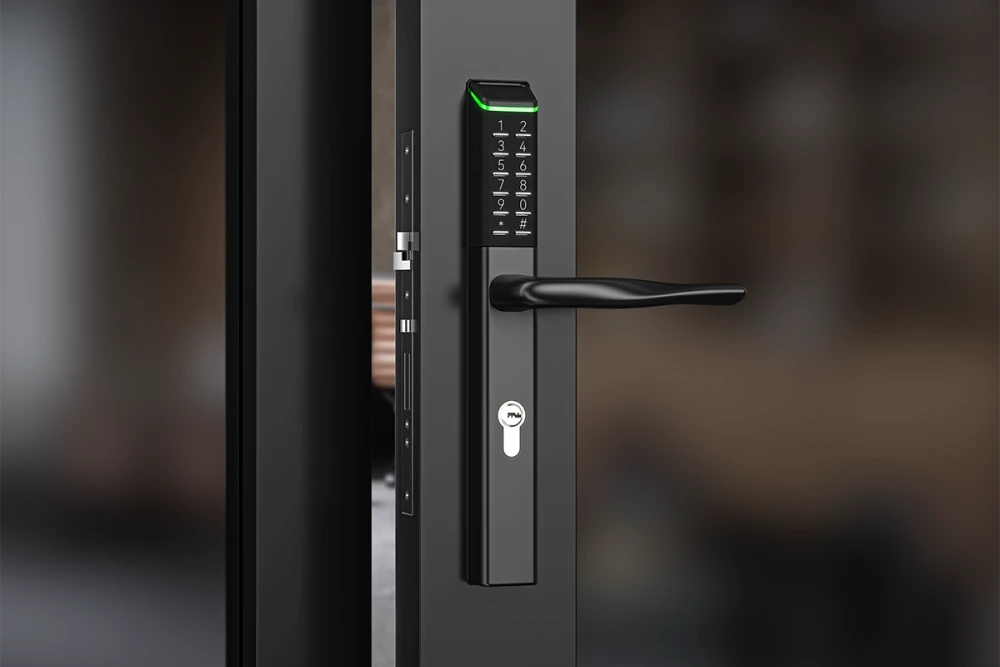
Electronic and smart locks combine electronic control with connectivity such as Bluetooth or Wi Fi. They support multiple credentials including PIN codes, cards, mobile apps, and fingerprints.
Advantages
- Flexible access management for growing teams
- Remote monitoring for shops, rental units, or multi site operations
- Audit logs that show who accessed the door
- No reliance on physical keys
Limitations
- Require batteries or wired power
- Higher initial investment
- Some users may need time to learn the system
Other Locks You Might Consider
Deadbolt Locks
Deadbolts provide strong resistance to forced entry by driving a solid bolt into the frame. They are recommended for main external doors and are available in mechanical or electronic versions.
Magnetic Locks
Magnetic locks operate smoothly but offer lower holding force, which makes them suitable for interior doors where convenience outweighs high security needs.
How To Choose the Lock That Fits Your Needs
After understanding each lock category, you can compare features that determine overall performance.
Verify Security Certifications
Look for recognized ratings such as EN based grades that measure durability and forced entry resistance. Higher grades indicate stronger performance for homes and businesses. <!– image suggested –> <!– alt: example of lock certification ratings like EN1303 –>
Review Critical Security Features
A strong lock may include the following
- Anti picking and anti bumping protection
- Anti drill components
- Protective escutcheons around the cylinder
- Multi point locking to reinforce weak frames
- Automatic locking to secure the door after every close
Weigh Practical Considerations
Think about
- Budget and future maintenance
- Business operations such as rental turnover or staff changes
- Comfort with digital tools if considering smart features
- Access needs for employees or temporary visitors
A certified lock with enhanced break in protection is often the best investment for main entry points. Proper installation and a reinforced frame are just as important as the lock itself.
Frequently Asked Questions
Q1. Do I need smart locks for every door?
Smart locks are not necessary everywhere. Use them on main entrances where access control is important, and choose simpler mechanical or electronic locks for interior rooms.
Q2. What happens if a smart lock loses power?
Most smart locks offer backup options such as a key override, USB emergency power, or a keypad. Low battery alerts help you replace batteries before access becomes an issue.
Q3. Which lock performs best in harsh weather?
High quality mechanical locks handle extreme temperatures reliably. Many electronic locks also work outdoors, but confirm the model rating for weather exposure.
Q4. How can I reduce picking or bumping risks?
Choose cylinders with certified anti picking and anti bumping features. Reinforced housings and advanced pin systems make forced entry more difficult.
Q5. What should I check before replacing a lock?
Confirm that the door, frame, and hinges are solid and aligned. A strong lock performs well only when installed on stable hardware.
About EOS SECURE
EOS SECURE delivers precision engineered mechanical and electronic lock cylinders backed by more than a decade of manufacturing expertise. Established in 2011, our factory operates under ISO9001 and ISO14001 certifications, ensuring every product meets rigorous international standards including EN1303 and SKG. With more than fifty advanced Swiss type CNC automatic lathes and integrated machining centers, we manufacture high quality lock cylinders trusted across global industries. Whether you need small batch customization or large scale production, EOS SECURE provides reliable performance, consistent quality, and dependable technical support. Strengthen your business security with solutions built for long term stability, contact us today.