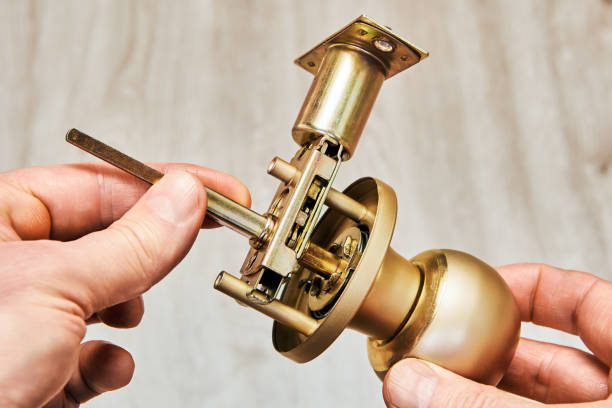
The subject of security is crucial to every aspect of life, the sector of a nation’s economy and across all industries. There is always a need to safeguard life and property at home, the grocery store, offices, banks, manufacturing houses, hotels: the list is endless. Locking systems are employed to meet such security requirements. In the security industry, all mechanical and electric door locks and access control elements must pass certain ratings before approval for commercialization. The American National Standards Institute (ANSI) approves security solutions and other door hardware distributed in the US via the BHMA – Builders Hardware Manufacturers Association. The BHMA is laden with the duty to develop, review and update operation standards for door locks and other related door hardware solutions. As of today, there are over 40 ANSI/BHMA standards for locks as stipulated in the ANSI/BHMA A156 series. Keep reading this article to learn more about lock certification!
Lock Certifications in Different Markets
Lock certifications vary across countries. In addition to U.S based standards like BHMA certified locks and ANSI lock rating, individual countries also have regulations that security door and lock producers must comply with. A few are discussed below:
US ANSI/BHMA Certification
BHMA certification is a US-based certification that approves the durability and operational efficiency of all builders’ hardware, including security locks. BHMA is the only licensed issuer accredited by ANSI (American National Standards Institute) – the agency responsible for dictating operations in all industries in the United States. BHMA certified lock ratings guarantee that the access control product in question has been tested to work under harsh environmental conditions; can be relied upon in the face of an emergency; comply with dimensional criteria; meet anti-tampering requirements; and ensure interoperability when used in conjunction with other hardware from other manufacturers. Some industry demands for various locks are as follows:
- ANSI/BHMA A156.10 gives requirements for power-operated pedestrian doors, sliding doors, control mats, etc., including other sensor-activated door features.
- ANSI/BHMA A156.19 evaluates power-assisted and low-energy-operated doors.
- ANSI/BHMA A156.25-2023 meets regulations for all electric locking devices, including types with mortise and cylinder lock types.
All door locks with BHMA certification or ANSI lock rating are categorized into three grades: grade 1, grade 2 and grade 3.
- Grade 1: ANSI 1 door locks offer security and premium quality second to none. Certified lock and safety with the grade 1 ranking is commonly utilized for entryways, mostly in commercial settings like banks, where top-level security is required. The high security and heavy impact resistance demands of such locks make them an expensive option.
- Grade 2: Any certified lock or security element with grade 2 certification comes next to grade 1, offering substantial security at budget-friendly rates. Grade 2 locks are employed in moderate traffic hallways and provide less robust security features when compared to ANSI 1 lock.
- Grade 3: Door locks categorized under ANSI lock grade 3 are used in residential apartments and other low-traffic regions where a basic level of security is required. They also cost way less than grade 1 and 2 certified locks.
The above categorization helps manufacturers and their clients make well-informed decisions on security solutions based on application and budget, seamlessly.
BHMA as an organization does not conduct in-house testing of security locks and other hardware. Testing is left to accredited laboratories that run tests according to BHMA certification guidelines approved by ANSI. Hence, manufacturers go to accredited labs like Underwriters Laboratories, depending on their market, to test their products.
Door Lock Safety Certification in Europe
In Europe, security systems from smart locks to other mechanically operated door lock hardware are approved for the market by the CE emblem. The CE certification connotes that the products adhere to safety and other EN regulatory standards. With the CE lock certification, locals and foreigners can sell their products in all EU member states. In today’s fast-paced world, where security systems innovate, including hacking and tampering tactics, EU CE standards assure end users of a door lock’s durability and reliability beyond the regulatory formality. Below are some EN standards and what they represent:
- EN 1125: The EN 1125 guideline is the compliance standard for high-traffic and emergency entryways. With this certification, end users and business owners are assured of the door’s reliability in the event of an emergency evacuation.
- EN 12209: EN 12209 standard refers to test guidelines that mechanical locks and related components must be subject to. EN 12209-certified locks are durable and efficient even in harsh and high-temperature environments.
- EN 1303:2015: EN 1303:2015 standards dictate requirements for one of the most critical door lock features – the lock cylinder. Certified lock and safe cylinders have anti-drilling and other anti-tampering properties, high mechanical strength and fire and corrosion resistance.
- EN 1634-1:2014: The EN 1634-1:2014 standard stipulates test requirements for any door lock component that requires a high temperature threshold. The CE certification uses a 1-4 fire grade system to rate the resistance level of door hardware. Other bodies conduct a test of 240 minutes, while Intertek runs the test for 260 minutes.
The CE certification is issued by accredited bodies including Intertek, Warringtonfire, Element, and IFT (Institut für Fenstertechnik). Aside from CE certification, other regulatory certificates may be tested for and issued. For instance, Warringtonfire certifies products in compliance with CPR regulations, while Element also issues ISO and UL certifications.
British Standards Institute (BSI)
The British Standards Institute certification endorses a UK-sold product as safe, durable and reliable, depending on its application, like the CE certification in Europe. All door hardware and other products sold in the United Kingdom must comply with BSI regulations before market approval. BS3621 sets stringent rules that specify rigorous tests for any lock component to be certified as a British Standard Lock. The tests assure against burglary attempts, including drilling or picking. To know if a lock complies with the safety protocols of the BSI, look out for the BSI kitemark engraved on the lock. The bolt throw specification of a lock is another indicator you can assess for BS3621 compliance. For instance, BSI-certified mortise deadlocks and night latches have their bolts extend from the door frame by 20 mm. Overall, BS3621 compliant locks are renowned for their sturdy design and anti-theft properties. In addition, fireproof doors and lock components in the UK must be BS 476 and BS EN 1634 compliant.
CCC Certification (China Compulsory Certificate) in China
For your door hardware to move freely within and across China, it must be endorsed by a CCC certification. This lock certification ensures that the product adheres to safety, quality and environmental standards as it pertains to China. The Certification and Accreditation Administration of China (CNCA) is the authority in China that certifies products sold in the Chinese market. CNCA develops requirements that locks and other products sold in China must adhere while accredited laboratories and third-party testing institutions conduct tests as stipulated by the CNCA standard for the product. Unlike other certifications, which may be intended for the international market, the CCC trademark is peculiar to China. CNCA-C11-10:2014 standard stipulates rigorous test guidelines for doors and door retention systems, confirming durability and reliability.
South Korea KC Safety Certification
The KC Safety Certification is a mandatory license for all electronic products, including smart door locks, used domestically in Korea. It ensures that concerned products adhere to strict safety, operational and design requirements, and environmental standards. The Korean Agency for Technology and Standards is the only authority responsible for the KC Safety Certification system and developing and reviewing standards for various products to eliminate risk to consumers. KC Safety certified locks are suitable for high-temperature environments due to fire-resistant features. Manufacturers, not distributors or other non-Korean traders, have the KC mark engraved on their products after testing in accredited laboratories.
How to make your lock products more smoothly imported and exported in various markets
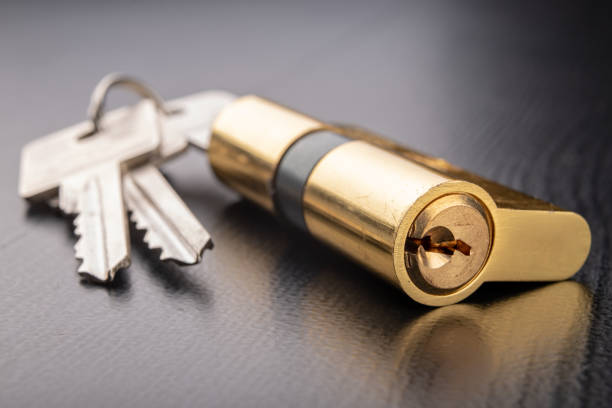
Certifications with local and international standards play a major role in the global competitiveness of your door lock brand. Follow these easy steps to make your products appeal to clients all over the world:
Research on the certification and regulatory standards of various countries
Every country across the globe has the responsibility of quality assurance of consumer goods to ensure the safety of citizens and the environment. Thus, the development of several mandatory certifications is required before products are sold within the country.
Consult with an accredited laboratory to test your lock systems, ensuring compliance with both fire, security and environmental standards within your country. As a global supplier of door locks and smart lock systems, opt for global certifications including ISO 9001 and ISO 14001, which connotes that the products are durable, reliable and environmentally safe. It is more budget-friendly to pick up other country-specific certifications like the US’ BHMA certification and ANSI lock rating; BSI Kitemark UK sold locks; CE Certification to export to Europe; CCC China Certification and KC Safety Certification for South Korean trades – for lock cylinders as your market network expands to operate in other territories.
Find a Reliable Supplier
Patronize only manufacturers and distributors like EOS Secure that retail locks compliant with local and international standards like CCC China, ANSI/BHMA, CE and ISO standards. Prioritize clients’ safety by triple-checking the agencies where certification tests were conducted. Lock certification from non-accredited bodies or laboratories give brands a bad reputation upon inspection and result in a probable ban from selling in a particular country. Go the extra mile and ensure your suppliers have good reviews you can lean on.
Find a reliable third-party testing institution
To avoid misleading information or any discrepancies, pick a reliable third-party testing institution or agency to ensure that your locks and lock cylinders are industry compliant. This eliminates the risks and uncertainties posed and helps manufacturers improve on lock design and operation features before sending them out to the market.
Applying the above steps will not only boost visibility and competitiveness in the global lock systems industry.
Conclusion
With the advancement of security systems now and then, it is important to not only craft the trendiest locks or door hinges but also industry-compliant and environmentally approved solutions. There’s a need to test a lock’s resistance to theft or tampering activities, high temperature in case of fire outbreaks, corrosion upon exposure to harsh environments, and reliability in the event of emergencies. EOS Secures’ solutions address these needs and more.
EOS Secure prides itself on over 14 years of experience as a manufacturer and distributor of certified locks throughout China, across Europe, the United Kingdom and the United States. Our Quality Control team assures clients of quality management on all fronts. EOS Secure locks adhere to ISO 9001 requirements, amongst other regulatory standards. Looking for a one-stop, compliant regulatory brand? Look no further. Contact EOS Secure for certified locks today!