What Firmware Security Really Means for Your Access Control System
Firmware is the first code that runs when a device powers on. In a smart lock or access control system, firmware controls how credentials are verified, how doors respond to commands, and how audit logs are recorded.
If firmware is compromised, everything above it becomes unreliable. Your permissions, activity logs, and remote management tools may appear normal while operating on corrupted logic.
For a small retail store, this could mean a former employee still gaining entry. For a shared office, it could mean access rights being altered without detection. Firmware integrity directly supports operational trust.
What Can Go Wrong When Firmware Is Not Secure
Firmware attacks rarely cause visible system crashes. In many cases, devices continue operating while hidden changes occur underneath.
Hidden Entry Risks You May Never Detect
Malicious firmware can allow silent backdoor entry. A door may unlock without generating a visible alert.
In a warehouse with rotating delivery staff, this could allow after-hours access without leaving a clear record.
When Access Logs Can No Longer Be Trusted
Access control systems rely on digital logs for accountability. If firmware is compromised, logs can be altered or suppressed.
This undermines internal audits, tenant disputes, and insurance investigations.
When Remote Control Creates New Risk
Cloud-based management depends on trusted device communication. If firmware integrity is broken, permission updates or credential revocation may not execute correctly.
A property manager may believe access has been removed, while the door continues to accept outdated credentials.
Compliance and Legal Exposure You Cannot Ignore
Many IoT and data protection frameworks require secure update mechanisms and credential protection.
If a firmware flaw leads to unauthorized entry, the issue is no longer technical. It becomes contractual and legal.
Firmware integrity protects more than hardware. It protects business continuity and liability control.
Why Smart Locks Face Higher Firmware Risk
Smart locks combine physical exposure with digital connectivity. This makes them uniquely sensitive to firmware integrity.
- They are installed in publicly accessible areas.
- They operate continuously for years.
- They rely on wireless communication.
- They function within limited hardware resources.
Unlike servers, smart locks cannot depend on heavy endpoint security software. Firmware becomes the core trust anchor.
For apartment buildings, offices, retail spaces, and co-working environments, firmware security directly affects daily operations.
The Firmware Mistakes That Put Access Control at Risk
When evaluating access control systems, businesses should understand common firmware weaknesses.
No Secure Boot
Without secure boot, unauthorized firmware can load during startup.
This means a device could be modified to ignore certain credential restrictions without visible change in the management dashboard.
Hardcoded Credentials
Shared default passwords or embedded master keys create systemic risk.
If one device is reverse-engineered, the entire deployment may be exposed.
Insecure Update Mechanisms
Firmware updates must be authenticated and encrypted. Without verification, attackers can inject malicious firmware through compromised networks.
Disabled Encryption
Unencrypted communication exposes credential data, configuration changes, and unlock commands.
In multi-tenant environments, intercepted commands could affect multiple units.
Enabled Debug Interfaces
Open debug ports allow direct firmware extraction or rewriting.
Even brief physical access can lead to long-term compromise.
No Rollback Protection
If devices allow downgrade to older firmware versions, attackers can reinstall known vulnerable builds.
Each of these weaknesses directly impacts access control reliability, tenant confidence, and long-term operational stability.
What Every Business Should Demand From a Secure Smart Lock
When selecting an access control provider, firmware security should be part of your evaluation checklist.
Secure Boot and Hardware Root of Trust
Secure boot ensures only authorized firmware runs. A hardware root of trust verifies integrity from the first instruction executed.
This prevents unauthorized firmware from altering door behavior or credential validation logic.
Digitally Signed and Encrypted Updates
Update packages must carry verified digital signatures and be delivered through encrypted channels.
This protects against malicious firmware injection during remote updates.
Unique Device Credentials
Each device should have its own cryptographic identity. Shared keys create large-scale risk.
Unique credentials limit compromise to individual units instead of entire deployments.
Runtime Integrity Monitoring
Devices should detect unexpected firmware modification during operation.
If anomalies occur, systems can restrict functionality or notify administrators.
Secure Default Configuration
Devices should ship hardened by default. No shared passwords, no unnecessary services, and no open communication ports.
This reduces misconfiguration risk during installation.
Long-Term Security Maintenance
Smart locks often remain installed for five to ten years. Vendors must commit to ongoing firmware support and vulnerability patching.
Without lifecycle support, secure deployment today may become exposed tomorrow.
A secure smart lock is not defined by its app features. It is defined by the integrity of the code controlling the door.
Digital Security Means Nothing Without Physical Protection
Digital integrity must align with mechanical resilience.
- Tamper detection sensors should alert administrators if hardware is opened.
- Sensitive keys should be stored in secure elements isolated from main firmware.
- Lock body construction should resist forced entry and manipulation.
For example, if a technician opens a unit for maintenance, the system should detect enclosure tampering and restrict operation until verified.
Physical and digital security must operate as one coordinated system.
How EOS SECURE Protects Firmware From the Inside Out
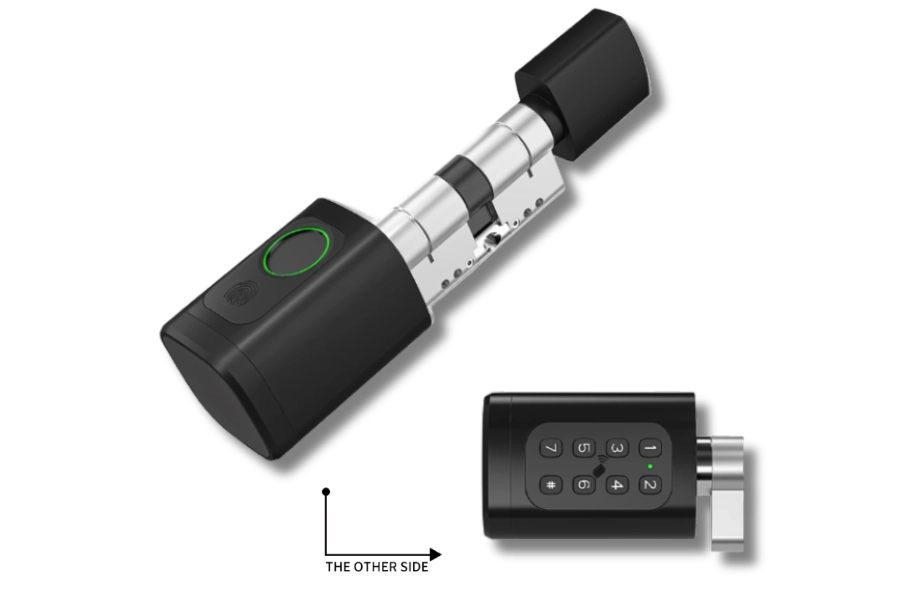
EOS SECURE treats firmware integrity as a foundational design requirement.
Our smart lock platforms enforce secure boot mechanisms that allow only EOS SECURE–signed firmware to execute. Unauthorized firmware flashing is blocked at startup.
Firmware updates are distributed through encrypted channels and protected by digital signatures. Rollback protection prevents installation of outdated builds with known vulnerabilities.
Each device is provisioned with unique cryptographic credentials. We maintain a strict zero hardcoded credential policy and require secure administrator binding during initial configuration.
For commercial deployments, optional secure element modules isolate sensitive keys from application logic. This ensures credential data remains protected even if other system components are targeted.
EOS SECURE also supports long-term firmware maintenance for commercial customers. Security patches and updates continue throughout the supported lifecycle, helping property managers maintain control without unexpected exposure.
Beyond product design, EOS SECURE provides firmware security evaluation and customization services for commercial projects. We help align firmware safeguards with remote management policies, permission structures, and operational workflows.
Access control trust begins at boot and continues throughout the device lifecycle.
Where Firmware Security Is Heading in Commercial Access Control
Industry expectations around firmware resilience continue to increase.
Regulatory frameworks emphasize secure update chains and platform integrity. Businesses should expect greater transparency in firmware lifecycle commitments.
Anomaly detection and supply chain transparency will become standard features in commercial-grade access control systems.
Security expectations are rising, and firmware integrity will remain central to long-term trust.
A Secure Smart Lock Begins at the Firmware Level
Firmware security is no longer a specialized concern. It is a core requirement for responsible access control design.
For smart locks, firmware compromise can translate directly into physical entry risk. Businesses cannot rely solely on cloud dashboards or mobile interfaces if the underlying code is not protected.
EOS SECURE combines mechanical precision with firmware integrity to deliver access control systems built for long-term stability.
Explore EOS SECURE solutions to strengthen your business security from the inside out.