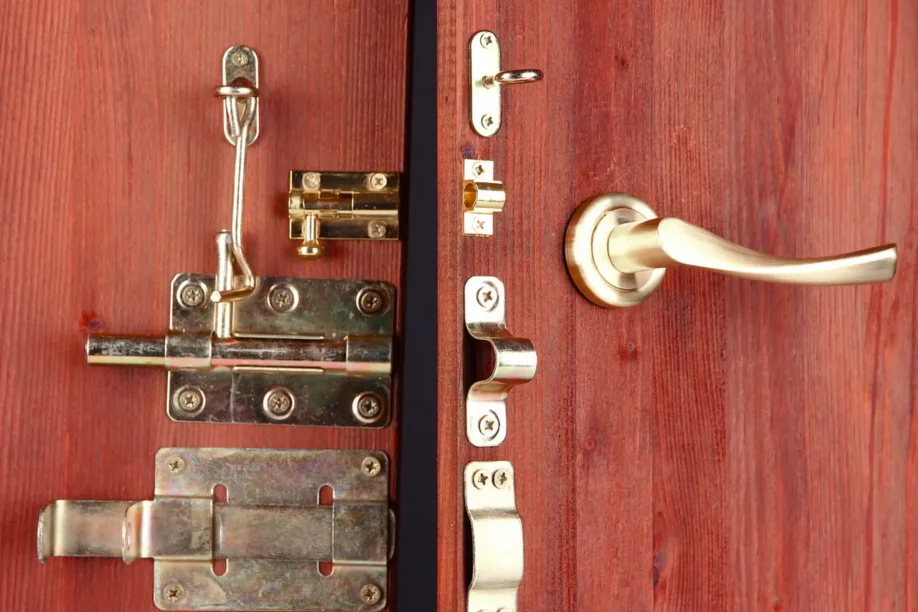
Door hardware as the backbone of every opening
Every secure door starts with more than a good lock.
Hinges, strikes, closers, levers, cylinders, and seals all work together to decide how that door feels and how long it lasts.
For small businesses, smart choices in door hardware reduce maintenance, improve security, and keep entrances consistent as sites grow.
The goal is a door that closes cleanly, resists abuse, and matches both the building code and the way people actually use the space.
Understanding the main door hardware categories
Before you choose products, it helps to sort hardware into a few clear groups.
Once you see the door as a system, selection becomes much easier.
Locking hardware
This group controls security when the door stays shut.
Common items include
- Cylinders and cores
- Mortise locks and deadbolts
- Rim locks and exit devices with keyed functions
For commercial work, focus on tested grades, strong bolts, and cylinders that support restricted keys or electronic upgrades.
Control and life safety hardware
These parts manage how the door moves and how people exit.
Key examples
- Door closers that control speed, latching, and backcheck
- Panic and fire exit devices on escape routes
- Coordinators on paired doors with astragals
They protect both the door and the people who use it, especially during emergencies or heavy traffic.
Support and protection hardware
Support hardware protects the door, frame, and nearby walls.
Common parts
- Hinges and pivots
- Flush bolts and strikes
- Stops, holders, kick plates, and guards
Strong support hardware reduces sagging, binding, and damage from carts and frequent impacts.
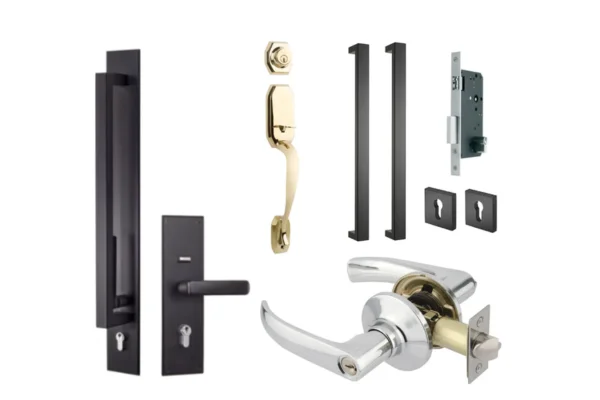
Key criteria for choosing quality door hardware
Once you know the basic types, you can weigh what matters most for each project.
First, match hardware grade and duty rating to door traffic.
High use doors at main entrances and stair cores need heavy duty products that survive frequent cycles.
Second, check compatibility with door material and thickness.
Hollow metal, timber, and aluminum frames each work best with specific lock cases, hinges, and fasteners.
Third, confirm local code requirements for fire, egress, and accessibility.
Life safety needs often drive hardware choices long before style comes into the picture.
Practical steps to match hardware across a project
Consistent hardware helps your building feel professional and reduces confusion.
You can reach that point with a simple plan.
Start by defining hardware sets for typical openings.
For example, one set for office doors, one for storage, and one for main entrances.
Within each set, keep
- The same lever style and rose shape
- Compatible finishes
- Matching cylinder systems and keying plans
When you repeat these sets, maintenance teams always know which parts to keep in stock and how each door functions.
Handing, hinges, and door movement
Handing decides which way a door swings and which hardware version you need.
Getting this right prevents returns and awkward installations.
Stand on the side where you can see the hinges.
If the hinges sit on your right and the door pulls toward you, you have a right hand reverse configuration.
If the hinges sit on your left and the door pushes away, you have a left hand configuration.
Hinge sizing depends on door height and thickness.
Heavier doors and taller doors need larger hinges or additional hinges to carry the load and keep the door aligned over time.
Finishes, color choices, and long term appearance
Finish selection affects both aesthetics and durability.
The right finish resists corrosion, hides fingerprints, and matches the overall design.
Think through three questions
- Interior or exterior environment
- Humidity and coastal exposure
- Desired visual style, modern, traditional, or industrial
Popular commercial finishes include satin stainless, satin chrome, and matte black.
Each works with a wide range of door colors and tends to age gracefully.
Balancing trends with durability
Design trends change, but doors stay in place for many years.
Hardware that looks current today should still feel appropriate five or ten years from now.
Right now, many projects favor
- Clean lever shapes and minimal roses
- Matte black and warm metallic tones
- Coordinated hardware across doors, cabinets, and furniture
Even when you follow these trends, pair them with proven base materials and tested plating or coating systems.
That way you keep both visual appeal and long service life.
How EOS SECURE hardware supports complete openings
Door hardware works best when mechanical strength and precise locking components align.
EOS SECURE focuses on cylinders and lock bodies that drop into common commercial hardware preparations.
With the right combination of hinges, locks, and trim, your doors feel solid, close reliably, and support future upgrades such as electronic cylinders or keyless entry.
A careful hardware schedule plus dependable core components gives small businesses a stable platform for growth.
FAQ
How to choose the right door hardware
Start with how the door will be used and where it sits in the building. Consider traffic level, security needs, fire and egress rules, and whether the door is interior or exterior. From there, choose graded hardware that fits the door material, supports your cylinder and key system, and aligns with your budget and design.
How to match door hardware
Match hardware by function, style, and finish across similar doors. Use the same lever design and finish for related spaces, and keep cylinders on a unified key system. For mixed environments, you can still coordinate core elements, such as stainless on all public doors and a consistent black or chrome theme in back of house areas.
How to determine handing of door hardware
Stand on the side where you see the hinges with the door closed. If the hinges sit on your right, you have a right hand door, if they sit on your left, you have a left hand door. Some hardware suppliers also distinguish between doors that push away and doors that pull toward you, so follow their charts carefully.
How to choose door hardware finish
Think about environment, maintenance, and design. In harsh or coastal locations, stainless or durable coated finishes offer good resistance to corrosion. For interiors, pick a finish that matches other metal elements, such as lighting and fixtures. Neutral tones like satin stainless or brushed nickel stay versatile across many color schemes.
What color hardware goes with everything
Satin stainless and brushed nickel work with most door colors and styles. They blend well with both cool and warm palettes and rarely clash with other metals in the space. For a stronger statement that still stays flexible, many designers now use matte black on modern interiors and simple architectural doors.
What is the 7 11 hinge rule
The seven eleven hinge rule gives a quick guide for hinge count on tall doors. Standard doors around seven feet often use three hinges, as height increases toward eight and nine feet, you add hinges to handle the extra leverage and weight. The goal is smooth movement and less stress on screws and frames over time.
What is the current trend for door hardware
Current projects often favor clean lines, slim backplates, and matte finishes, especially black and warm metallic tones. Mixed metals appear more often, such as black levers with stainless hinges. Even with these trends, commercial spaces still prioritize performance and code compliance first, then use finish and form to support the design.
What does wrapping a rubber band around your doorknob mean
People sometimes wrap a rubber band around a knob or lever to hold the latch back or soften noise when the door closes. It can help during short term moving or frequent trips. It does not provide real security and should not replace proper latching, closers, or hardware adjustments on occupied and secure doors.
What color hardware never goes out of style
Satin stainless stays one of the most timeless choices in commercial settings. It works with many door colors, resists wear, and fits both modern and traditional designs. Brushed nickel also stays popular for interiors because it looks clean without drawing too much attention or showing fingerprints easily.
About EOS SECURE
EOS SECURE delivers precision engineered mechanical and electronic lock cylinders backed by more than a decade of manufacturing expertise. Established in 2011, our factory operates under ISO9001 and ISO14001 certifications, and our products meet rigorous international standards including EN1303 and SKG. With more than 50 advanced Swiss type CNC automatic lathes and integrated machining centers, we manufacture high quality lock cylinders and components that integrate smoothly with a wide range of door hardware. Whether you need cylinders for mortise locks, deadbolts, or smart access upgrades, EOS SECURE provides reliable performance, consistent quality, and dependable technical support. Secure your business with solutions built for long term stability, contact us today.