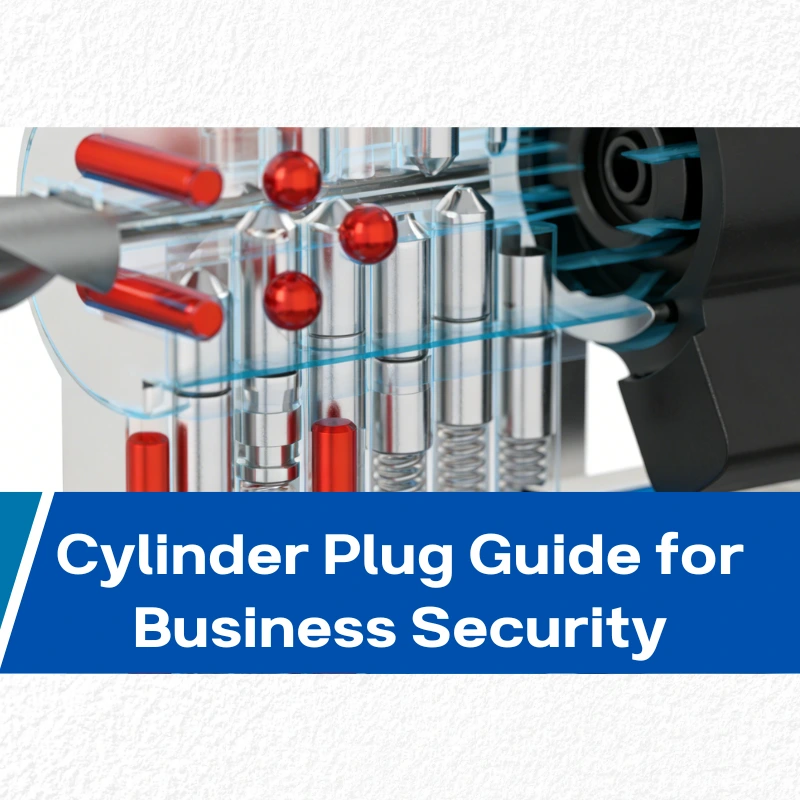
Why the Cylinder Plug Matters in Everyday Business Security
Most people focus on the lock as a whole. In reality, security often depends on a much smaller component — the cylinder plug.
The plug is the part that physically moves when a key is inserted. If the plug fails, the entire lock system fails. For small businesses, this can lead to access issues, service interruptions, and unexpected maintenance costs.
Understanding how the cylinder plug works helps you choose locks that are not just functional, but reliable, scalable, and easier to manage over time.
What a Cylinder Plug Does Inside a Lock System
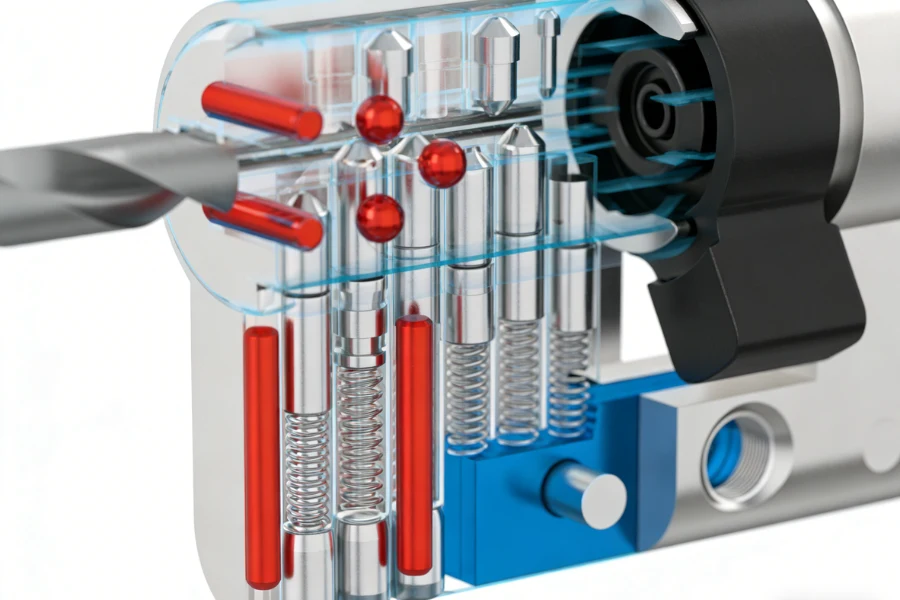
A cylinder plug is the rotating core inside a lock cylinder. It contains the keyway and interacts directly with the key.
When the correct key is inserted, the plug rotates within the cylinder housing. This movement activates the cam or tailpiece, which controls the locking or unlocking of the door.
In simple terms:
- The cylinder verifies the key
- The plug enables motion
Without a properly functioning plug, even a high-quality lock cannot operate correctly. For businesses, this means that daily access depends directly on plug performance.
How the Cylinder Plug Controls Locking and Unlocking
Most cylinder plugs operate within a pin tumbler system. The process is precise and repeatable.
Here is how it works:
- A key is inserted into the plug’s keyway
- The key lifts a series of pins to specific heights
- The pins align at the shear line between plug and housing
- The plug rotates freely
- The cam or tailpiece retracts or extends the latch
If the wrong key is used, the pins remain misaligned. The plug cannot rotate, and access is denied.
This mechanism is simple, but its effectiveness depends on precision inside the plug. In high-traffic environments such as offices or retail stores, consistent plug performance helps avoid delays caused by stuck or misaligned locks.
Key Components That Support Plug Operation
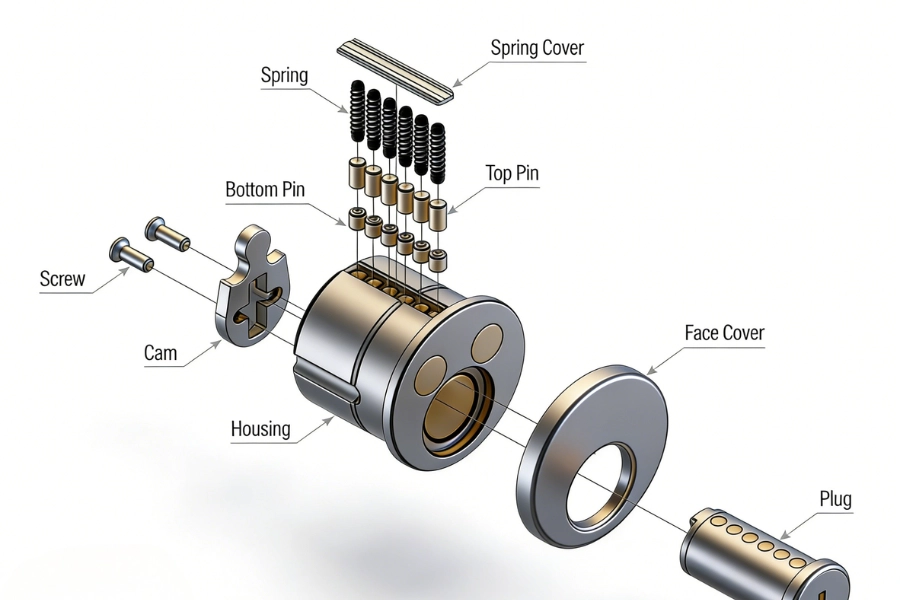
The cylinder plug does not work alone. It operates within a system of supporting components.
- Keyway — guides the key and defines key compatibility
- Pins (key pins and driver pins) — control whether the plug can rotate
- Springs — reset the pins after key removal
- Shear line — the critical boundary that enables rotation
- Housing — holds all components in alignment
- Cam or tailpiece — converts plug rotation into locking action
Each component supports the plug. However, the plug remains the central moving element that drives the entire process.
When these components are properly aligned, businesses benefit from smooth operation and reduced wear. Poor alignment, on the other hand, often leads to key sticking, lock failures, and higher maintenance frequency.
How Plug Quality Affects Security, Durability, and Maintenance
Not all cylinder plugs perform the same. Small differences in material and machining can significantly impact security and long-term reliability.
Key factors include:
- Precision tolerance
A tightly machined plug ensures smooth rotation and accurate pin alignment. This reduces friction and minimizes service interruptions in high-use environments. - Material strength
Hardened materials improve resistance to drilling and forced entry. This is especially important for storefronts, offices, and storage areas exposed to external risk. - Surface finish
A refined internal surface reduces wear on both the plug and the key. This helps extend the lifespan of the entire locking system. - Wear resistance
In environments where doors are used frequently, such as coworking spaces or warehouses, a durable plug maintains consistent performance over time.
For businesses, these factors translate into fewer lock replacements, lower service costs, and more reliable daily operations.
Common Attacks That Target the Cylinder Plug
Many physical attacks focus directly on the plug or its surrounding structure.
- Lock picking
Attackers manipulate pins to simulate correct alignment. Poorly designed plugs provide less resistance and are easier to compromise. - Lock bumping
A bump key forces pins upward momentarily. Low-quality plugs are more vulnerable to this technique, especially under repeated attempts. - Drilling attacks
Drills target the plug to destroy internal components. Reinforced plugs can delay entry and increase the effort required. - Lock snapping
In certain cylinder designs, attackers break the plug to access internal mechanisms and bypass the lock.
Modern cylinder plugs reduce these risks through:
- anti-pick pin configurations
- hardened inserts
- reinforced structural design
The goal is not to eliminate risk completely, but to increase resistance. In most real-world situations, increased resistance is enough to discourage unauthorized access.
Types of Cylinder Plugs and Where They Are Used
Cylinder plugs vary depending on application and access requirements.
Common configurations include:
- Standard mechanical plugs
Used in residential and light commercial environments. Suitable for areas with moderate security needs. - High-security plugs
Designed for commercial use, with enhanced resistance to picking, drilling, and unauthorized duplication. - Master key system plugs
Support multiple access levels. Ideal for offices, rental properties, and shared workspaces. - Smart-integrated plugs
Combine mechanical reliability with electronic access, enabling features such as remote management and temporary credentials.
Each type supports different operational needs. For example, a retail store with multiple employees benefits from consistent plug performance, while a property manager may prioritize scalable key systems.
How to Choose the Right Cylinder Plug for Your Business Needs
Choosing the right plug is a practical decision that affects both security and operations.
Consider the following:
- Traffic level
High-traffic doors require durable plugs that can handle repeated use without performance loss. - Security requirements
Businesses handling valuable inventory or sensitive information should prioritize high-security plug designs. - Key control
Restricted keyway systems help prevent unauthorized duplication, which is important in multi-user environments. - System scalability
Master key systems allow businesses to manage access efficiently as teams grow. - Compatibility
Ensure the plug matches your existing door hardware and installation requirements.
Example:
A small office can assign individual access to staff while maintaining a master key for management. This reduces administrative complexity while maintaining control over entry points.
Installation and Maintenance Tips for Long-Term Performance
Even a high-quality plug requires proper installation and routine maintenance.
Installation
- Keep the cylinder flush with the door surface to reduce exposure to forced entry
- Use reinforced hardware to improve structural resistance
- Avoid over-tightening, which can affect internal alignment
Maintenance
- Use graphite or silicone lubricant to keep internal movement smooth
- Remove dust and debris from the keyway regularly
- Replace worn keys to prevent damage to internal components
Consistent maintenance reduces unexpected failures and ensures reliable operation over time.
How Cylinder Plug Technology Is Evolving
Cylinder plug design continues to evolve alongside modern security needs.
Key trends include:
- integration with smart access systems and mobile credentials
- modular designs that allow easier upgrades without full replacement
- improved materials for longer service life
- enhanced key control systems to prevent unauthorized duplication
While digital access is expanding, mechanical plugs remain a critical foundation. They provide a reliable fallback and continue to support secure entry in a wide range of environments.
Final Thoughts — Why the Cylinder Plug Deserves More Attention
The cylinder plug is a small component with a large impact. It controls movement, influences durability, and plays a central role in overall lock performance.
For businesses, the right plug improves access consistency, reduces maintenance issues, and supports scalable security systems.
Choosing a well-designed cylinder plug is not just about locking a door. It is about maintaining reliable operations and protecting assets over time.
For businesses that rely on consistent access control, plug quality is not a minor detail — it is a core part of operational security.
EOS SECURE delivers precision-engineered mechanical and electronic lock cylinders backed by more than a decade of manufacturing expertise. Established in 2011, our factory operates under ISO9001 and ISO14001 certifications, ensuring every product meets rigorous international standards including EN1303 and SKG. With over 50 advanced Swiss-type CNC automatic lathes and integrated machining centers, we manufacture high-quality lock cylinders trusted by clients across industries worldwide. Whether you need small-batch customization or large-scale production, EOS SECURE provides reliable performance, consistent quality, and dependable technical support. Secure your business with solutions built for long-term stability — contact us today.