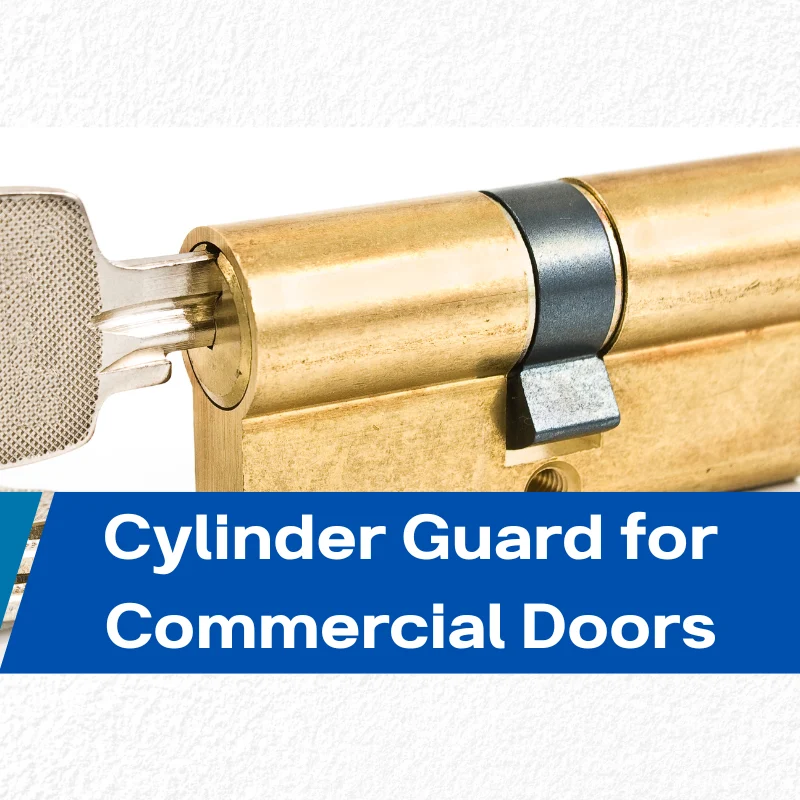
Why Lock Cylinder Protection Matters for Businesses
For most small businesses, the front door is both the first impression and the primary security barrier.
Retail shops, offices, studios, and warehouses often rely on a standard lock cylinder to secure their entrance. That small component determines whether a door is truly secure or simply closed.
Many business owners invest in cameras and alarm systems but overlook a common weak point — the exposed lock cylinder.
A cylinder guard is a simple upgrade that reduces forced entry risk without replacing your entire lock system.
The Hidden Weak Point in Many Commercial Doors
Most standard mortise cylinders are made from brass. Brass is durable for daily use but relatively soft against aggressive physical attacks.
When a cylinder protrudes beyond the door surface, it creates a grip point. With basic tools such as locking pliers or pipe wrenches, an intruder can attempt to twist or pull the cylinder out.
Once removed, the internal locking mechanism becomes exposed.
For a small business, that can mean:
- Inventory loss
- Equipment theft
- Business interruption
- Insurance claims and premium increases
Physical cylinder protection directly reduces this exposure.
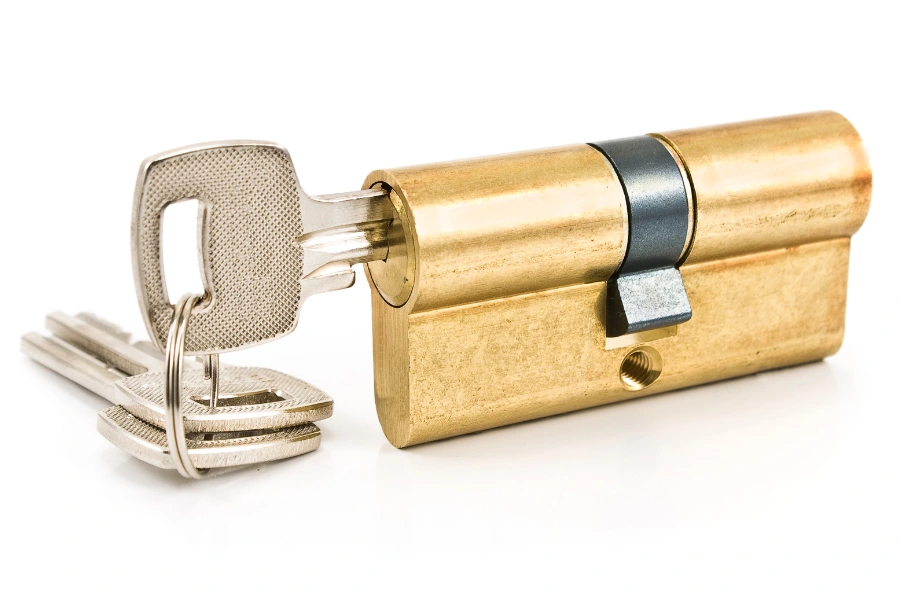
What a Cylinder Guard Actually Does
A cylinder guard is a hardened steel protective ring installed around the exposed portion of a lock cylinder.
It does not replace the cylinder.
It reinforces it.
When properly installed, the guard:
- Covers the cylinder body
- Eliminates grip points
- Sits flush or recessed within the door surface
- Prevents direct access to vulnerable components
The result is simple — tools cannot easily grab, twist, or drill the cylinder.
For businesses with visible storefront doors, this acts as both a deterrent and a delay mechanism.
How Cylinder Guards Prevent Common Break-In Methods
Commercial break-ins often rely on speed. Intruders target the fastest entry point.
Cylinder guards disrupt that speed.
Pulling or Twisting Attacks
Without protection, a protruding cylinder can be gripped and forcefully removed.
A hardened steel guard removes that leverage point.
No grip point means no easy extraction.
Prying and Wedging
If a tool cannot slide between the cylinder and door surface, it cannot create side leverage.
Flush-mounted guards eliminate this gap.
Drilling
Some guards integrate hardened inserts that cause drill bits to slip or dull before reaching internal pins.
This delays entry and increases noise and visibility — two factors most intruders avoid.
Cutting
High-strength steel significantly increases cutting time compared to exposed brass.
For a business, added time equals reduced probability of successful forced entry.
Where Businesses Benefit Most from Cylinder Guards
Cylinder guards are especially valuable in:
- Retail stores with glass or aluminum storefront doors
- Offices with frequent employee turnover
- Storage facilities
- Small warehouses
- Short-term rental properties
- Service entrances and back doors
For example:
A retail shop that receives early morning deliveries can strengthen its entrance security without changing keys or retraining staff.
An office with multiple tenants can reinforce physical protection while maintaining its existing master key system.
This is security improvement without operational disruption.
Installation Overview – What Business Owners Should Know
Installation is straightforward when dimensions match the cylinder type.
General process:
- Loosen the cylinder retaining screw
- Remove the existing cylinder
- Slide the guard over the cylinder body
- Reinstall and align the cylinder
- Tighten securely and test operation
Important considerations:
- The cylinder should sit slightly recessed within the guard
- Avoid over-tightening to prevent binding
- Ensure proper cam or tailpiece engagement
If the guard prevents correct operation, a slightly longer cylinder may be required.
Correct alignment ensures both security and smooth daily use.
Choosing the Right Cylinder Guard for Commercial Use
Not all guards offer the same protection.
When evaluating options, consider:
Material Strength
Choose hardened steel or alloy materials designed to resist drilling and cutting.
Flush Fit Design
The guard should sit level with the door surface to eliminate grip points.
Compatibility
Confirm diameter and threading compatibility with your existing cylinder type.
Certified Security Standards
Look for products aligned with standards such as EN1303 or UL 437 when possible.
Integration with High-Security Cylinders
A guard is most effective when paired with a certified high-security cylinder that includes:
- Anti-drill pins
- Anti-pick design
- Anti-bump protection
- Key control systems
Layered protection always performs better than a single upgrade.
Why Physical Reinforcement Still Matters in a Smart Security World
Access control, mobile credentials, and cloud-based systems improve management and permissions.
However, physical hardware remains the foundation of door security.
If the cylinder can be physically removed, digital control becomes irrelevant.
Smart management works best when paired with strong mechanical protection.
For small businesses balancing cost and risk, reinforcing existing hardware is often the most practical first step.
Strengthen Your Business Security with the Right Foundation
Cylinder guards are not complex technology.
They are practical reinforcement.
For many small businesses, they provide a cost-effective upgrade that improves resistance, reduces vulnerability, and supports overall security strategy.
When paired with certified mechanical or electronic lock cylinders, they become part of a layered protection system built for long-term reliability.
EOS SECURE delivers precision-engineered mechanical and electronic lock cylinders backed by more than a decade of manufacturing expertise. Established in 2011, our factory operates under ISO9001 and ISO14001 certifications, ensuring every product meets rigorous international standards including EN1303 and SKG. With advanced Swiss-type CNC automatic lathes and integrated machining centers, EOS SECURE manufactures high-quality lock cylinders trusted by clients worldwide. Whether you require customized cylinder configurations or scalable production support, EOS SECURE provides reliable performance, consistent quality, and dependable technical guidance.
Explore EOS SECURE solutions to strengthen your business security.