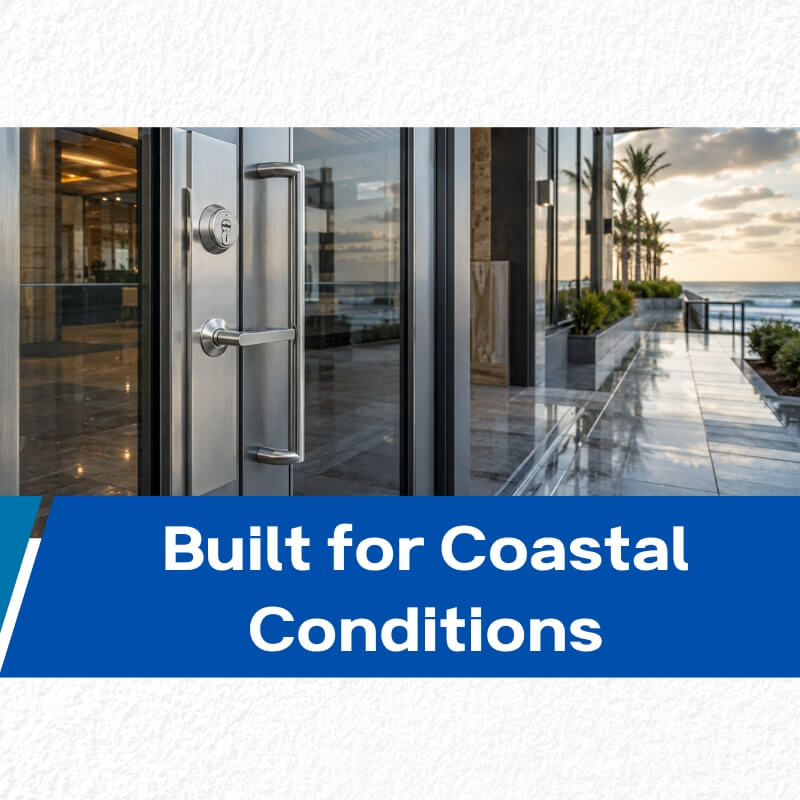
Oceanfront and waterfront properties face a different level of stress than inland buildings. Salt-laden air, humidity, wind-driven rain, and airborne chlorides accelerate wear across entry systems, especially in exposed doors, locking cores, hinges, and electronic access components.
In many salt-air environments, standard residential-grade hardware begins deteriorating far earlier than expected. Surface rust is only part of the issue. Internal wear inside moving locking components often develops first, gradually affecting daily operation and long-term reliability.
For business properties, this creates more than a maintenance concern. Failing entry systems can interrupt staff access, delay deliveries, increase service calls, weaken security, and raise long-term operating costs.
Choosing the right marine-grade locking solution starts with understanding how different entry points experience different exposure levels, usage cycles, and security demands.
Why Standard Door Hardware Fails Faster Near the Coast
Salt-heavy environments accelerate material breakdown because airborne chlorides settle onto exposed metal surfaces and slowly weaken protective finishes and internal mechanisms.
Buildings near the shoreline experience the highest exposure, but marine conditions can extend miles inland depending on prevailing winds and environmental conditions.
The risk increases significantly in high-traffic business environments because entry systems experience:
- Higher daily usage cycles
- More moving mechanical components
- Constant exposure to outdoor airflow
- Frequent opening and closing
- Faster wear on seals and finishes
A beachfront retail storefront or restaurant entrance may operate continuously throughout the day while remaining exposed to humid airflow and salt particles. Over time, deterioration inside locking mechanisms and latch systems can interrupt daily opening and closing routines, creating maintenance issues that directly affect operations.
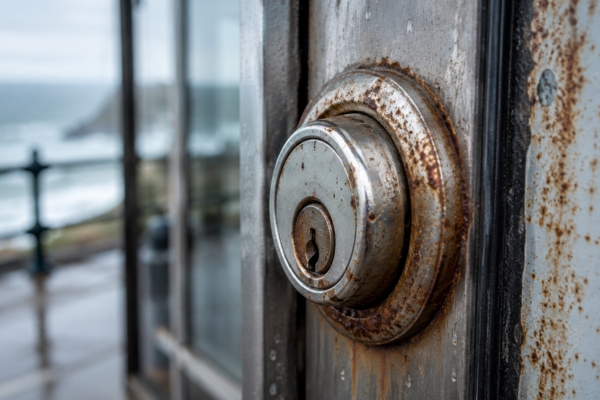
Internal wear rarely begins with visible damage. In many cases, salt intrusion starts inside the keyed entry system long before exterior rust appears.
Why Residential-Grade Hardware Struggles in High-Traffic Seaside Buildings
Many standard door locks are designed for light residential use. They may perform adequately inland, but waterfront business properties create very different operating conditions.
Common failure points include:
- Zinc alloy internal parts degrading inside locking systems
- Springs losing tension due to moisture exposure
- Keyways collecting salt deposits and debris
- Decorative finishes wearing away from frequent use
- Hinges seizing under constant humidity and salt exposure
- Electronic readers degrading due to moisture intrusion
Decorative entry hardware also creates additional risk. Many plated finishes look durable initially, but once the surface coating is scratched or worn, the base material deteriorates rapidly.
This is especially common with:
- Zinc-based die-cast hardware
- Decorative chrome over soft metals
- Low-grade stainless steel
- Mixed-metal assemblies
For commercial operators, these failures create operational problems, not just cosmetic concerns.
A corroded locking core can delay employee entry, interrupt deliveries, create tenant complaints, or prevent secure locking after business hours. Emergency maintenance visits and repeated replacement cycles also increase long-term operating costs for property managers and business owners.
Sliding Doors Need More Than Basic Marine Protection
Sliding doors are common in seaside restaurants, hospitality properties, retail spaces, and waterfront commercial buildings because they maximize natural light and outdoor access.
However, these systems experience some of the harshest environmental exposure.
Where Sliding Door Systems Usually Fail
Sliding door assemblies often fail where moisture reaches internal locking components through poorly sealed drainage paths or exposed tracks.
Common problem areas include:
- Tracks collecting sand and salt deposits
- Rollers wearing faster in humid environments
- Drainage channels clogging over time
- Multi-point locking systems remaining partially exposed
- Large panel gaps allowing salt intrusion
Wind-driven rain also increases pressure around sliding door seals and locking points.
Without proper drainage and corrosion-resistant entry components, moisture eventually reaches the internal locking assembly and accelerates wear on moving parts.
What Sliding Doors Need in Salt-Air Conditions
| Component | Recommended Solution |
|---|---|
| Door frame | Thermally broken aluminum or marine-grade steel |
| Fasteners | 316 stainless steel |
| Track systems | Sealed drainage channels |
| Weather seals | High-performance compression seals |
| Locking system | Marine-grade multi-point locking system |
Why Sliding Door Locks Fail Internally
Sliding doors often rely on multi-point locking systems for structural stability and weather resistance.
However, the locking assembly itself must also resist internal wear.
A standard Euro cylinder may begin sticking when salt deposits build inside the keyway and pin chambers. Over time, this creates inconsistent locking performance, key resistance, and latch problems that affect daily operation.
For exposed exterior entrances, locking systems should include:
- Corrosion-resistant internal springs
- Brass or stainless internal components
- Sealed keyed entry faces
- Protective escutcheons or weather covers
Business entry points also benefit from integrated electronic access control. A restaurant manager or property operator can issue temporary credentials to maintenance teams or vendors without sharing physical keys, improving both convenience and security oversight.
Security Expectations for Sliding Door Entrances
Ground-level sliding doors are frequently targeted as access points because of their large opening area.
Security should not rely solely on exterior finishes. Internal locking strength, weather sealing, long-term durability, and operational consistency all matter in salt-heavy environments.
Hinged Entry Doors Face the Highest Daily Wear
Hinged doors remain the most common entry type for offices, storefronts, warehouses, side entrances, and service access points.
They also experience direct exposure to marine airflow and repeated daily usage.
Common Seaside Failure Risks
Main entry doors often face:
- Constant salt exposure on exposed locking systems
- Material breakdown around hinges and latch hardware
- Wear from high-cycle daily operation
- Surface coating deterioration around handles and escutcheons
Frequent opening and closing accelerates wear on moving components.
In waterfront commercial buildings, entry doors must handle both environmental stress and operational demand simultaneously. A busy office entrance or service access point may cycle hundreds of times per day while remaining exposed to salt-heavy airflow.
Some Hardware Materials Break Down Much Faster
Not all metals perform equally in marine environments.
| Material Type | Suitability |
|---|---|
| 316 stainless steel | Recommended for exposed exterior hardware |
| Solid brass or bronze | Excellent long-term durability |
| 304 stainless steel | Acceptable for sheltered areas only |
| Zinc alloy die-cast hardware | Not recommended |
| Decorative plated hardware | High failure risk near marine exposure |
316 stainless steel performs significantly better because it contains molybdenum, which improves resistance to chloride-related deterioration.
Bronze and solid brass also perform well because they develop a protective surface patina instead of relying entirely on external coatings.
The Lock Cylinder Is Often the First Part to Fail
The lock cylinder is often the first internal component affected by salt intrusion.
Environmental deterioration inside the cylinder can cause:
- Sticking keys
- Incomplete latch retraction
- Pin seizure
- Spring failure
- Inconsistent locking operation
These problems often appear before visible exterior rust develops.
For high-traffic business entrances, locking systems should include:
- Stainless internal springs
- Corrosion-resistant pins
- Sealed cylinder faces
- Protective rubber gaskets
- Anti-drill and anti-snap reinforcement
In larger business properties, electronic cylinders can further improve operational efficiency. Cloud-based credential management allows managers to update permissions remotely instead of replacing physical keys after staff turnover or contractor changes.
Main Entrances Need Both Security and Long-Term Reliability
Main entrances represent the primary security perimeter for most business properties.
Salt-air exposure should never reduce physical security performance.
A properly specified marine-grade locking solution should combine:
- Environmental durability
- Forced-entry protection
- Long-term mechanical reliability
- High-cycle operational performance
Modern access systems also support audit logs, credential scheduling, and scalable permissions management, helping businesses maintain better visibility and control across multiple entry points.
Pivot Doors Create Different Marine Exposure Risks
Pivot doors are increasingly used in luxury residences, boutique hotels, premium retail spaces, and commercial lobbies because they create large, visually clean entrances.
However, these systems introduce different environmental vulnerabilities.
Common Failure Risks in Pivot Systems
Unlike traditional hinged doors, pivot systems contain hidden moving components that may trap moisture internally.
Common risks include:
- Salt intrusion into concealed pivot mechanisms
- Internal wear inside floor closers
- Moisture buildup around concealed bearings
- Seal deterioration around oversized door panels
Because many pivot components are hidden, damage may remain undetected until operation becomes inconsistent.
For hospitality properties and commercial lobbies, this can create operational disruption, emergency maintenance calls, and a poor visitor experience.
What Pivot Door Systems Need Near the Ocean
For waterfront pivot systems:
- Internal pivot hardware should use stainless steel components
- Floor closers should use sealed marine-grade housings
- Door assemblies should include moisture-resistant sealing systems
- Electronic locking components should use weather-protected enclosures
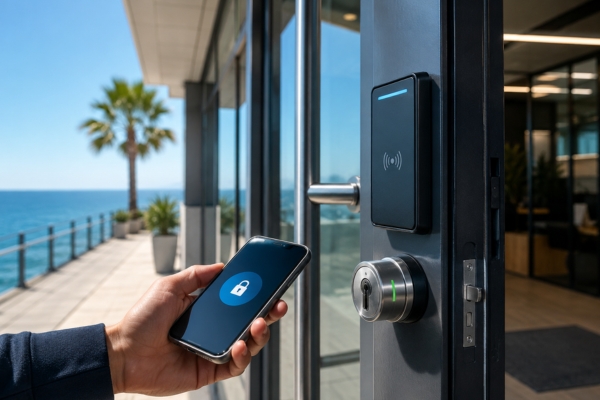
Electronic Entry Systems Need Better Environmental Protection
Modern business properties increasingly use:
- Mobile credentials
- NFC access systems
- Keyless entry
- Cloud-based access control
- Remote management platforms
These systems simplify access management and reduce dependence on physical keys.
However, exposed electronic systems require:
- Sealed electronic housings
- Marine-rated protective gaskets
- Corrosion-resistant readers
- Moisture-protected wiring pathways
Without proper sealing, moisture intrusion can affect readers, credentials, and internal electronics.
For multi-tenant properties and hospitality buildings, centralized access control also improves scalability. Managers can update permissions remotely, review audit logs, and control multiple entry points from a single platform.
Security Expectations for Premium Entrances
Premium entry systems create higher security expectations.
A visually impressive entrance quickly loses value if the locking system becomes unreliable due to moisture exposure or internal deterioration.
Long-term reliability, credential control, and consistent operation matter just as much as appearance.
Different Entrances Need Different Levels of Protection
Different doors require different levels of protection depending on exposure, usage frequency, and operational importance.
| Entry Type | Exposure Level | Usage Frequency | Recommended Security Level |
|---|---|---|---|
| Storage room | Low | Low | Basic |
| Rear employee entrance | Medium | High | Medium-High |
| Retail storefront entrance | High | Very High | High |
| Hospitality lobby | Extreme | High | Very High |
Business properties should evaluate both environmental exposure and operational usage when selecting locking systems.
A lightly used inland office door and a heavily used beachfront storefront entrance should never use the same hardware specification.
Better Locking Systems Reduce Long-Term Maintenance
Mechanical Lock Cylinders
A properly designed marine-grade cylinder remains one of the most reliable long-term solutions for exposed environments.
Key features include:
- Stainless steel springs
- Brass or bronze internal housings
- Sealed keyway protection
- Corrosion-resistant pins
Business benefit — fewer emergency service calls, lower replacement frequency, and more consistent operation over time.
High-Security Mechanical Cylinders
High-security cylinders combine environmental durability with:
- Anti-drill protection
- Anti-pick configurations
- Anti-snap reinforcement
Business benefit — physical security performance remains stable even in aggressive marine conditions.
Electronic Cylinders and Keyless Entry
Keyless entry systems reduce dependence on physical keys, which helps minimize wear around traditional keyways.
These systems may include:
- Mobile credentials
- NFC credentials
- Remote permissions management
- Scheduled access control
- Cloud-based credential updates
Business benefit — simplified credential management and improved operational flexibility.
A property manager can grant temporary access to contractors, cleaning crews, or delivery teams without replacing physical keys or visiting the property in person.
Integrated Access Control Systems
Larger business properties often benefit from centralized access control systems.
These systems can manage:
- Multiple entry types
- Staff permissions
- Audit logs
- Credential scheduling
- Remote access updates
Business benefit — scalable access management across multiple entry points while improving operational visibility and reducing administrative overhead.
Even Marine-Grade Hardware Needs Regular Maintenance
Even marine-grade entry components require regular maintenance.
Routine care significantly extends hardware lifespan and reduces long-term replacement costs.
| Maintenance Task | Recommended Frequency | Purpose |
|---|---|---|
| Fresh water rinse | Monthly | Removes salt buildup |
| Silicone lubrication | Quarterly | Protects moving components |
| Lock inspection | Every 6 months | Detects early internal wear |
| Hardware replacement review | As needed | Prevents system-wide failure |
Avoid abrasive cleaners because they damage protective finishes and accelerate environmental wear.
If keys begin sticking or lock operation feels inconsistent, internal deterioration may already be developing inside the locking mechanism.
The Right Hardware Protects Both Security and Property Value
Salt-heavy environments place continuous stress on entry systems. Standard hardware often fails because it was never designed for aggressive marine exposure, high humidity, and heavy operational cycling.
Different entry types require different strategies.
Sliding doors require sealed drainage systems and corrosion-resistant multi-point locks.
Hinged doors require durable locking systems, marine-grade hinges, and high-cycle reliability.
Pivot doors require sealed internal components, moisture-protected locking systems, and scalable access management.
The most important question for property owners and managers is not whether exterior hardware looks corrosion-resistant.
It is whether the internal locking components are engineered to survive long-term environmental exposure while supporting reliable daily operation.
Reliable entry systems reduce maintenance costs, improve operational continuity, strengthen access control, and protect long-term property value.
Salt-heavy environments place constant pressure on locking systems, moving hardware, and business entry reliability. Choosing solutions engineered for long-term durability helps reduce maintenance cycles, improve operational continuity, and strengthen access control performance over time.
EOS SECURE delivers precision-engineered mechanical and electronic lock cylinders backed by more than a decade of manufacturing expertise. Established in 2011, our factory operates under ISO9001 and ISO14001 certifications, ensuring every product meets rigorous international standards including EN1303 and SKG. With over 50 advanced Swiss-type CNC automatic lathes and integrated machining centers, we manufacture high-quality lock cylinders trusted by clients across industries worldwide. Whether you need small-batch customization or large-scale production, EOS SECURE provides reliable performance, consistent quality, and dependable technical support for demanding business environments. Explore EOS SECURE solutions to strengthen long-term security and entry reliability.