Which Locks Work Best for Sliding Glass Doors in Commercial and Rental Properties
Sliding glass doors are common in retail stores, offices, studios, and rental properties. They provide light, visibility, and convenient access. At the same time, they often introduce avoidable security gaps when treated as secondary entrances rather than critical access points.
This guide explains how small businesses and property managers can secure sliding glass doors using proven lock solutions. The focus is on performance, reliability, and long-term operational security rather than residential convenience or short-term fixes.
Why Sliding Glass Doors Create Hidden Risks for Businesses
Frequent use without equivalent protection
In commercial environments, sliding glass doors are often used as staff entrances, side access points, or connections to outdoor areas. Despite frequent daily use, they usually receive less security investment than main doors. This imbalance creates a weak link in overall access control.
Reduced visibility increases exposure
Side and rear entrances are typically quieter and less visible. For businesses, this makes sliding doors more attractive targets for unauthorized entry, especially outside business hours.
Operational impact goes beyond theft
A compromised door does not only result in asset loss. It can disrupt operations, affect insurance claims, and undermine employee safety. Reliable door security supports business continuity and risk management.
Common Risks and Misunderstandings With Sliding Glass Doors
Primary security risks
- Panel lifting or shifting
Some sliding doors can be lifted from the track, bypassing basic latch mechanisms. - Weak factory-installed locks
Many standard locks rely on simple latches that offer limited resistance to prying or manipulation. - Large glass surfaces
Glass provides visibility but also requires reinforcement to delay forced entry.
Common misconceptions
- “All sliding door locks perform similarly.”
Lock performance varies widely. Commercial-grade designs differ significantly from basic residential hardware. - “A locked door is automatically secure.”
Locks must work with proper installation, anti-lift protection, and routine maintenance. - “Older doors cannot be upgraded.”
Even when full lock replacement is not possible, supplemental solutions can improve resistance and delay entry.
Effective Lock Types for Sliding Glass Doors in Commercial Use
| Lock type | Key characteristics | Advantages | Limitations | Best use case |
|---|---|---|---|---|
| Sliding security bar or rod | Bar placed in the door track | Low cost, fast deployment | Manual operation, not permanent | Supplemental protection |
| Sliding bolt lock | Bolt engages into the frame | Durable, simple design | Interior operation only | Basic daily reinforcement |
| Keyed lock | Requires controlled key access | Clear access accountability | Key management required | Primary commercial entry |
| Double bolt lock | Locks top and bottom | Strong anti-lift resistance | More complex installation | High-risk locations |
| Mortise lock | Embedded hook-style mechanism | High forced-entry resistance | Professional installation | Long-term commercial use |
| Alarm-integrated lock | Lock with sensors and alerts | Immediate breach awareness | Power or network dependency | Integrated security systems |
Professional Manufacturing Perspective
From a manufacturing standpoint, lock reliability depends on internal precision and material quality. Tight tolerances reduce manipulation risk. Reinforced alloys improve durability under repeated daily use. These factors directly affect how consistently a lock performs over time in commercial environments.
How to Choose the Right Lock for a Commercial Sliding Door
Assess realistic security requirements
Consider operating hours, location visibility, and asset value. Locks should match actual risk levels rather than minimum compliance standards.
Confirm door compatibility
Verify frame material, door thickness, track design, and existing cutouts. Proper fit is essential for lock performance.
Balance installation and scalability
- Surface-mounted solutions are suitable for quick upgrades.
- Mortise and multi-point systems provide stronger long-term protection but require precise installation.
Prioritize daily usability
High-traffic doors benefit from simple interior operation combined with controlled exterior access. Convenience supports consistent employee compliance.
Plan for durability
Corrosion-resistant materials such as stainless steel or treated alloys extend service life. Manufacturing quality directly affects maintenance frequency and replacement cycles.
Installing Sliding Glass Door Locks Correctly
Preparation
- Review manufacturer instructions carefully.
- Gather appropriate tools before drilling or mounting components.
Installation best practices
- Measure and mark positions precisely.
- Avoid unnecessary pressure near glass panels.
- Secure all components firmly to prevent movement.
Post-installation checks
- Test locking and unlocking repeatedly.
- Confirm the door cannot be lifted or shifted.
- Adjust rollers or strike plates as needed.
For older doors or complex systems, professional installation helps ensure proper alignment and long-term reliability.
Additional Ways to Reinforce Sliding Glass Door Security
Layered protection improves resistance and delay time:
- Shatter-resistant film helps hold glass together.
- Anti-lift blocks prevent panel removal.
- Door sensors provide immediate alerts.
- Motion-activated lighting reduces concealment.
- Clear landscaping improves visibility near entry points.
These measures support lock performance rather than replacing it.
Maintaining Sliding Glass Door Locks Over Time
Routine maintenance, quarterly recommended
- Clean tracks and lock components.
- Lubricate moving parts with approved lubricants.
- Tighten fasteners and mounting hardware.
Common performance issues
- Jamming often results from debris or misalignment.
- Key resistance may indicate internal wear.
- Inconsistent operation signals the need for adjustment or replacement.
Most commercial locks perform reliably for five to ten years when properly maintained.
FAQ
How do intruders typically breach sliding glass doors?
Unauthorized entry usually targets weak latch mechanisms rather than breaking glass. Common methods include prying the latch, lifting the panel from the track, or forcing the door to slide. Reinforced locks and anti-lift protection directly address these methods.
What is the most effective way to secure a sliding glass door?
The most reliable approach combines a high-quality primary lock with secondary reinforcement. Layered protection increases resistance, delays entry, and reduces the likelihood of successful intrusion.
Are smart locks suitable for sliding glass doors?
Smart locks can be effective when designed specifically for sliding systems. They should be paired with physical reinforcement to maintain security during power, battery, or network interruptions.
How can security be balanced with emergency egress?
Commercial sliding doors used for egress should include interior quick-release mechanisms. These allow rapid exit without compromising exterior access control during normal operation.
How should lock security ratings be evaluated?
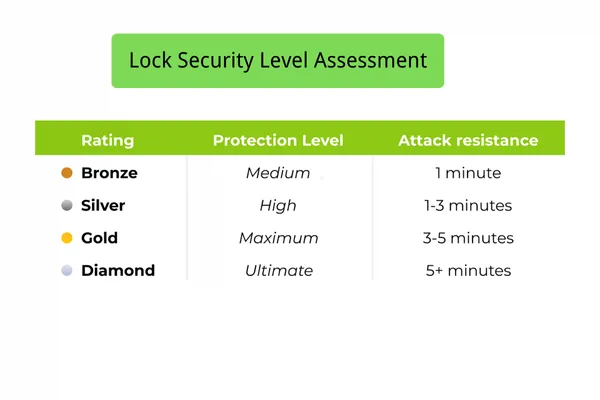
Recognized standards such as ANSI and EN classifications help compare durability and forced-entry resistance. Higher-rated locks typically offer better materials, tighter tolerances, and longer service life.
What if an existing door cannot support new locks?
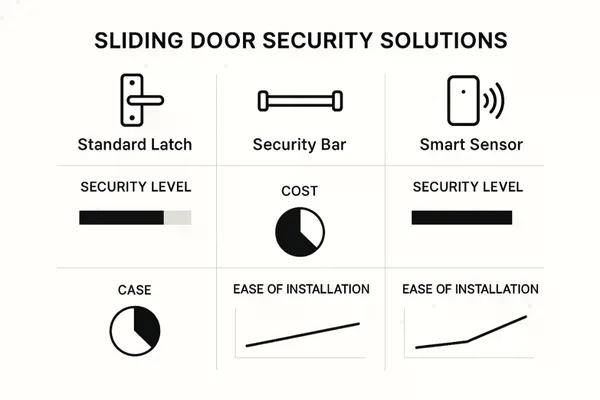
When structural limitations exist, supplemental solutions such as track bars and anti-lift devices can still improve security. Severely worn doors should be assessed before advanced systems are installed.
What Long-Term Sliding Door Security Depends On
Effective sliding glass door security relies on layered protection and consistent performance. Locks form the foundation, but reliability comes from precision manufacturing, correct installation, and ongoing maintenance.
EOS SECURE delivers precision-engineered mechanical and electronic lock cylinders backed by more than a decade of manufacturing expertise. Established in 2011, our factory operates under ISO9001 and ISO14001 certifications and meets recognized international security standards. By focusing on controlled tolerances, durable materials, and consistent quality, EOS SECURE helps businesses achieve stable, predictable access control across commercial and rental environments.
Explore EOS SECURE solutions to strengthen your business security.