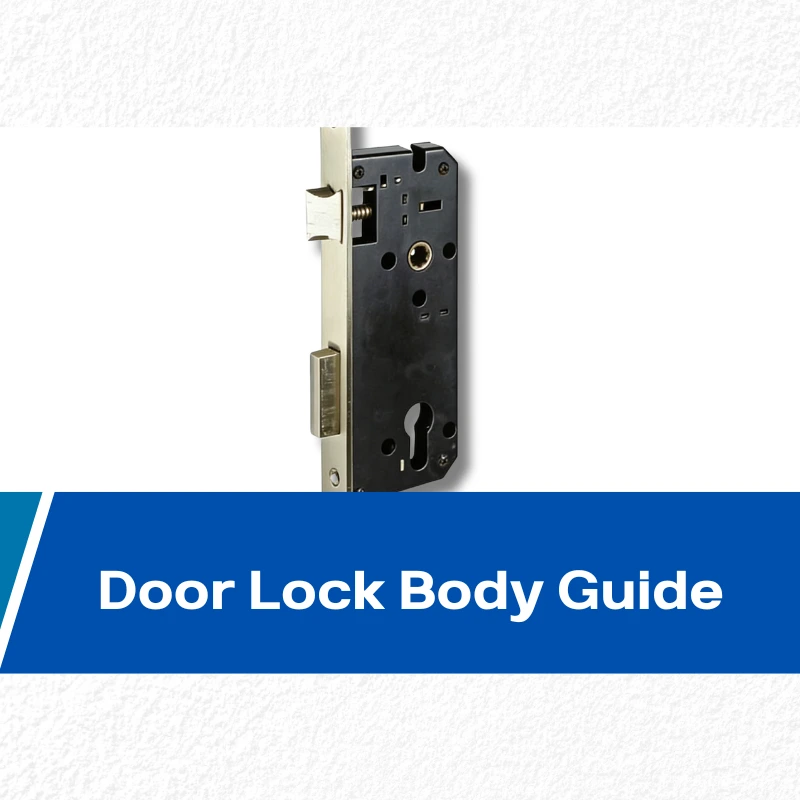
What Is a Door Lock Body and Why It Matters for Security
A door lock body is the internal mechanical unit installed inside a door. It contains the components responsible for locking and securing the door, including the latch, deadbolt, and linkage mechanisms that connect to the lock cylinder.
While the cylinder receives the key, the lock body performs the actual locking action. When the key rotates inside the cylinder, internal linkages inside the lock body extend or retract the bolt to secure the door.
Because the lock body directly handles the mechanical load of locking and forced entry resistance, its structural strength and reliability play a major role in overall door security.
For businesses, property managers, and commercial facilities, choosing a high-quality lock body helps ensure long-term stability, smoother operation, and better protection against forced entry. Retail shops, offices, and warehouses rely on durable lock bodies to maintain consistent security for daily operations.
EOS SECURE has specialized in precision lock component manufacturing since 2011. Through high-tolerance machining and durable materials, EOS lock bodies are designed to provide consistent performance across residential and commercial security systems.
Main Parts of a Door Lock Body
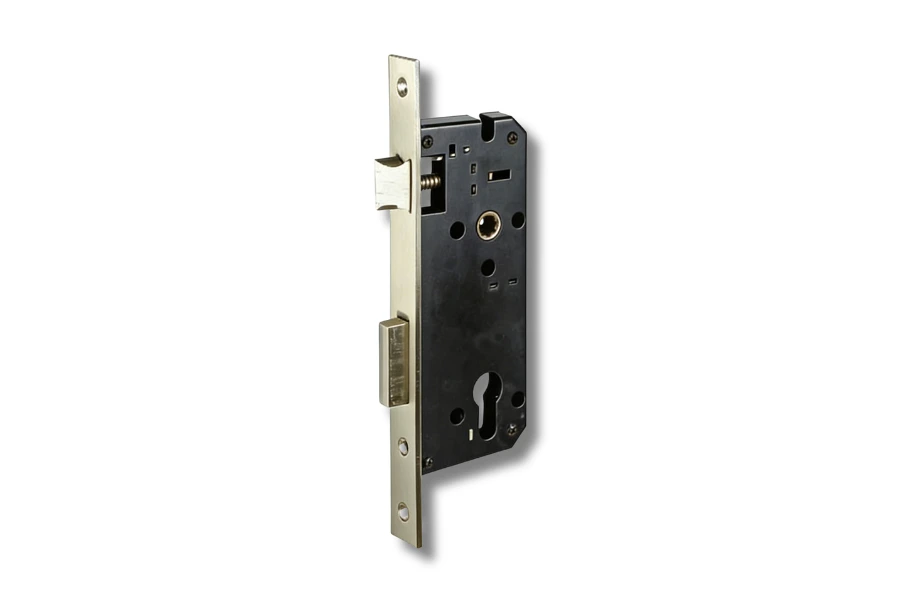
A door lock body contains several internal mechanical components that work together to control the locking function of the door.
The Lock Case – The Housing That Protects the Mechanism
The lock case is the metal housing that encloses all internal components of the lock body.
Typically manufactured from galvanized steel or stainless steel, the case protects the internal mechanisms from external force, wear, and environmental exposure.
A reinforced case structure helps the lock body resist impact and drilling attempts.
Deadbolt – The Main Locking Bolt
The deadbolt is the primary locking element responsible for securing the door.
Unlike the spring-loaded latch, the deadbolt extends fully into the strike plate and remains locked until the cylinder or thumb turn retracts it.
Because it is not spring-loaded, it provides stronger resistance against forced entry attempts.
Latch Bolt – The Spring Loaded Closing Bolt
The latch bolt is the spring-loaded bolt that allows the door to close automatically.
When the door shuts, the angled latch retracts slightly and then springs back into the strike plate, keeping the door closed without requiring a key.
The latch is usually operated by a door handle or lever.
Cam Mechanism – How the Cylinder Drives the Lock
The cam interface connects the lock cylinder to the internal mechanism of the lock body.
When the key rotates inside the cylinder, the cam transfers rotational movement to the lock body, activating internal linkages that move the deadbolt or latch.
This interaction allows the cylinder and lock body to function as a coordinated locking system.
Internal Linkage – How the Lock Body Moves the Bolts
Inside the lock body, a series of levers and linkages convert the rotational movement from the cylinder into linear bolt movement.
These mechanisms control:
- bolt extension
- bolt retraction
- handle-operated latch movement
In advanced lock bodies, additional linkages may operate multiple locking points simultaneously.
How a Door Lock Body Locks and Unlocks a Door
The lock body acts as the mechanical executor of the door lock system.
A simplified locking process typically follows this sequence.
Key inserted into cylinder
Cylinder rotates
Cam transfers rotation into the lock body
Internal linkage moves the deadbolt
Bolt extends into the strike plate and secures the door
When the key rotates in the opposite direction, the bolt retracts and the door can be opened.
Meanwhile, the latch bolt is controlled separately by the door handle or lever. This division of functions allows doors to close automatically while still requiring a key for full locking.
Common Types of Door Lock Bodies Used in Doors
Door lock bodies vary depending on installation method, security level, and application environment. Understanding the differences helps businesses choose the most appropriate security solution.
Mortise Lock Body – The Most Common High Security Lock
A mortise lock body is installed inside a pocket cut into the edge of the door. This design allows the lock to house multiple mechanical components in a reinforced structure.
Mortise lock bodies are widely used in commercial entrances, retail stores, office buildings, and residential entry doors because their reinforced design improves resistance to forced entry.
For example, a retail shop may use a mortise lock body with a high-security cylinder to protect the storefront after business hours.
Rim Lock Body – Surface Mounted Lock Systems
Rim lock bodies are mounted directly on the surface of the door rather than installed inside it.
These locks are typically used in older buildings or in situations where door modification is limited.
Although easier to install, rim locks generally provide lower security than mortise locks.
Tubular Lock Body – Compact Locks for Interior Doors
Tubular latch lock bodies are commonly used in interior doors.
They are compact and simple to install, making them popular for bedroom doors, office interior doors, and storage rooms.
However, tubular locks usually provide lower resistance to forced entry compared with mortise lock bodies.
Multi-Point Lock Body – Multiple Locking Points for Higher Security
Multi-point lock bodies operate several locking bolts along the door edge simultaneously.
When the key rotates, multiple locking points engage with the door frame. This distributes locking force across the entire door height and significantly increases resistance to forced entry.
Multi-point systems are commonly used in residential entrance doors, warehouse access doors, and commercial buildings where stronger perimeter security is required.
Property managers often use multi-point locking systems in apartment buildings to provide stronger door stability and improved security.
Door Lock Body vs Lock Cylinder – How They Work Together
Modern door lock systems are typically modular, meaning the lock body and lock cylinder function as separate components.
The cylinder receives the key and controls access, while the lock body performs the mechanical locking action.
Common cylinder interfaces include:
- Euro profile cylinder
- UK oval cylinder
- round cylinder
- Scandinavian cylinder
Because the cylinder and lock body are separate components, users can upgrade the cylinder without replacing the entire lock.
For example, a property manager can upgrade cylinders across multiple office doors while keeping the existing lock bodies installed. This approach improves security without replacing the entire hardware system.
EOS SECURE lock bodies are designed to be compatible with standard cylinder formats, making them suitable for a wide range of commercial and residential applications.
Security Features and Standards for Door Lock Bodies
The security performance of a lock body depends on both mechanical design and compliance with recognized testing standards.
Key security features include:
- reinforced bolt construction
- hardened bolt materials
- anti-drill protection plates
- reinforced lock case structure
These features help resist forced entry techniques such as prying, drilling, or impact.
EN 12209
EN 12209 is the European standard that defines performance requirements for mechanically operated locks and latches. The standard evaluates durability, strength, and operational reliability.
EN 1303
EN 1303 applies specifically to lock cylinders but is often considered together with lock body performance when evaluating complete locking systems.
SKG Certification
SKG certification evaluates resistance against burglary attacks and provides a star rating indicating the level of protection.
How to Choose the Right Door Lock Body for Your Door
Selecting the correct lock body depends on several practical considerations.
Door Type
Different door materials require compatible lock bodies.
Common door materials include:
- wood doors
- steel doors
- fire-rated doors
- glass doors
For example, small offices and retail shops typically install mortise lock bodies in metal or solid-core doors to improve durability and security.
Security Level
Higher-risk environments require stronger locking systems.
Retail stores, office entrances, warehouses, and public-facing commercial buildings often require reinforced locking systems.
Mortise lock bodies or multi-point locking systems provide stronger structural protection in these environments.
Compatibility
When replacing a lock body, it is important to measure:
- backset distance
- center spacing
- faceplate dimensions
- cylinder profile compatibility
Accurate measurement ensures the new lock body fits correctly within the door.
Door Lock Body Installation and Maintenance Tips
Correct installation ensures the lock body functions smoothly and securely.
Typical installation steps include:
- Confirm door thickness and lock body dimensions
- Insert the lock body into the door cavity or mounting position
- Install the lock cylinder and handle
- Secure mounting screws
- Test bolt and latch movement
Regular maintenance can extend the service life of the lock.
Recommended practices include lubricating the bolt mechanism periodically, keeping debris out of the strike plate area, and checking screw tightness over time.
Avoid oil-based lubricants because they can attract dust and reduce long-term performance.
EOS SECURE – Precision Lock Solutions for Modern Security
EOS SECURE delivers precision-engineered mechanical and electronic lock cylinders backed by more than a decade of manufacturing expertise. Established in 2011, our factory operates under ISO9001 and ISO14001 certifications, ensuring every product meets rigorous international standards including EN1303 and SKG.
With more than 50 advanced Swiss-type CNC automatic lathes and integrated machining centers, EOS SECURE manufactures high-quality lock cylinders trusted by clients across industries worldwide.
Whether you require small-batch customization or large-scale production, EOS SECURE provides reliable performance, consistent quality, and dependable technical support.
Secure your business with solutions built for long-term stability — contact us today.