Battery-powered smart locks are transforming how businesses manage access. They combine keyless entry, remote permissions, and scalable control without the complexity of hardwired systems.
For retail stores, offices, clinics, short-term rentals, and small warehouses, battery-powered locks reduce key management costs while improving operational control. This guide explains how they work, what batteries they use, how long they last, and how to manage them reliably in commercial environments.
How Battery-Powered Smart Locks Work in Real Buildings
A battery-powered smart lock operates independently from building wiring. It uses internal batteries to power credential verification and motorized locking.
It typically powers:
- Wireless modules – Bluetooth, Wi-Fi, Z-Wave, or Zigbee
- Motorized locking mechanisms
- Keypads or touchscreens
- Fingerprint readers
- Credential authentication systems
Instead of distributing physical keys, businesses issue digital credentials. When authentication succeeds, the motor rotates the cylinder and grants entry.
This removes the risk of lost keys and unauthorized duplication while keeping access centralized.
How They Operate Without Wiring
Most battery-powered locks use a sleep-and-wake architecture.
- The lock remains in low-power standby mode
- It activates only when detecting a credential
- The motor completes the lock or unlock cycle
- It returns to standby to conserve energy
Sleep mode reduces battery drain. Lower energy consumption translates into fewer maintenance visits in multi-door installations.
Communication Options
Wireless communication affects both functionality and battery life:
- Bluetooth – Low energy, ideal for local staff access
- Wi-Fi – Enables remote management and cloud-based control
- Z-Wave or Zigbee – Integrates into smart building ecosystems
For example, a retail store can grant temporary digital access to a delivery driver without handing over a physical key. Once the delivery is complete, permissions can be revoked remotely.
Which Access Methods Fit Your Business?
Battery-powered locks support multiple credential types. The right choice depends on workflow and staff turnover.
Mobile Access
Secure app-based credentials allow remote management and real-time permission updates.
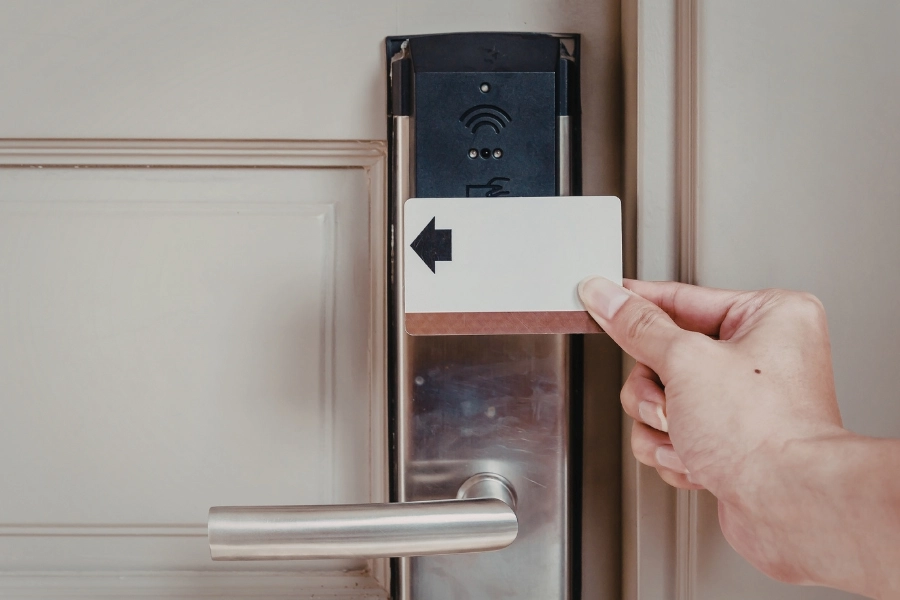
RFID or NFC
Card-based systems are efficient for offices and co-working spaces.
PIN Code
Temporary codes support contractors, cleaning crews, or short-term guests.
Biometric
Fingerprint authentication suits restricted areas such as storage rooms or financial offices.
Smart System Integration
Integration with cameras and access logs provides traceable audit records.
Flexible credential options allow businesses to scale without replacing hardware.
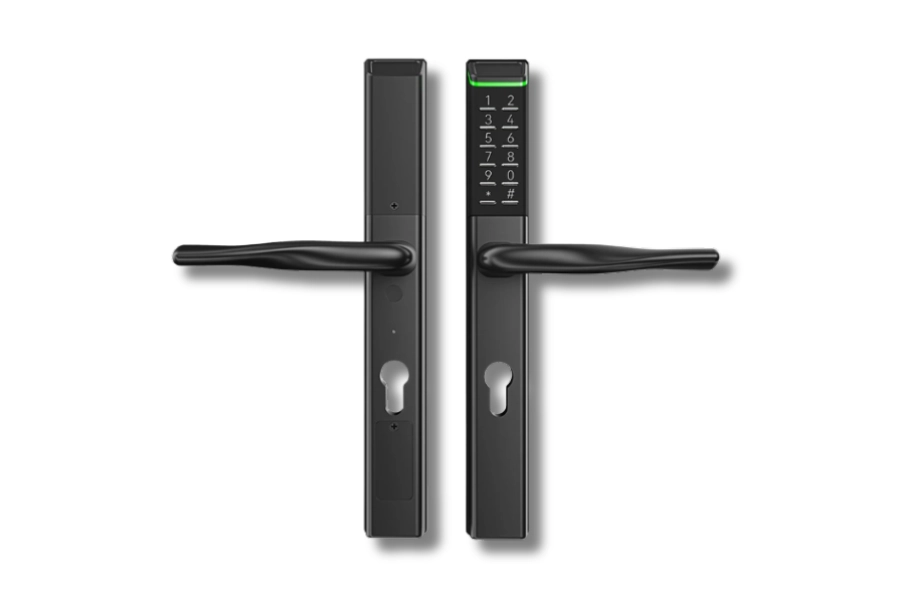
EOS SECURE smart cylinders and handle sets use modular configurations, enabling property managers to match functionality to operational needs.
Which Battery Type Is Best for Commercial Locks?
Battery selection impacts reliability and maintenance planning.
| Battery Type | Typical Voltage | Typical Lifespan | Commercial Consideration |
|---|---|---|---|
| AA/AAA Alkaline | 1.5V | 6–12 months | Lower upfront cost but more frequent replacement |
| CR2 Lithium | 3V | 1.5–3 years | Compact, stable output |
| CR123A Lithium | 3V | 1–2 years | Strong low-temperature performance |
| CR2450 Button Cell | 3V | Varies | Suitable for lower-power designs |
| Rechargeable Li-ion | 3.7V | 3–6 months per charge | Requires charging management |
Industrial vs Consumer Batteries
In commercial properties, predictable voltage stability is critical.
Industrial-grade lithium batteries provide consistent output. This reduces the risk of sudden shutdowns that could interrupt access during business hours.
How Long Will the Batteries Actually Last?
Battery lifespan depends on:
- Daily access frequency
- Communication type
- Environmental conditions
- Enabled features
In typical commercial use:
- AA batteries last 6–12 months
- Lithium batteries may last 1.5–3 years
For multi-door environments, scheduling proactive battery replacement prevents emergency maintenance calls.
What Happens If the Battery Fails?
Battery-powered systems include layered fail-safe mechanisms.
Low Battery Alerts
- App notifications
- Audible warnings
- LED indicators
Most systems provide advance notice before shutdown.
Emergency Access Options
- Mechanical key override
- 9V emergency contact terminals
- USB emergency power input
- Backup PIN credentials
Because the lock operates independently from building electricity, it continues working during power outages.
Battery-powered does not mean power-dependent on the grid. It increases resilience during electrical failures.
How to Reduce Maintenance and Extend Battery Life
Small operational adjustments improve reliability:
- Use lithium batteries instead of alkaline
- Disable Wi-Fi if remote management is not required
- Adjust auto-lock timing
- Enable power-saving modes
- Keep battery contacts clean
- Avoid exposure to extreme temperatures
Routine inspection every six months keeps performance predictable.
Are Battery-Powered Locks Secure Enough for Commercial Use?
Security must address both physical and digital threats.
Physical Protection
- Anti-drill and anti-pull cylinder construction
- Reinforced housing
- Compliance with EN1303 and SKG standards
Digital Protection
- Encrypted communication such as AES-based protocols
- Secure credential authentication
- Rolling code verification
- Cloud-based audit logs
Traditional residential smart locks often lack multi-user access control features. Commercial-grade systems are designed for credential management, permissions control, and traceable access history.
Can Battery-Powered Locks Fit Existing Doors?
Most systems replace standard Euro profile cylinders.
They are compatible with:
- Standard door thickness
- Many multi-point locking systems
- Retrofit upgrades without structural wiring
Installation typically requires no electrical modification, reducing installation cost and downtime.
Should Your Business Choose Battery-Powered Locks?
Battery-powered smart locks provide scalable, wire-free access control. They reduce installation complexity while improving credential management and operational flexibility.
For small and growing businesses, they offer controlled access without the overhead of mechanical key distribution.
EOS SECURE designs battery-powered smart lock cylinders and handle sets engineered for commercial reliability. Our systems support modular credential configurations, scalable access control, and compliance with EN1303 and SKG standards. Backed by ISO9001 and ISO14001 manufacturing processes and advanced CNC production capabilities, EOS SECURE delivers consistent quality for both retrofit projects and large-scale deployments.
If your business is evaluating secure, flexible, and professionally engineered battery-powered lock solutions, explore EOS SECURE systems built for long-term operational stability.