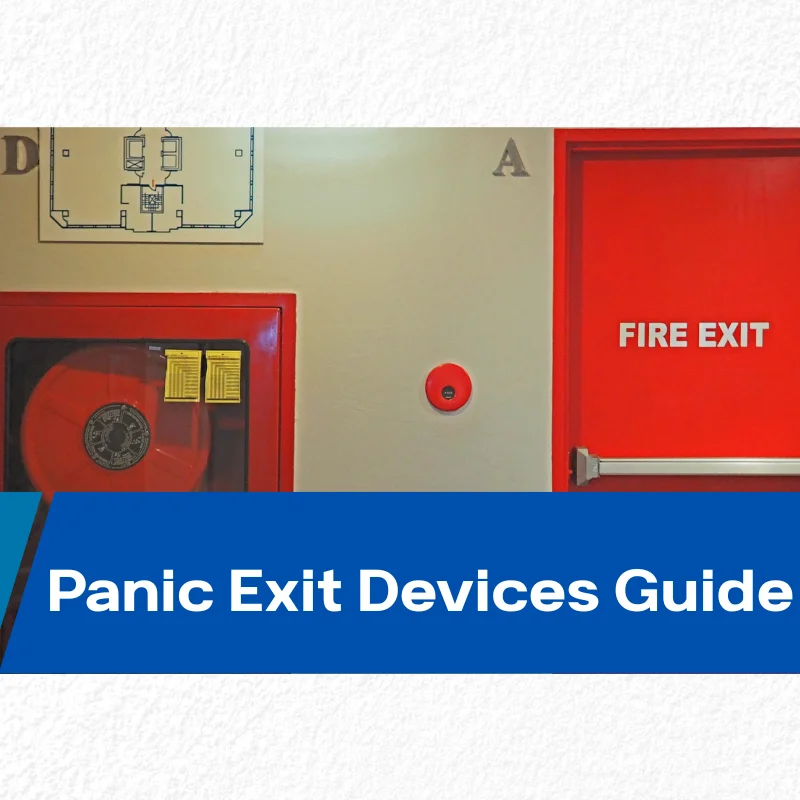
What Is a Panic Exit Device and Why It Matters
Definition and Common Names
A panic exit device is a door latching assembly that releases when pressure is applied in the direction of egress travel. It allows occupants to exit immediately during an emergency without twisting, turning, or using a key.
You may also hear it called a panic bar, crash bar, push bar, or exit device. In commercial code language, exit device is the formal term.
For business owners, this hardware is not optional decoration. It is a life-safety component that directly affects compliance inspections, liability exposure, and operational readiness.

How the Mechanism Works
The core function is simple. A single push releases the latch, and the door swings open in the direction of exit.
Codes require the actuating portion to extend at least half the width of the door. Operating force must not exceed 15 pounds under model codes, and many manufacturers design to 5 pounds to align with ADA expectations.
This low-force, single-motion design ensures evacuation even when a crowd is pressing against the door. In practical terms, it reduces the risk of exit obstruction during high-stress situations.
Why Panic Hardware Became Law
Modern panic hardware standards were shaped by tragedy.
Major disasters in the late 19th and early 20th centuries, including the Victoria Hall disaster, the Iroquois Theatre fire, and the Collinwood school fire, revealed how locked or inward-opening doors could turn exits into fatal bottlenecks.
Today, building codes worldwide reflect those lessons. Failing to comply is not simply a safety issue, it can delay occupancy permits, invalidate insurance assumptions, and increase legal risk.
Core Functions and Required Characteristics
Primary Safety Function
A panic exit device ensures that doors can always be opened from the inside with a single motion. No key, no special knowledge, no secondary action.
This internal override is critical for:
- Life safety compliance
- Fire marshal approval
- Reduced evacuation delay
For business owners, this translates to predictable emergency performance and fewer regulatory disputes.
Mandatory Code Characteristics
Where panic hardware is required, certain characteristics are non-negotiable.
- Single push motion only
- Operating force at or below 15 pounds
- Actuating portion at least half door width
- Mounting height between 34 and 48 inches
- No additional locking devices such as chains or padlocks
Balanced doors must use touchpad-style devices and cannot use crossbar designs. Using the wrong configuration can result in inspection failure.
Durability and Performance Standards
In the United States, panic hardware must comply with UL 305 and often ANSI BHMA A156.3 performance grades.
In the European Union, EN 1125 governs panic exit devices used in public panic situations.
Commercial-grade devices are typically tested for 100,000 to 500,000 cycles. For high-traffic environments such as retail, hospitality, or educational facilities, durability directly affects maintenance costs and downtime.
Where Panic Exit Devices Are Required
Primary Code References
Key regulatory sources include:
- International Building Code
- NFPA 101 Life Safety Code
- NFPA 70 for certain electrical rooms
Local jurisdictions and authorities having jurisdiction may enforce amendments. Always verify current requirements before specifying hardware.
Occupancy and Load Thresholds
Requirements are generally based on occupancy type and occupant load.
Under modern IBC editions, panic hardware is required for:
- Assembly or educational occupancies with 50 or more occupants
- High-hazard occupancies regardless of load
Under NFPA 101, panic hardware is typically required for:
- Assembly, educational, or daycare occupancies with 100 or more occupants
- High-hazard areas with more than five occupants
If your space meets these thresholds, non-compliant hardware can trigger corrective orders or delay approvals.
Typical Applications
Common locations include:
- Theaters, arenas, conference centers
- Schools and university facilities
- Restaurants and nightclubs
- Hospitals and healthcare facilities
- Factories and hazardous material areas
- Airports and transit hubs
- Government buildings and libraries
- Large multi-unit residential buildings
Even when not required, many facilities install panic hardware for improved traffic flow and reduced wear on door hardware.
Types of Panic Exit Devices and How to Choose
By Actuating Style
Touchpad devices are the most common in North America. They support electrified functions and are easier to integrate with access control systems.
Crossbar devices provide a more traditional aesthetic and are common in Europe. Electrification options may be more limited.
Recessed devices reduce projection and are used in environments where corridor clearance matters.
Selecting the right style affects not only appearance but also integration flexibility.
By Latching Configuration
Rim devices are surface-mounted and project the latch from the device itself. They are simple, cost-effective, and widely used on single doors.
Mortise devices use a lock body installed inside the door. They provide cleaner aesthetics and increased security.
Vertical rod devices latch at the top and bottom. They are commonly used on pairs of doors without a center mullion.
Multi-point devices combine rim and vertical rod configurations for enhanced security or wind resistance.
Choosing the wrong configuration can increase maintenance complexity, especially in high-traffic commercial environments.
Mechanical vs Electrified Models
Standard mechanical devices provide reliable egress without power.
Electrified models support:
- Electric latch retraction
- Delayed egress
- Alarmed exit
- Monitoring switches
For small businesses using access control systems, electrified devices provide scalable control without compromising life safety.
Panic Exit Hardware vs Fire Exit Hardware
Understanding the Difference
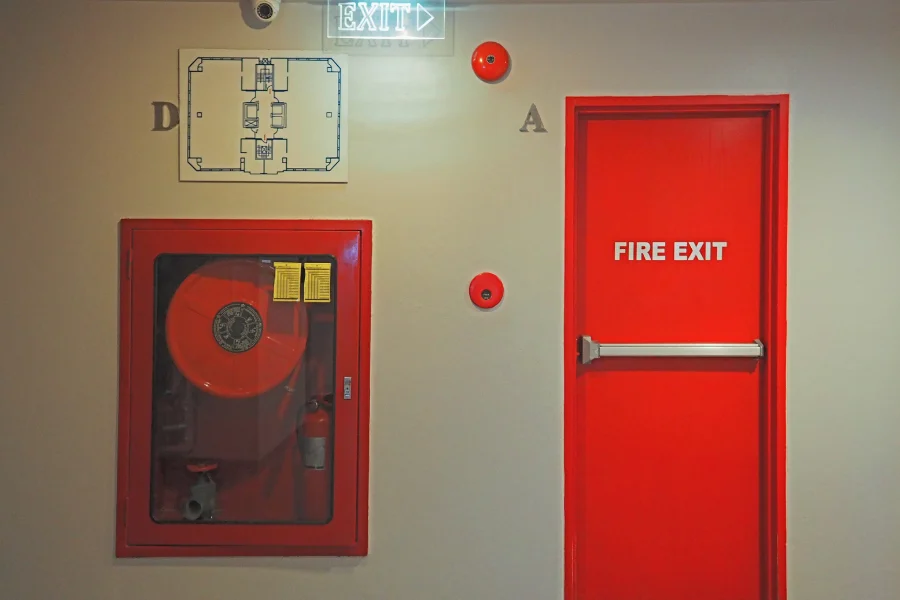
All fire exit hardware is panic hardware. Not all panic hardware qualifies for fire-rated applications.
If a door is part of a fire-rated assembly, it must use fire exit hardware that meets fire testing standards.
Key Distinctions
Fire exit hardware must:
- Automatically relatch when the door closes
- Be labeled for fire use
- Withstand fire-resistance testing
- Prohibit mechanical dogging
Standard panic hardware does not require these features.
Installing non-fire-rated panic hardware on a fire door can invalidate the door assembly rating. This may create compliance violations and increase liability in the event of an incident.
Exterior Trim and Access Control Considerations
While the panic device governs safe exit, the exterior trim governs entry.
Common functions include:
- Exit only
- Night latch
- Classroom function
- Passage function
- Storeroom function
Your choice determines how credentials are managed and who can enter your building.
For example, a retail shop may use storeroom trim to ensure exterior entry always requires a key. A school may use classroom function trim to allow controlled locking from the outside.
Dogging and Operational Efficiency
Dogging holds the latch in the retracted position so the door operates as push-pull.
This reduces wear in high-traffic periods and improves convenience during business hours.
Mechanical dogging is not permitted on fire-rated doors. Electrified latch retraction may provide similar functionality while maintaining compliance.
Used properly, dogging can extend hardware lifespan and reduce service calls.
Global Standards and Regional Differences
North America primarily follows UL 305 and ANSI BHMA standards.
Europe follows EN 1125 for panic situations and EN 179 for controlled environments where panic is unlikely.
In North America, panic hardware is often used even when not strictly required, due to convenience and usability. In Europe, it is more strictly tied to code-mandated locations.
Understanding these differences is critical for international projects.
How to Select the Right Device for Your Facility
Step One – Confirm Fire Rating
If the door is labeled as a fire door, you must use fire exit hardware. This decision affects dogging, relatching, and compliance requirements.
Step Two – Identify Door Configuration
Single doors typically use rim or mortise devices.
Pairs of doors without a mullion typically require vertical rod configurations.
Correct identification prevents alignment problems and long-term maintenance costs.
Step Three – Define Entry Control Needs
Determine whether exterior access should be:
- Locked at all times
- Scheduled
- Credential-based
- Integrated with cloud based access control
This decision shapes trim selection and cylinder compatibility.
Step Four – Consider Future Scalability
If you plan to add electronic credentials, remote management, or audit logs, select hardware that supports electrified functions.
Planning ahead reduces replacement costs later.
Integration with Lock Cylinders and Access Systems
The exterior trim relies on a lock cylinder or electronic credential system to manage entry.
A properly engineered cylinder supports:
- Master key systems
- Restricted keyways
- Anti-drill and anti-pick protection
- Compatibility with smart or hybrid credentials
EOS SECURE designs mechanical and electronic lock cylinders that integrate with commercial exit devices, supporting scalable access control for small and growing businesses.
For example:
A retail shop can grant temporary access to delivery personnel without issuing permanent keys.
A multi-tenant office can maintain master key hierarchy while preserving secure egress.
A healthcare facility can combine panic hardware with antimicrobial cylinder finishes to support hygiene standards.
Conclusion
Panic exit devices are foundational to modern building safety. They protect occupants, support compliance, and reduce operational risk.
Selecting the correct device requires understanding fire ratings, occupancy thresholds, door configuration, and access control strategy.
When properly specified, panic hardware improves both life safety and day-to-day operations.
EOS SECURE delivers precision-engineered mechanical and electronic lock cylinders backed by more than a decade of manufacturing expertise. Established in 2011, our factory operates under ISO9001 and ISO14001 certifications, ensuring every product meets rigorous international standards including EN1303 and SKG. With over 50 advanced Swiss-type CNC automatic lathes and integrated machining centers, we manufacture high-quality lock cylinders trusted by clients across industries worldwide. Whether you need small-batch customization or large-scale production, EOS SECURE provides reliable performance, consistent quality, and dependable technical support. Secure your business with solutions built for long-term stability — contact us today.