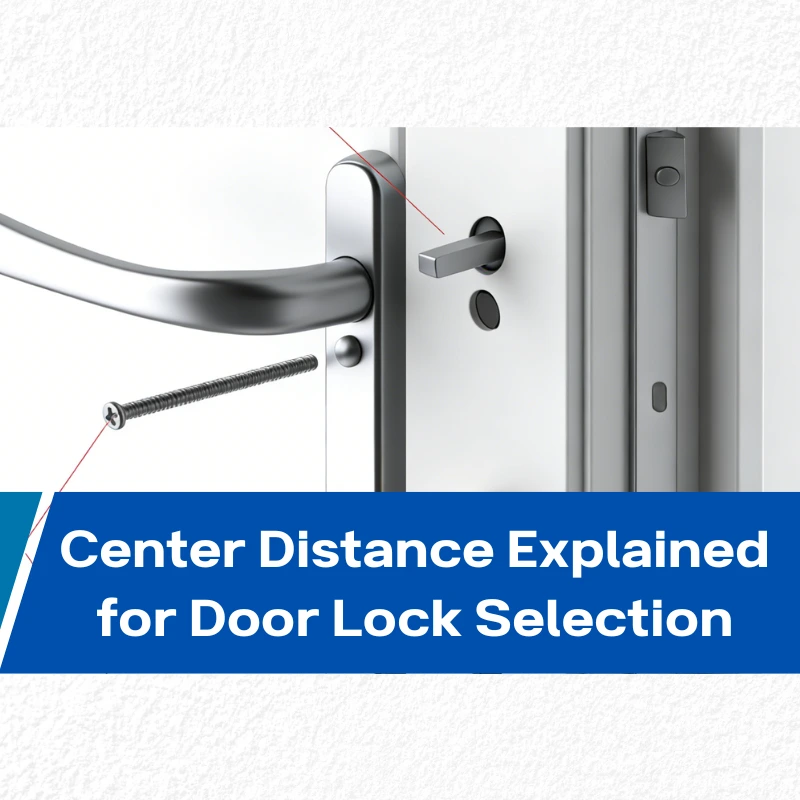
What Center Distance Means for Door Lock Compatibility
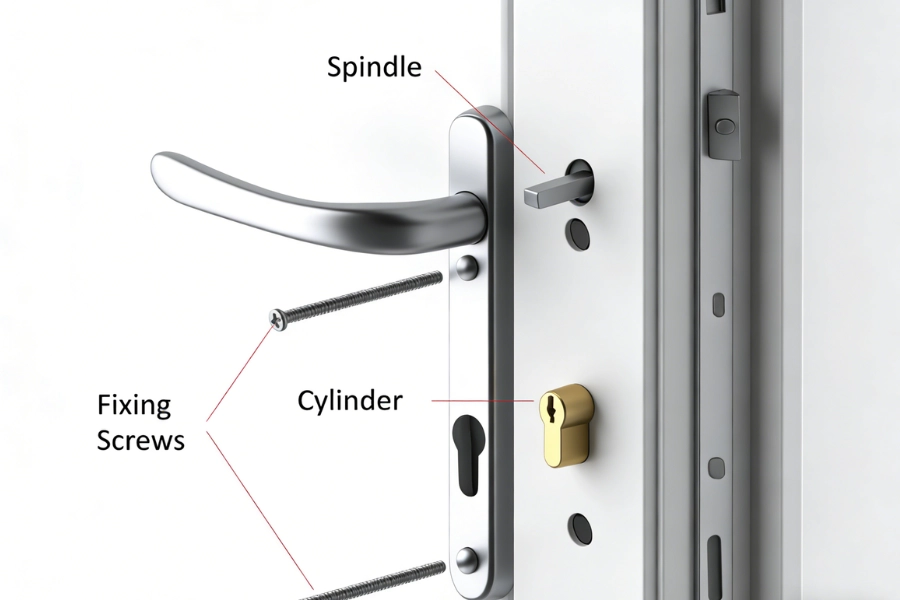
Center Distance refers to the horizontal distance between two key openings on a door lock. In most lock systems, this means the distance between the handle spindle center and the lock cylinder or keyhole center.
This measurement plays a critical role in door lock compatibility. It determines whether the lock body, handle set, and cylinder can work together as a complete system.
An incorrect center distance often leads to installation failure, poor operation, or long-term reliability issues. In many cases, it results in unnecessary rework, added costs, or compromised security.
Common Center Distance Standards by Door Type
Different door types typically use different center distance standards. Knowing these values helps avoid mismatched components.
| Door Type | Common Center Distance | Notes |
|---|---|---|
| Interior doors | 72 mm | Most common residential standard |
| Exterior and security doors | 92 mm | Higher security requirements |
| Fire-rated or special doors | 92–100 mm | Often defined by regulations |
| Older or non-standard doors | 78 mm, 85 mm, others | Measurement required |
Practical note
Standards may vary by region and building age. Always measure before selecting a replacement lock or upgrading hardware.
How to Measure Center Distance Without Installation Errors
Accurate measurement is the foundation of selecting a lock that installs correctly the first time.
Tools Required
- Measuring tape or caliper
Step 1. Identify the center points
- Locate the center of the handle spindle opening
- Locate the center of the cylinder or keyhole opening
Step 2. Measure horizontally
- Place the measuring tool level
- Measure the horizontal distance between the two center points
- Avoid angled measurements to reduce error
Step 3. Record and verify
- Measure more than once and confirm consistency
- Record the result and take reference photos
- For older doors, plan to measure additional dimensions as well
How Center Distance Works With Other Lock Measurements
Center distance is only effective when it aligns with other key lock measurements. On its own, it does not guarantee proper fit or reliable operation.
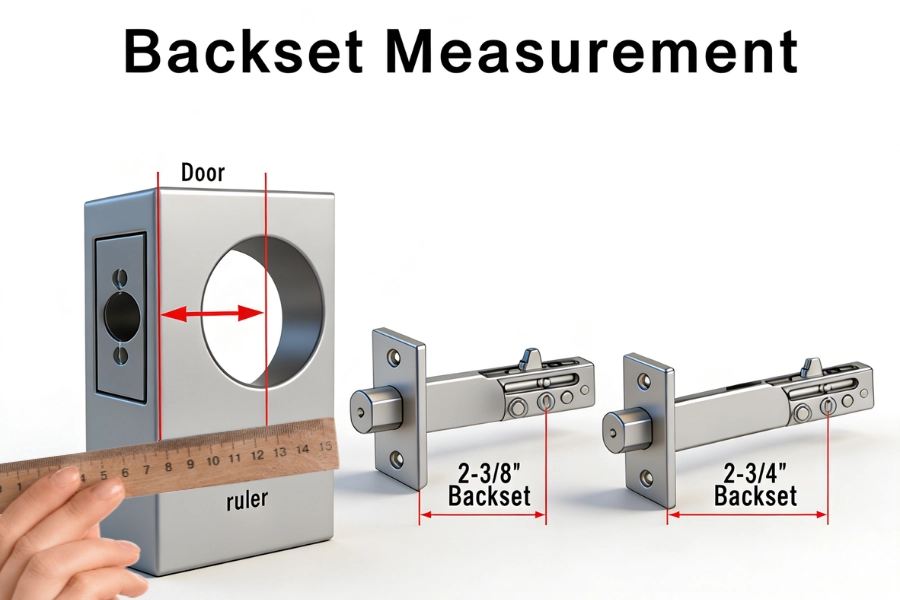
- Backset
The distance from the door edge to the center of the cylinder or keyhole. Common values include 55 mm for interior doors and 65 mm for exterior doors. - Faceplate dimensions
The faceplate width and length must match the existing door edge cutout. - Lock case depth
Determines how the lock body fits inside the door and affects stability.
Together, these measurements determine whether a lock installs correctly, operates smoothly, and avoids future replacement or adjustment costs.
How to Handle Non-Standard and Special Door Situations
Older doors
Older buildings often use non-standard center distances such as 78 mm or 85 mm. Replacement requires precise measurement and, in many cases, adapter solutions or custom hardware to avoid unnecessary door modification.
Special door types
Fire-rated doors, metal doors, and glass doors often have additional requirements. These doors typically require certified lock solutions designed for specific standards.
Mismatched center distance during replacement
If the new lock does not match the existing center distance, options may include adapter plates or re-machining. These actions should be handled by qualified professionals to avoid structural or compliance issues.
How Center Distance Guides Proper Lock Selection
Match the lock to the door type
- Interior doors often use mortise or handle locks
- Exterior doors may require mortise locks combined with deadbolts or multi-point systems
- Special doors require certified fire or security-rated locks
Verify the specification sheet
Before purchasing, confirm center distance, backset, and faceplate dimensions against the manufacturer’s technical data to prevent ordering incompatible hardware.
Consider security requirements
Exterior and commercial doors benefit from high-security cylinders that meet standards such as EN1303.
Plan for future access upgrades
If digital access or electronic cylinders may be added later, choose lock systems designed to support these upgrades without replacing the entire lock body.
EOS SECURE provides precision-engineered lock cylinders and lock systems supporting both standard and non-standard center distances. Our solutions cover mechanical and electronic locking needs, meet international standards including EN1303, and support OEM and ODM requirements for residential, commercial, and special applications.
Installation and Maintenance Tips for Long-Term Reliability
Before installation
- Confirm all measured dimensions match the lock specifications
- Check door cutouts and strike alignment
During installation
- Use proper tools to avoid damaging components
- Ensure fasteners are secure and alignment is correct
Ongoing maintenance
- Lubricate cylinders and moving parts regularly
- Inspect screws and strike plates for movement
- Perform a full inspection at least once per year
Consistent maintenance helps preserve security and extend hardware lifespan.
Accurate Center Distance Prevents Costly Lock Replacement Mistakes
Center distance is one of the most critical measurements in door lock replacement and upgrade decisions. Correct measurement ensures compatibility, reliable operation, and long-term security.
Whether choosing traditional mechanical locks or preparing for digital access systems, dimensional accuracy protects both performance and investment.
If measurement or selection challenges arise, consulting experienced security professionals helps ensure the right decision.
EOS SECURE delivers precision-engineered mechanical and electronic lock cylinders backed by more than a decade of manufacturing expertise. Established in 2011, our factory operates under ISO9001 and ISO14001 certifications, ensuring every product meets rigorous international standards including EN1303 and SKG. With over 50 advanced Swiss-type CNC automatic lathes and integrated machining centers, we manufacture high-quality lock cylinders trusted by clients across industries worldwide. Whether you need small-batch customization or large-scale production, EOS SECURE provides reliable performance, consistent quality, and dependable technical support. Secure your business with solutions built for long-term stability — contact us today.