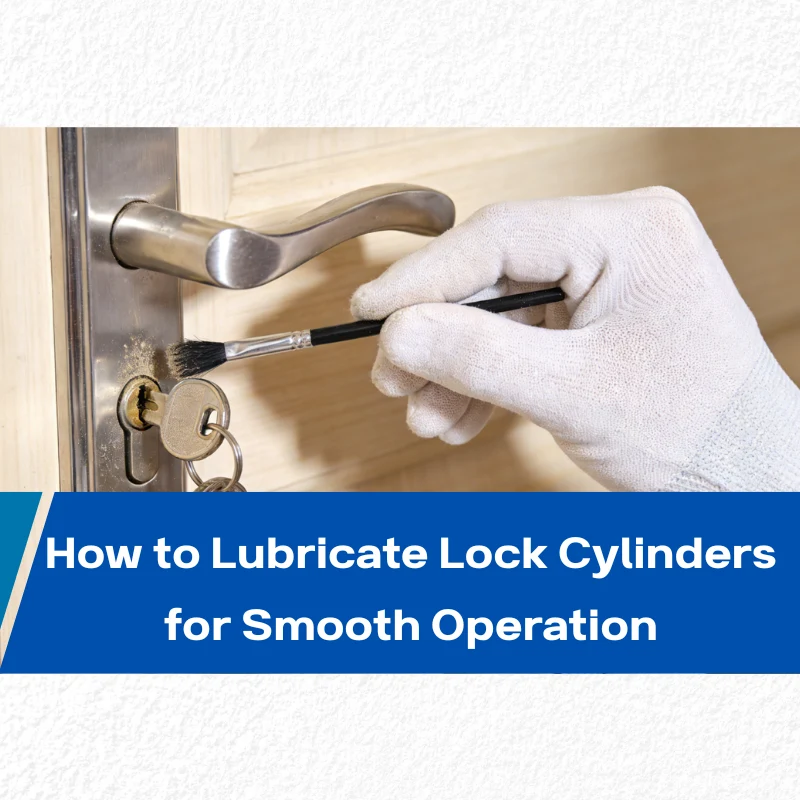
Why Lubricating Your Lock Cylinder is Essential
Lock cylinders are essential components in both homes and businesses. Over time, they can accumulate dust, dirt, and moisture, causing friction and stiffness, making the locks harder to operate. Without proper lubrication, the internal mechanism of the lock can wear out faster, leading to broken keys or even complete lock failure.
The benefits of lubricating your lock cylinders include:
- Reduced friction: Ensures smooth key operation and protects delicate internal components, such as pins.
- Prevention of rust and corrosion: Forms a protective layer that shields the lock from moisture and rust, especially in humid or salty environments.
- Extended lifespan: Regular maintenance can significantly extend the life of your lock, making it a worthwhile investment for both security and convenience.
For high-precision mechanical lock cylinders like those provided by EOS SECURE, regular professional maintenance is not just about smooth operation—it’s essential for maintaining the lock’s designed lifespan and its resistance to tampering.
What Lubricant to Use and What to Avoid
Choosing the right lubricant is key to maintaining your lock’s performance. Here are the best options:
- Preferred: Dry lubricants (Graphite Powder and PTFE Spray)
- Graphite Powder: A traditional, dry lubricant that works by reducing friction without attracting dust. However, be cautious as it can stain light-colored surfaces and may harden if built up over time.
- PTFE (Teflon) Spray: A modern choice, PTFE lubricants go on wet to clean the lock and dry quickly, leaving a non-stick film that resists dirt and moisture, providing long-lasting lubrication.
- Optional: Silicone-Based Lubricants (for external moving parts)
- Ideal for parts like the latch, bolt, and hinges. These lubricants prevent moisture and dust accumulation, keeping external moving parts smooth and quiet.
- Avoid: Oil-Based Lubricants (e.g., WD-40)
- WD-40 and machine oils: While they provide short-term relief, they attract dust, dirt, and metal debris, creating a sticky sludge that can block the internal lock mechanism, leading to more significant issues.
When selecting lubricants, always follow the manufacturer’s guidelines. For EOS SECURE’s high-security locks, adhering to recommended lubricating solutions ensures the best compatibility with its intricate design.
Step-by-Step Guide: How to Lubricate Your Lock Cylinder
Here’s how to lubricate your lock cylinder effectively:
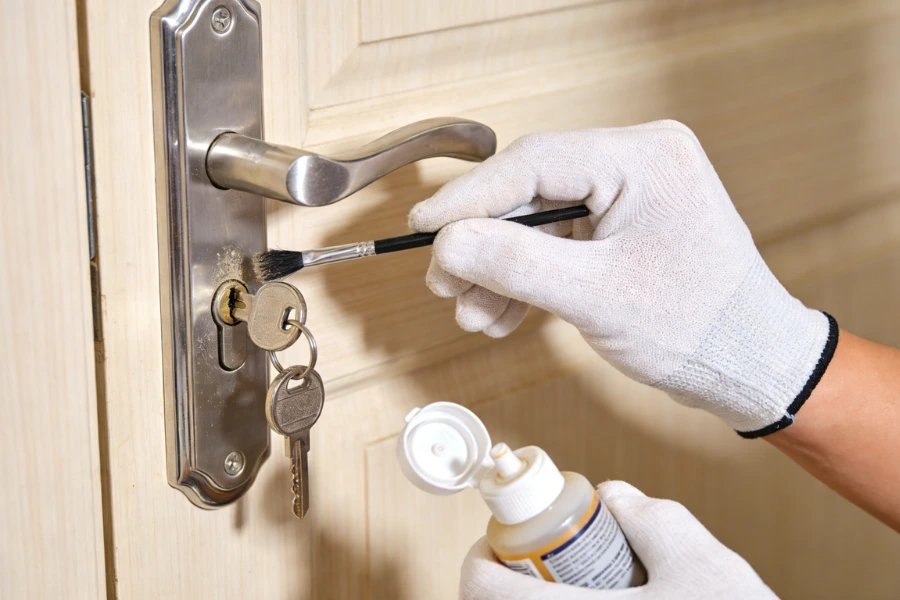
Tools Needed: Dry lubricant (Graphite Powder or PTFE Spray), key, clean soft cloth.
- Clean the Lock (Optional but Recommended):
- Use compressed air to blow out loose dust from the keyhole. If your lock is old or if the wrong lubricant has been used, you can clean it with a small amount of WD-40 and let it dry thoroughly before proceeding with lubrication.
- Apply the Lubricant:
- Graphite Powder: Lightly puff a small amount of powder into the keyway or rub the key with the powder before inserting it into the lock.
- PTFE Spray: Attach the straw nozzle to the spray can and apply a short burst into the keyhole.
- Distribute the Lubricant:
- Insert the key and turn it back and forth 10-15 times (both in the unlocking and locking directions) to ensure the lubricant spreads evenly throughout the internal mechanism.
- Lubricate External Parts:
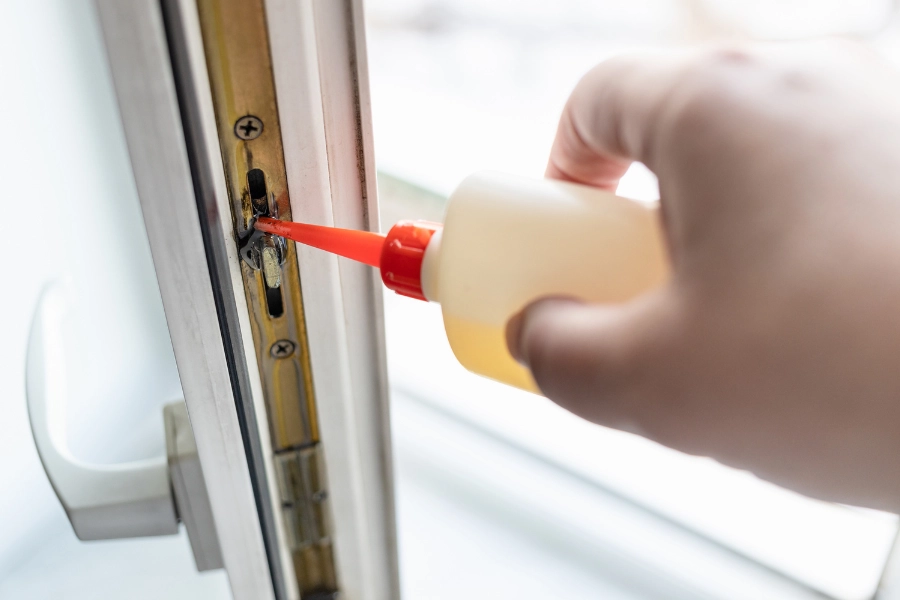
- Apply a small amount of silicone-based or PTFE spray to the latch, bolt, or strike plate. Work the parts a few times to ensure smooth operation.
- Wipe off Excess Lubricant:
- Use a dry cloth to wipe off any excess lubricant from the key and surrounding lock area to prevent dirt buildup.
How Often Should You Lubricate Your Locks?
- General Frequency: Lubricate your locks every 6-12 months as part of a regular preventive maintenance schedule.
- Increased Frequency:
- For locks that are frequently used, or in humid, dusty, coastal (high salt) environments, lubricate more often.
- After heavy rain, snow, or extreme temperatures, it’s a good idea to lubricate your locks to protect against moisture.
- Key Warning Signs:
- If your key starts feeling stiff or resistant, it’s time to lubricate the lock before the problem worsens.
Tips for Upgrading Your Lock Cylinder
Professional Inspections:
- Have your locks professionally checked (annually or as needed). A trained locksmith can detect wear and tear that’s not visible to the naked eye.
Upgrading Your Lock Cylinder:
- If your lock cylinder is old or low-security, even frequent lubrication won’t guarantee its effectiveness. Consider upgrading to a higher-security lock with features like anti-drill, anti-pick, and anti-snap technologies.
Choosing High-Quality Lock Cylinders: The Key to Successful Maintenance
The effectiveness of lock maintenance ultimately depends on the quality of the lock cylinder itself. A precision-made lock cylinder not only offers higher security but also ensures stable performance with less frequent maintenance.
This is where manufacturers like EOS SECURE come in. Since 2011, EOS SECURE has been dedicated to developing high-precision lock cylinders and locking systems that meet rigorous international standards like EN1303.
Conclusion: Keep Your Locks Running Smoothly
Regular lubrication is a simple yet essential maintenance task that can keep your lock cylinders functioning smoothly and securely. By using the right dry lubricants and following the correct steps, you can significantly extend the life of your locks and prevent costly repairs.