What a Multi-Point Locking System Is and Why It Matters
Understanding Multi-Point Locking Systems
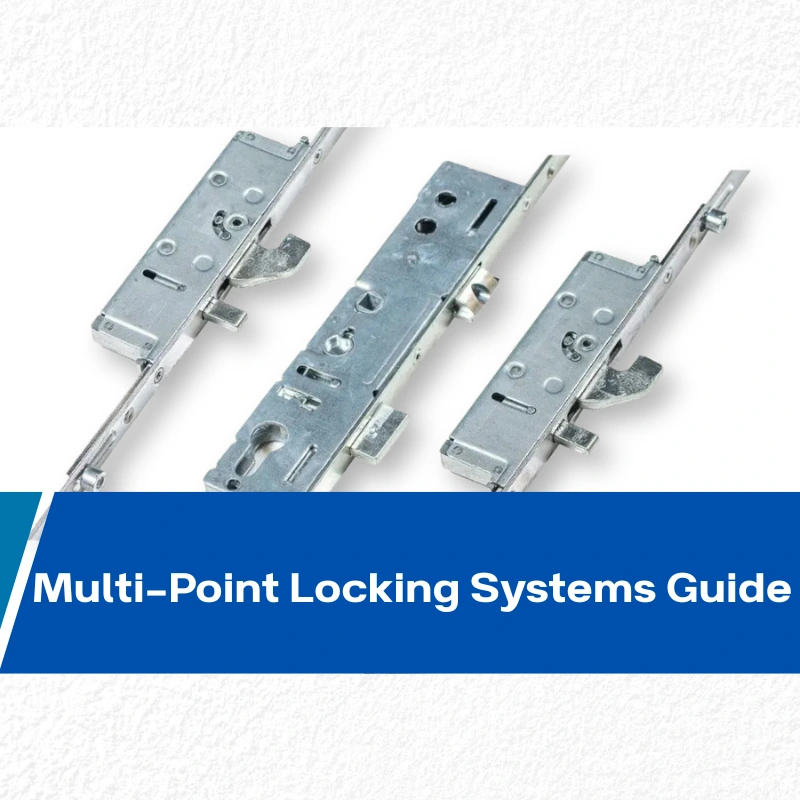
A multi-point locking system is an advanced door locking mechanism that secures a door at multiple points along its height through a single action, such as turning a key or lifting a handle. Unlike traditional single-point deadbolts that lock only at the center, a multi-point system typically engages at least three locking points at the top, middle, and bottom of the door.
By pulling the door evenly and firmly into the frame, the system creates a stronger, more stable lockup across the entire door edge.
The Real Value Behind Multi-Point Locking
A multi-point locking system is more than a physical barrier. It is an integrated solution that combines security, sealing, and structural stability into one coordinated system.
By distributing locking pressure across multiple points, it significantly improves resistance to prying, impact, and forced entry. At the same time, it enhances sound insulation, thermal performance, and long-term door alignment.
EOS SECURE perspective
As a manufacturer focused on high-security locking systems, EOS SECURE understands that the true value of a multi-point lock lies in its precision-engineered mechanical coordination and the reliability of its cylinder. A high-performing multi-point system is the result of careful engineering, not simply more locking points.
How Multi-Point Locking Systems Secure a Door
Key Components That Make the System Work
Lock case or gearbox
The gearbox is the central control unit installed inside the door edge. It converts handle or key rotation into linear motion that drives all locking points simultaneously.
Locking points
Distributed along the door edge, common types include:
- Hook bolts that provide strong anti-pry and anti-lift resistance
- Mushroom cams or rollers that improve sealing, smooth operation, and compensate for minor frame movement
- Central deadbolt that serves as the primary impact-resistant locking point
Cylinder and handle
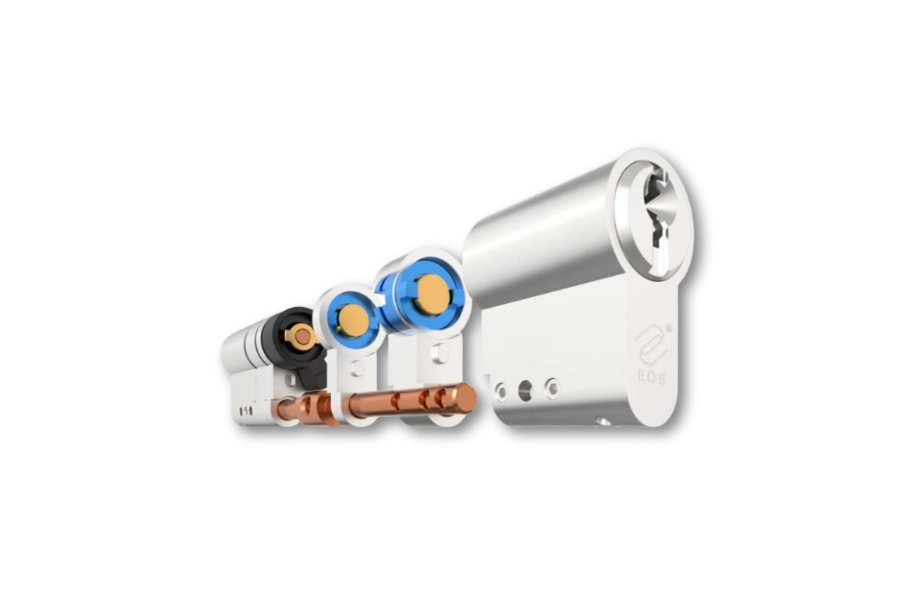
These components activate the system. A high-quality cylinder, commonly Euro-profile, is essential for resisting picking, bumping, drilling, and other non-destructive attacks.
Faceplate
The vertical metal strip that protects internal components and anchors the locking points. Its dimensions and profile must match the door design precisely to ensure correct alignment.
What Happens When You Lock the Door
User action, such as lifting the handle or turning the key, transfers force through the spindle to the gearbox. The internal gear mechanism drives connecting rods, causing all locking points to extend simultaneously into the corresponding keeps in the frame. The door is pulled evenly into place, completing the locking cycle with balanced pressure across the entire edge.
Common Types of Multi-Point Locking Systems
Locking Systems Based on How They Operate
Lift-handle systems
The most common design, where lifting the handle engages all locking points before the cylinder secures the system.
Key-operated systems
Locking points are engaged directly by the key without lifting the handle, often preferred where simplified operation is required.
Automatic systems
Locking points engage automatically when the door closes, reducing the risk of forgetting to lock.
Smart or electronic systems
Integrated with fingerprint readers, PIN codes, mobile apps, or access cards to enable keyless entry and remote management.
Internal System Designs and Control Options
Single-spindle systems
Standard configuration for most applications.
Split or dual-spindle systems
Allow independent operation of inside and outside handles or separate handle and key functions, offering greater flexibility for different access scenarios.
Why Businesses and Property Owners Choose Multi-Point Locks
Superior Physical Security
Multiple locking points dramatically increase the time, effort, and noise required to force a door open. The system aligns with recognized security design principles and may contribute to reduced insurance risk in certain regions.
Improved Sealing and Energy Efficiency
Even pressure along the door edge allows seals to compress properly, helping block wind, rain, dust, and noise while improving thermal efficiency.
Enhanced Door Integrity
By spreading load across several points, the system prevents sagging, twisting, and warping that often occur with single-point locks. This extends the service life of the door itself.
Operational Convenience
One action secures the entire door. There is no need to manage multiple independent locks.
Clean, Modern Appearance
Locking components are concealed within the door edge, supporting contemporary door designs without visible surface hardware.
Important Limitations to Understand Before Choosing One
Higher Initial Cost
Both the locking system and professional installation typically cost more than single-point solutions.
Installation Sensitivity
Multi-point systems require precise alignment between door and frame. Poor installation can lead to stiffness, misengagement, or premature wear.
Mechanical Complexity
More moving parts increase maintenance requirements and introduce additional failure points.
Repair Implications
If the central gearbox fails, replacement often involves the entire lock mechanism rather than a single component.
How to Choose a Multi-Point Lock That Fits Your Door and Security Needs
Confirm Door Compatibility
Verify door material, thickness, and profile. Measure backset, PZ center distance, and faceplate type carefully. Incorrect sizing leads to functional failure.
Select Locking Point Quantity and Type
- Three-point systems suit most standard exterior doors
- Five or seven-point systems are appropriate for tall doors or higher security requirements
Hooks emphasize anti-pry resistance, while rollers prioritize smooth closing and sealing.
Cylinder Quality Defines Security
The cylinder is the most commonly attacked component. Choose cylinders with certified resistance to snapping, drilling, bumping, and picking.
EOS SECURE core strength
This is where EOS SECURE specializes. Our precision-engineered cylinders comply with international standards such as EN 1303 and support anti-snap designs and master key systems. A high-quality cylinder ensures the mechanical strength of a multi-point system translates into real-world security.
Check Security Certifications
Look for products tested to standards such as PAS 24 or EN 12209 to ensure verified resistance to forced entry.
Evaluate Long-Term Cost
Initial savings often lead to higher maintenance and replacement costs. A well-matched system with a reliable gearbox and high-security cylinder delivers better long-term stability and lower total cost of ownership.
Installation Considerations That Affect Long-Term Performance
When DIY Works and When Professional Installation Matters
DIY may be suitable only when replacing an identical model in an existing door with no structural changes.
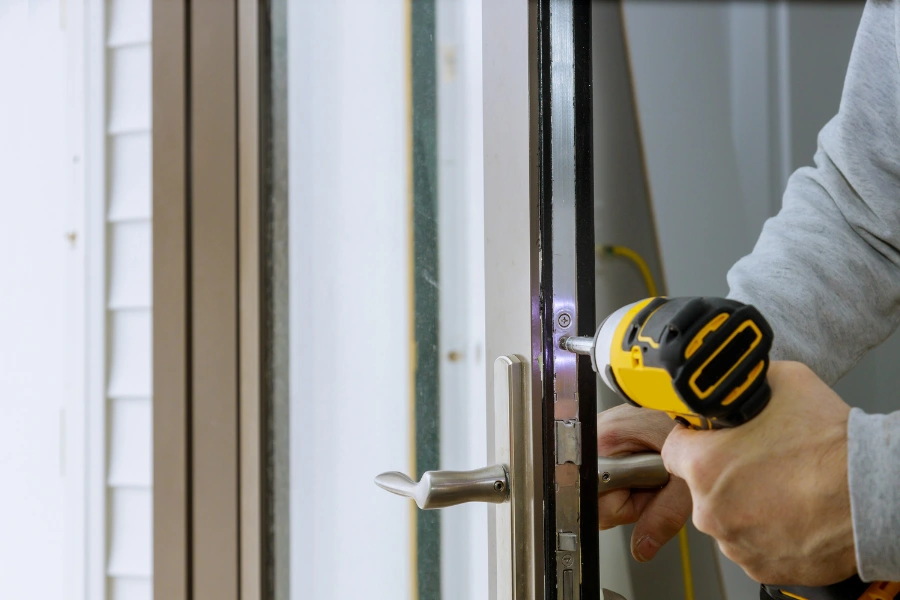
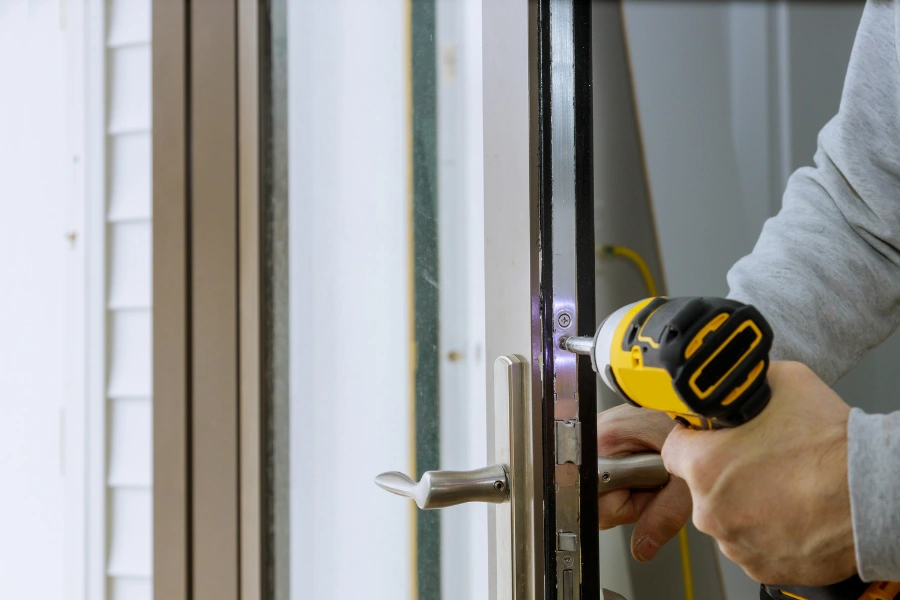
Professional installation is strongly recommended for new installations, door replacements, or frame adjustments. Precision fitting ensures optimal performance and avoids costly damage.
How to Keep a Multi-Point Lock Performing Reliably
Routine Inspection
Quarterly checks should confirm smooth handle operation, full locking point engagement, and consistent key rotation.
Annual Cleaning and Lubrication
Use lock-specific, non-oil lubricants on locking points, transmission components, and cylinders. Remove dust and old residue.
Fastener Inspection
Loose screws cause misalignment quickly and should be tightened promptly.
Environmental Awareness
Coastal areas require corrosion monitoring. Cold climates require lubricants suitable for low temperatures.
Common Problems and How to Address Them Early
| Issue | Likely Cause | Recommended Action |
|---|---|---|
| Handle lifts but points do not engage | Gearbox failure or disconnected linkage | Professional service, often gearbox or full lock replacement |
| Key difficult to turn | Cylinder contamination or wear | Lubricate cylinder, replace if unresolved |
| Door hard to close or lock | Door sag or misalignment | Adjust hinges and keeps |
| Stiff operation in cold weather | Seal compression or lubricant thickening | Use low-temperature lubricants |
| Drooping handle | Spindle wear or loose fixings | Tighten screws, replace handle or internal parts if needed |
Key Takeaways for Choosing and Maintaining a Secure System
A well-designed multi-point locking system is a foundational element of door security. Success depends on selecting compatible, high-quality components, ensuring precise installation, and maintaining the system consistently. Above all, cylinder security should guide decision-making, as it defines the true protective capability of the entire system.
EOS SECURE
A multi-point locking system reinforces a door physically, but the cylinder determines who controls access. While multiple locking points increase resistance, true security depends on the reliability of the cylinder at the center of the system.
EOS SECURE designs high-security mechanical and electronic cylinders engineered to integrate with multi-point locking systems. Built under ISO9001 and ISO14001 certified production and tested to standards such as EN 1303 and SKG, our solutions help businesses maintain consistent access control and long-term system stability. Explore EOS SECURE solutions designed to support secure, informed decisions.