Introduction – Why People Try to Make a Key From a Lock
Creating a key from a lock is often seen as a clever shortcut when a key is lost or unavailable. In reality, it is also a practical way to understand how mechanical locks function and why precision matters so much in security systems.
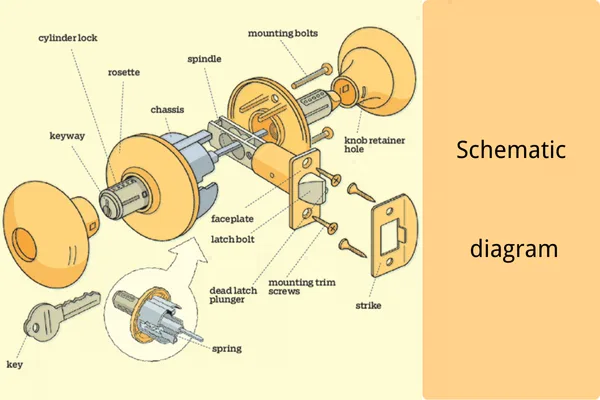
This article explains the main approaches people discuss when trying to make a key or key mold from a lock. It covers common DIY ideas, professional locksmith methods, and the limitations that appear when accuracy and security are required. The goal is to help readers understand what is possible, what is risky, and when professional solutions are the better choice.
From a manufacturing perspective, every working key relies on tolerances measured in fractions of a millimeter. As a company focused on precision lock cylinders and mechanical and electronic locking systems since 2011, EOS SECURE views these questions through the lens of real-world performance rather than theory alone.
Three Common Ways People Try to Make a Key From a Lock
Impressioning – The Most Talked-About DIY Technique
Typical use cases
Basic residential door locks and simple padlocks
Conceptual principle
Impressioning relies on how internal pins interact with a blank key inside the lock. Through repeated insertion and controlled movement, contact points reveal where material would need adjustment for a key to align with the lock mechanism.
Key characteristics
- Does not require disassembling the lock
- Relies heavily on experience and feedback rather than automation
- Often discussed as a learning technique rather than a reliable solution
In practice, impressioning demands patience and skill. Minor errors can lead to unusable keys or unnecessary wear on the lock.
Disassembling the Lock – How Professionals Actually Do It
Typical use cases
Locks that can be legally removed and serviced
Conceptual principle
By disassembling a lock cylinder, a professional can identify internal pin configurations and produce a matching key based on measured data rather than guesswork.
Key characteristics
- High accuracy when performed correctly
- Requires professional tools and training
- Generally handled by locksmiths or authorized technicians
This method reflects how keys are actually produced in controlled environments. It also explains why most reliable key duplication happens outside of DIY settings.
Mold-Based Key Copying – Why It Looks Simple but Rarely Works
Typical use cases
Low-security locks or educational demonstrations
Conceptual principle
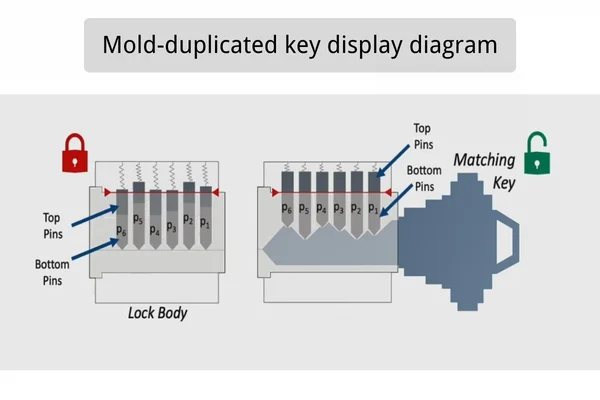
A soft material is used to capture a negative impression of the lock’s internal shape. That impression is then treated as a reference for creating a physical key.
Key characteristics
- Easy to understand conceptually
- Limited accuracy due to material distortion
- High risk of failure in real locks
From a security standpoint, this approach highlights why professional lock cylinders are engineered to resist uncontrolled duplication rather than enable it.
Why Modern Lock Cylinders Are Hard to Copy
Modern high-security cylinders often include features such as sidebars, complex pin geometries, or restricted keyways. These designs intentionally prevent impressioning and molding techniques from working. Copying such locks requires authorized equipment and controlled processes.
Why Impressioning Is Educational but Unreliable
Impressioning is frequently mentioned because it appears simple on the surface. In reality, it works only within narrow limits.
At a high level, the process depends on repeated interaction between a blank key and the internal pins of a lock. Over time, contact points become visible, guiding gradual adjustments. Progress depends on consistency, careful observation, and restraint.
For first-time attempts, this method carries clear risks. Excessive material removal, misinterpreting contact points, or forcing movement can damage both the key and the lock. For that reason, impressioning is best viewed as a way to understand lock mechanics rather than a dependable solution for critical access.
Professional manufacturers and locksmiths rarely rely on impressioning for high-value locks. Precision cutting and controlled tolerances are far more reliable.
The Limits of Mold-Based Key Making
Mold-based methods attract attention because they look straightforward. However, real-world results are inconsistent.
Material shrinkage, incomplete impressions, and surface distortion all affect accuracy. Even small deviations can prevent a key from aligning properly with internal pins. In some cases, poorly formed keys can break or become stuck inside the lock.
In commercial and residential security, lock cylinders are designed to meet standards such as EN1303 and SKG. These standards assume controlled manufacturing and discourage any form of uncontrolled duplication. This is why professional systems rely on precision machining rather than impression molds.
For learning purposes, molds may help visualize internal structures. For practical use, they are unreliable and introduce unnecessary risk.
Comparing These Methods – Accuracy, Risk, and Real Use
| Method | Accuracy | Difficulty | Typical Use | Risk Level |
|---|---|---|---|---|
| Impressioning | Medium | Medium | Skill learning, theory | Moderate |
| Lock disassembly | High | High | Professional duplication | Low when authorized |
| Mold replication | Low to medium | Low | Demonstration only | High |
General guidance
- Beginners should focus on understanding concepts, not producing working keys
- Urgent access issues are better handled by locksmiths
- High-security locks should never be tested with DIY methods
Manufacturers like EOS SECURE design modular, master key, and smart lock cylinder systems specifically to eliminate the weaknesses exposed by these DIY approaches.
FAQ
Can any lock be copied using DIY methods?
No. DIY methods are limited to very simple mechanical locks. Automotive keys, high-security cylinders, electronic or chip-based systems, and restricted commercial locks cannot be reliably duplicated without authorized tools. Attempting DIY duplication on these locks often fails and may permanently damage the lock mechanism.
Can you really make a key or key mold from a lock?
In theory, certain basic locks can produce impressions or rough molds. In practice, these results are unreliable. Small inaccuracies in shape, depth, or alignment usually prevent the key from working. For most real-world security needs, professional cutting or authorized duplication is required.
What is the most common mistake people make?
The most common mistake is removing too much material or trusting unclear impressions. Once excess material is removed, it cannot be restored. This often leads to unusable keys and unnecessary wear inside the lock. Rushing the process also increases the risk of internal damage.
Are DIY-made keys durable?
Durability depends on how the key is produced. Professionally cut metal keys can last for years. Keys made from molds, plastics, or soft metals usually wear out quickly, bend, or break. These DIY keys are not suitable for daily use or critical access points.
Why can professionals handle complex locks?
Professionals use dedicated equipment, precise specifications, authorized key blanks, and proven processes. They also understand lock tolerances and security features designed to prevent unauthorized copying. This combination of tools, data, and experience cannot be replicated in casual or home-based attempts.
Conclusion – Why Precision Matters More Than DIY Shortcut
Exploring how keys interact with locks can be an educational experience. It reveals how much precision is required for even the simplest mechanical systems to function reliably.
At the same time, real security depends on understanding limits. DIY techniques may offer insight, but they cannot replace controlled manufacturing, certified standards, and professional responsibility.
This philosophy guides how EOS SECURE develops mechanical and electronic lock solutions for residential, commercial, rental, and access-controlled environments. Precision manufacturing, compliance with international standards, and scalable security design are essential for long-term reliability.
Explore EOS SECURE solutions to see how precision-engineered mechanical and electronic lock cylinders support reliable, scalable security for real-world business environments.