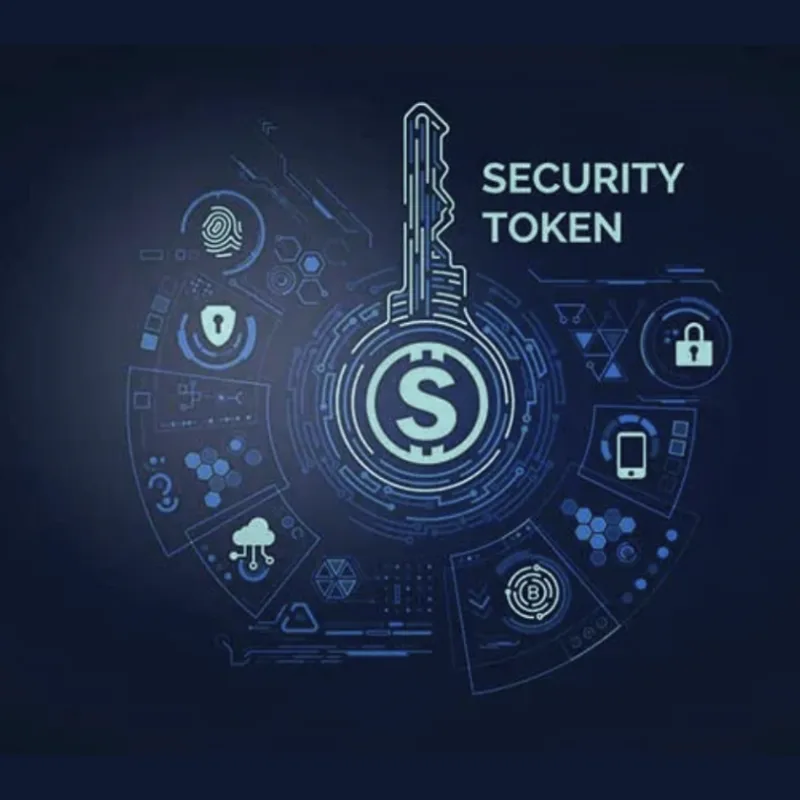
When a door asks for more than a badge
Many businesses now expect the same security standard at the door as they already use for VPNs and business apps.
A single badge or PIN no longer feels enough when staff log in with two factor authentication every day.
Security tokens bring that extra layer to physical access.
They turn door entry into a true two step check, something you have plus something you know or something you are.
How security tokens fit into two factor door access
In a two factor door system, the access card or mobile credential often plays the first factor.
The security token adds a second proof that the person at the reader is the right user, not just someone who found or borrowed a badge.
Typical combinations include
- Card plus hardware token code
- Card plus app based token on a phone
- Card plus fingerprint or face
- Mobile credential plus biometric
The door controller only unlocks when both factors line up.
This mirrors IT security practice and creates a bridge between logical and physical access.
The main families of physical security tokens
Security tokens come in several forms, each with its own strengths for door access.
One time code tokens
These tokens generate short numeric codes that change every few seconds or every minute.
They can be
- Small key fobs with a display
- Card sized devices with a screen
- Phone apps that act as soft tokens
For doors, the workflow often looks like
- Present card or mobile credential
- Enter the current token code on a keypad
- Controller checks both credentials before unlocking
Codes change often, so copying a code once does not grant long term access.
Challenge response tokens
Some tokens respond to a challenge from the system instead of showing a simple rolling code.
The reader or keypad displays a short challenge.
The user enters that into the token, which returns a response based on secret data.
The controller verifies the response and makes the decision.
This method suits higher risk doors where replay attacks and code sharing must stay strictly under control.
Phone based tokens and authenticators
Soft tokens on phones or tablets follow the same principles as hardware devices.
They can
- Generate time based codes
- Approve push notifications
- Combine biometric unlock on the device with the token itself
When you pair these apps with card or mobile credentials at the door, you extend an existing IT security investment into the physical space.
What two factor looks like at a real entrance
Consider a staff entrance at a finance office or data center.
During the morning rush, staff
- Tap a contactless card or phone at the reader
- Enter the current token code or approve a prompt on the phone
- Walk through after the system approves both steps
If a badge goes missing, the card alone cannot open the door.
An attacker would still need access to the matching token or to the employee phone and its unlock method.
For visitors and contractors, the system can issue temporary cards and short lived tokens that expire at the end of the day or project.
Where security tokens add the most value
Not every door needs dual factors.
Tokens make the biggest difference at doors where both risk and impact are high.
Examples
- Data rooms and network hubs
- Cash handling and safe rooms
- R and D labs and prototype areas
- Executive suites and boardrooms
- Shared offices that hold sensitive client information
For lower risk internal doors, single factor card access and strong mechanical hardware often give enough protection.
This risk based approach keeps two factor where it matters and keeps daily flow efficient everywhere else.
Connecting IT identity and door credentials
One strength of security tokens comes from their link to IT identity systems.
When door access lines up with directory accounts and single sign on platforms, you can manage both from the same source of truth.
This alignment enables
- Automatic removal of both door rights and app rights when staff leave
- Shared token policies across VPN, critical applications, and high risk doors
- Consistent reporting on who had access to which systems and spaces
EOS SECURE cylinders and lock components sit at the physical end of this chain.
They ensure that once digital checks pass, the mechanical action at the door remains precise and reliable.
Practical steps to introduce security tokens at the door
A phased rollout keeps complexity under control and builds confidence.
First, choose a pilot zone.
Select a small number of high value doors and a group of users who already use tokens for IT access.
Next, pick the token type.
Reusing the same hardware tokens or authenticator apps that staff know from VPN access simplifies training and support.
Then, integrate with the access control system.
Make sure controllers, readers, and management software can handle two factor workflows without slowing traffic unreasonably.
Finally, review results and expand gradually.
Use early feedback to refine procedures, signage, and support materials before you extend the model to more doors and sites.
FAQ
What is token with example
A token is a credential that represents a user to a system. A familiar example is a small device or app that generates one time codes for login. In physical access, a security token can work alongside a card so the door only opens when both credentials match.
What does a security token look like
A security token can look like a key fob, a small screen device, a card with a display, or an icon inside a phone app. The shape changes by vendor, yet the purpose stays the same, it provides a unique, verifiable credential that proves the user holds an approved device.
What is a common use for a security token
Security tokens most often support two factor authentication. Users enter a password or present a card, then they supply a code or approval from the token. This approach protects online accounts and can also protect high risk doors in commercial buildings.
What is a hardware security token
A hardware security token is a physical device that stores secrets and generates secure codes or responses. It works independently of the phone or computer and often includes tamper resistant design. Many organizations use these devices for VPN access and for access to sensitive areas.
What is my security token
Your security token is the specific device or app that your organization issued to you as a second factor. It might be a key fob with a changing code, a USB security key, or an authenticator app on your phone that generates or approves sign in attempts.
What is a token on your phone
On a phone, a token usually means an authenticator app that creates one time codes or receives push approvals. When you log in or use a two factor door system, the app shows a code or request linked to your account so the system knows you are present and authorized.
Why do I need a token
A token adds a second barrier beyond a password or card. If someone learns your password or finds your badge, they still cannot pass the second check without your token. This extra step greatly reduces the chance that a single mistake leads to a serious security breach.
How to generate a security token
Only trusted systems and administrators should generate or enroll security tokens. In practice you follow an enrollment process, scan a QR code, register a device, or accept an issued fob. The server and token then share secret information that allows secure code generation and verification.
About EOS SECURE
EOS SECURE delivers precision engineered mechanical and electronic lock cylinders backed by more than a decade of manufacturing expertise. Established in 2011, our factory operates under ISO9001 and ISO14001 certifications, and our products meet rigorous international standards including EN1303 and SKG. With more than 50 advanced Swiss type CNC automatic lathes and integrated machining centers, we manufacture high quality cylinders and cores that integrate smoothly with modern access control platforms, including deployments that use hardware and mobile security tokens for two factor door access. Whether you are upgrading a few critical doors or building a multi site program, EOS SECURE provides reliable performance, consistent quality, and dependable technical support. Secure your business with solutions built for long term stability, contact us today.