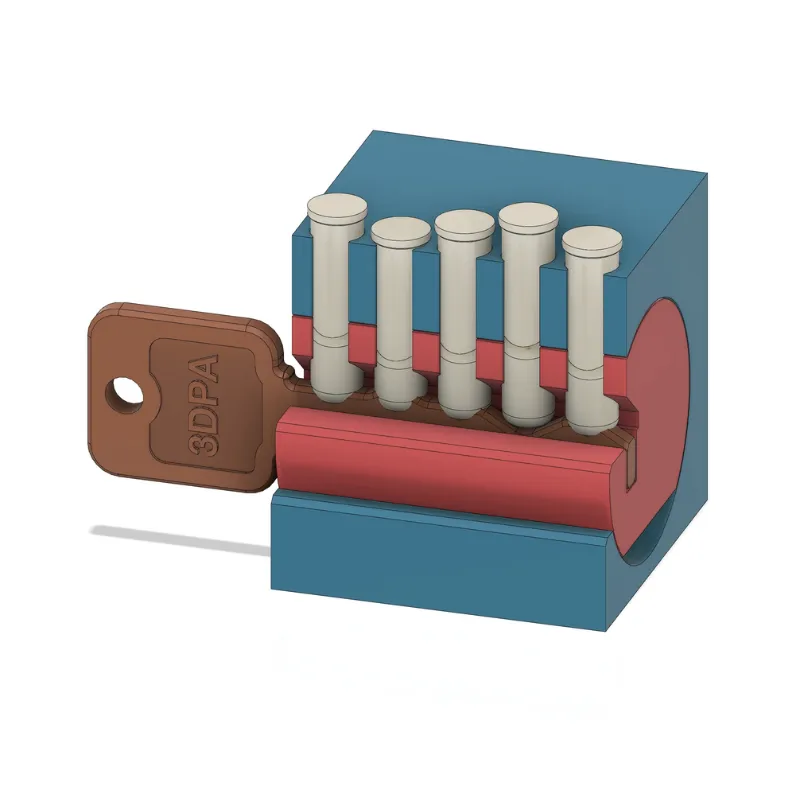
Everyday locks that rely on pins and tumblers
Walk up to most commercial doors, insert a key, and you are almost certainly using a pin tumbler lock.
This design has protected shops, offices, schools, and homes for decades.
For small businesses, understanding how pin tumblers work turns lock choices from guesswork into informed decisions about security, rekeying, and upgrades.
Inside the pin tumbler cylinder
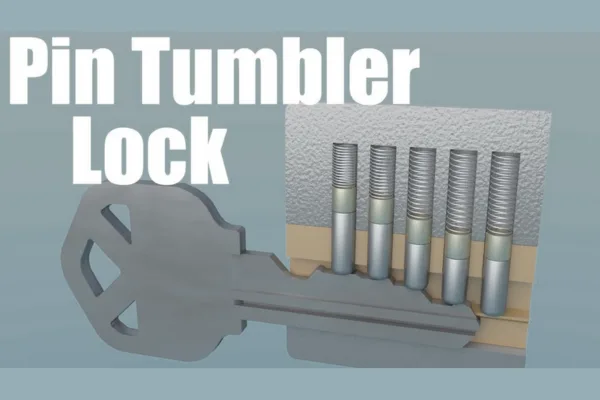
A pin tumbler lock uses stacked pins to decide whether a key can turn.
The cylinder splits into two main pieces, the outer housing and the inner plug that rotates with the key.
Core parts of the mechanism
A standard pin tumbler core includes
- Plug with a shaped keyway
- Housing that surrounds the plug
- Vertical pin chambers drilled through plug and housing
- Bottom pins that sit on the key cuts
- Top pins that sit above the shear line
- Springs that push the pins down
The shear line is the boundary between plug and housing.
Only the correct key can line all pin stacks up at that line so the plug can rotate.
What happens during a correct key turn
When you insert the correct key
- Each cut lifts its bottom pin to a precise height
- Top pins move fully into the housing
- Springs stay compressed above the pin stacks
With all pin splits aligned at the shear line, the plug rotates.
That rotation moves the cam or tailpiece, which retracts or extends the latch or bolt in the lock body.
With a wrong key, at least one pin stack sits across the shear line.
The plug binds against the housing before it can move enough to unlock the door.
Strengths that keep pin tumbler locks popular
Pin tumbler designs remain the everyday standard for a reason.
They balance cost, durability, and flexibility better than many alternatives.
Key advantages include
- Wide range of cylinder formats for different doors
- Support for master key systems across large buildings
- Reliable performance in varied environments when built well
- Straightforward rekeying by trained locksmiths
Manufacturers can also raise security levels by adding more pins, tighter tolerances, and protected keyways.
That means the same basic principle can serve both simple interior doors and higher security openings.
Limits and typical security considerations
No mechanic will call a pin tumbler lock unbreakable.
Like any device, it has limits that owners should understand.
Low cost cylinders often use soft metals, loose tolerances, and simple pinning.
These choices can make forced attacks easier and may reduce resistance to dirt and wear.
Attackers may try
- Physical force on the cylinder or door
- Drilling or snapping on exposed profiles
- Covert manipulation with tools on weak designs
You do not need to know how those attacks work to defend against them.
You need cylinders with tested resistance, reinforced strike plates, good frames, and clear key control so casual attacks become impractical.
Rekeying and system design with pin tumblers
Pin tumbler locks make rekeying practical because the security code lives in pin stacks, not in fixed hardware.
A locksmith can change the combination while the lock body stays on the door.
This flexibility supports
- Tenant changes and staff turnover
- Layered master key hierarchies
- Upgrades to restricted key systems with tighter duplication control
For larger sites, formats such as interchangeable core cylinders let teams swap coded cores quickly with a control key.
Pin tumbler principles still apply, yet the mechanical package suits high change environments better.
What this means for small business security
If you manage a shop, office, or warehouse, pin tumbler locks probably already protect your entrances.
The real question is which pin tumbler cylinders you use and how you manage them.
Practical steps include
- Upgrading exposed doors to higher security cylinders
- Pairing cylinders with strong deadbolts and reinforced strikes
- Keeping a clear record of who holds each key level
- Scheduling rekey work after key loss or major staff changes
When you combine quality cylinders, sensible hardware, and good procedures, pin tumbler locks continue to deliver strong everyday security for a reasonable cost.
EOS SECURE designs and manufactures its cylinder ranges around these principles, so security plans start from a solid mechanical base.
FAQ
What is a pin and tumbler lock
A pin and tumbler lock uses stacked spring driven pins to control plug rotation. The correct key lifts each bottom pin so the pin splits line up at the shear line between plug and housing. Once aligned, the plug turns and operates the latch or bolt.
Can a pin tumbler lock be picked
Any mechanical lock can face manipulation attempts. Basic pin tumbler cylinders can be vulnerable to skilled picking, while higher security versions use more pins, complex keyways, and tighter tolerances to raise the difficulty. Good hardware, proper installation, and key control all help reduce practical risk.
What is a tumbler in a door lock
In this context, a tumbler is a movable part inside the lock that blocks rotation until the correct key positions it. In pin tumbler locks, pin stacks act as tumblers, they must sit at the right height so the plug can turn freely within the housing.
Can you rekey a tumbler lock
Most pin tumbler locks can be rekeyed by changing the pins inside the cylinder to match a new key code. A locksmith removes the cylinder, replaces the pins according to the new combination, and then tests the lock. Rekeying keeps the hardware while changing which keys work.
Is lockpicking illegal in the US
Laws vary by state. In many places, owning lockpicking tools is legal when used for work or hobby under local rules, yet using them to enter property without permission is a crime. For any real access need, the safest path is to work with a licensed locksmith.
How to open tubular pin tumbler lock
Tubular pin tumbler locks use a circular keyway and pin layout. Opening them without a key requires specialized tools and training that professional locksmiths use. Attempting to bypass these locks without proper authority can damage hardware and may violate local law, so call a qualified technician instead.
What does wrapping a rubber band around your doorknob mean
Some people wrap a rubber band around a knob or lever to hold the latch back or soften noise when the door closes. This trick can help during short term moving or frequent trips, yet it reduces real security and should not be used on exterior or critical doors.
About EOS SECURE
EOS SECURE delivers precision engineered mechanical and electronic lock cylinders backed by more than a decade of manufacturing expertise. Established in 2011, our factory operates under ISO9001 and ISO14001 certifications, and our products meet rigorous international standards including EN1303 and SKG. With more than 50 advanced Swiss type CNC automatic lathes and integrated machining centers, we manufacture high quality pin tumbler cylinders and cores for commercial projects worldwide. Whether you need standard formats, restricted key systems, or electronic ready designs, EOS SECURE provides reliable performance, consistent quality, and dependable technical support. Secure your business with solutions built for long term stability, contact us today.