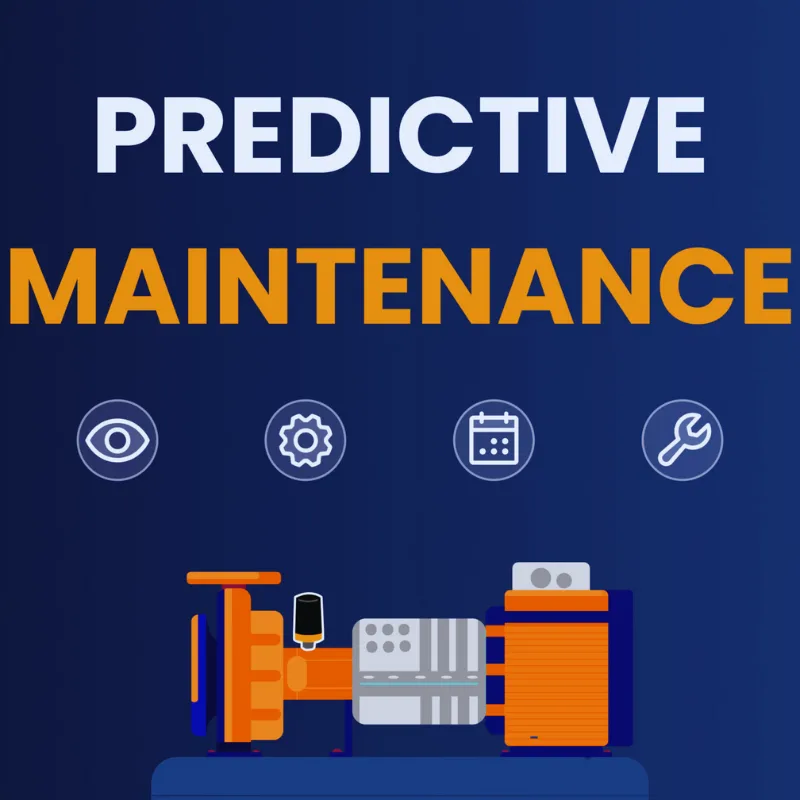
When lock failures start telling a story
Every stuck door, drained battery, or jammed latch leaves clues.
In a smart lock system, those clues turn into data, and that data can tell you what will break next.
Predictive maintenance uses that story to shift work from emergency repairs to planned, low stress visits.
For small businesses, this means fewer “door out of service” signs and more predictable service costs.
What predictive maintenance looks like at the door
Instead of thinking in abstract analytics, it helps to picture one busy entrance.
- Staff badges in and out all day
- The door closer fights wind and heavy use
- The lock motor works harder as alignment drifts
- Batteries drain faster on cold mornings
A predictive system watches these behavior changes and says
“this lock should receive attention next week, not three months from now, and not at 10 p.m. on a Friday.”
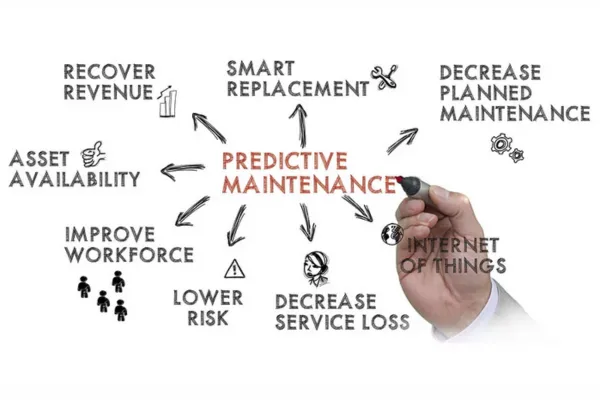
Signals your smart locks already produce
Most connected locks and cylinders can surface three simple health signals
- Usage patterns – cycles per day, per week, or per tenant
- Effort and friction – motor current, failed latch attempts, door held alarms
- Power and connectivity – battery trends, offline periods, repeated retries
Predictive maintenance is about reading these signals early instead of waiting for a failure.
Three lenses for predictive maintenance in access control
You can think about predictive maintenance through three lenses that line up with how managers and technicians work.
1 Facility manager view, risk and uptime
Facility managers ask
- Which doors cause the most trouble
- Where will the next complaint come from
- How do we avoid failures on critical doors
For them, dashboards that rank doors by risk or remaining battery life are more useful than raw charts.
They need a clear list of “doors to schedule this month.”
2 Technician view, root cause and action
Technicians care about why a door behaves differently.
Data can point to patterns such as
- Rising motor current on one door only – likely alignment or frame issues
- Uniform early battery drop across a wing – environment, firmware, or part choice
- High denied events at one reader – user training or schedule configuration
The system should translate anomalies into concrete jobs like “realign strike,” “check closer speed,” or “review access rules.”
3 Business owner view, cost and continuity
Owners focus on
- How much downtime costs in lost sales or tenant trust
- How often emergency callouts interrupt operations
- Whether the investment in smart locks truly pays off
For them, predictive maintenance shows up as fewer urgent visits, fewer lock replacements, and more stable budgets over the year.
Building blocks of a predictive maintenance ready lock system
Predictive maintenance does not require a full AI rollout on day one.
It needs a few solid building blocks that you can phase in.
Instrumented devices
Locks and cylinders must provide more than “locked” or “unlocked.”
Look for devices that expose
- Battery level with trends, not just a final low warning
- Cycle counts and error codes
- Door position inputs or events
These details allow the platform to learn what “normal” looks like for each opening.
Event rich access control software
Your access platform becomes the maintenance hub.
It should be able to
- Store and visualize historical data per door
- Trigger alerts when values cross thresholds
- Feed reports to maintenance or ticketing tools
Cloud based systems make it easier to see patterns across sites, such as one hardware model wearing faster in specific conditions.
Clear rules and thresholds
Start with simple rules, for example
- Flag a door if motor errors exceed a certain count in a week
- Raise a ticket when battery projections fall below a defined number of days
- Highlight any fire exit with repeated “door held open” alarms
You can refine these thresholds after a few months of real world feedback.
Where predictive maintenance saves the most
Predictive strategies do not need to cover every door at once.
You gain the most by focusing on a few categories.
High consequence doors
These doors cause real disruption when they fail
- Main entrances and loading bays
- Server rooms and security rooms
- Emergency exits in active areas
Keeping these points healthy protects both safety and operations.
Hard to reach or high cost doors
Some doors sit on rooftops, remote buildings, or secure cages.
Sending a team there for a surprise failure costs more than a routine visit.
Predictive alerts let you bundle work – technicians can service several doors during one planned trip.
Doors with complex hardware
Doors that combine readers, closers, strikes, and special hinges need more care.
Small changes in one part can stress the rest.
Monitoring these openings closely helps you catch problems while they still only need adjustment, not replacement.
Practical rollout roadmap for predictive maintenance
You can approach predictive maintenance as a staged project rather than a single big switch.
Stage 1, visibility
- Turn on and centralize health events from existing smart locks
- Clean up door names and locations in the system
- Start monthly reviews of “top 10” doors by alerts
Stage 2, simple automation
- Create rules for battery, error counts, and offline duration
- Connect alerts to email or ticketing tools
- Define which team responds to which type of alert
Stage 3, optimization
- Adjust thresholds based on actual false alarms and missed issues
- Group maintenance tasks by area and time window to reduce travel
- Use data to refine hardware choices for new projects and retrofits
Over time, your team moves from reacting to problems to actively shaping how long hardware lasts and how smoothly doors operate.
FAQ
What is the meaning of predictive maintenance
Predictive maintenance uses real data about equipment condition and use to decide when service should happen. Instead of waiting for breakdowns or following only fixed schedules, you watch indicators such as cycles, power, and errors, then plan work before the asset fails.
What are the three types of predictive maintenance
People often describe three main styles. Condition based monitoring reacts to live measurements. Trend based analysis looks at how key values change over weeks or months. Model based or analytics driven approaches compare current behavior to expected patterns and highlight early signs of trouble.
What are the 4 types of maintenance
A simple framework includes corrective, preventive, predictive, and condition based maintenance. Corrective work fixes failures after they occur, preventive work follows calendars or cycle counts, predictive and condition based strategies rely on real measurements to time service more precisely.
What’s the difference between predictive and preventive maintenance
Preventive maintenance runs on predefined intervals even if the equipment still performs well. Predictive maintenance uses evidence from sensors and logs to decide when to intervene. This difference helps reduce unnecessary visits while still lowering the risk of sudden breakdowns.
Which tool is commonly used for predictive maintenance
Common tools include sensors, onboard diagnostics, and software platforms that analyze the resulting data. In access control, those functions often live inside the smart lock and its management system, which track cycles, power, errors, and door status, then generate alerts when values move outside expected ranges.
What are the 4 P’s of maintenance
The four P’s are people, process, parts, and performance. You need trained people, clear processes, the right spare parts, and performance metrics that show whether your strategy works. Predictive maintenance strengthens all four by tying actions directly to measured equipment behavior.
About EOS SECURE
EOS SECURE delivers precision engineered mechanical and electronic lock cylinders backed by more than a decade of manufacturing expertise. Established in 2011, our factory operates under ISO9001 and ISO14001 certifications and our products meet rigorous international standards including EN1303 and SKG. With more than 50 advanced Swiss type CNC automatic lathes and integrated machining centers, we manufacture high quality cylinders and smart locking components that integrate smoothly with data driven, predictive maintenance ready access control platforms. Whether you need electronic ready cylinders, small batch customization, or large scale production, EOS SECURE provides reliable performance, consistent quality, and dependable technical support. Secure your business with solutions built for long term stability, contact us today.