
Mechanical door locks remain one of the most dependable ways to secure a building. They work without electricity, they function consistently in any environment, and they give businesses simple and predictable protection.
This guide explains what mechanical door locks are, how they work, and how small businesses can select and maintain them for long term security.
Why Mechanical Door Locks Still Matter
Mechanical locks form the first layer of physical access control. They do not depend on batteries, networks, or software.
For small businesses, this reliability reduces disruption, lowers maintenance, and keeps operations stable.
Their straightforward construction and long lifespan make them a trusted choice for offices, retail stores, workshops, rental properties, and warehouses.
What Mechanical Door Locks Are
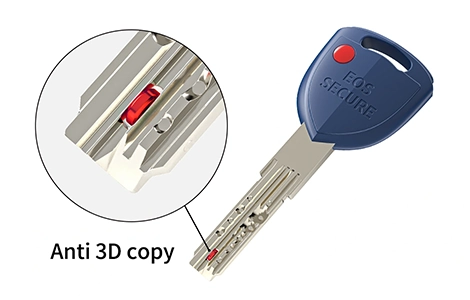
A mechanical door lock uses physical components such as pins, springs, levers, and a bolt to secure a door. Most models work with a key that matches the internal mechanism.
Because they contain no digital systems, mechanical locks are not affected by hacking, signal interference, or downtime.
This makes them a practical choice for businesses that need stable, low maintenance security.
How Mechanical Door Locks Work
Mechanical locks rely on internal parts that move when the correct key is inserted. The pin tumbler design is the most common in commercial and residential doors.
Step 1 — Key Insertion
The correct key enters the cylinder. Its shape must match the lock so the internal components can move.
Step 2 — Pins Lift to Specific Heights
Inside the cylinder are sets of key pins and driver pins. The key lifts each key pin to a specific height.
This step ensures the lock responds only to the correct key.
Step 3 — Pins Align at the Shear Line
When all pin pairs align at the shear line, the boundary between the plug and the housing becomes clear.
Alignment prevents unauthorized keys from turning the lock.
Step 4 — Cylinder Rotation
When the pins align correctly, the plug can rotate. Turning the key activates the lock mechanism.
Step 5 — Bolt or Latch Movement
Rotation moves the bolt.
Locking extends the bolt into the door frame.
Unlocking retracts it.
This is the physical barrier that protects a business’s entry points.
Step 6 — Key Removal and Reset
Removing the key lets internal springs return the pins to their starting positions. The lock resets for the next use.
Step 7 — Role of the Handle or Lever
When the door is unlocked, the handle retracts the latch.
The latch keeps the door closed without locking it, which is useful for high traffic areas such as office corridors or retail entrances.
Step 8 — Master Key Functionality
Master key systems use additional master pins that create more than one shear line.
This structure allows businesses to assign tiered access levels without installing multiple locks.
Main Types of Mechanical Door Locks
(保持你的内容,同时让语气更商务与简洁)
| Lock Type | Key Characteristics | Business Applications |
|---|---|---|
| Deadbolt | Solid bolt with strong resistance to forced entry | Exterior entrances, after hours security |
| Knob Lock | Light duty, cylinder inside the knob | Interior rooms, basic storage |
| Lever Handle Lock | Easy operation, ADA friendly | Offices, public buildings, high traffic areas |
| Mortise Lock | Heavy duty construction inside the door pocket | Commercial facilities, long term installations |
| Padlock | Portable, not fixed to the door | Gates, sheds, equipment storage |
| Cam Lock | Rotating cam plate | Mailboxes, cabinets, display cases |
| Mechanical Combination Lock | Uses a number code instead of a key | Shared rooms, employee storage, gyms |
Key Benefits and Limitations
Benefits
- Reliable operation without electricity or batteries
- Stable physical security with no digital risks
- Long service life when built with quality materials
- Lower installation and maintenance costs
For businesses, these strengths create predictable security and reduce emergency service calls.
Limitations
- Physical keys can be lost or copied
- Limited access flexibility without rekeying
- No audit logs or remote control
- Lower grade cylinders may be vulnerable to forced entry
Businesses with frequent access changes often pair mechanical locks with digital systems.
How to Select and Maintain Mechanical Door Locks
Selection Guidelines
- Match the lock to the security level, deadbolts or mortise locks work best for exterior doors
- Check security ratings such as ANSI or regional grading systems
- Consider traffic volume, lever handle locks perform well in high use areas
- Review materials and construction, a solid bolt and precisely machined cylinder strengthen durability
Maintenance Tips
- Lubricate the cylinder every six to twelve months with a dry lubricant
- Inspect keys and pin movement to ensure smooth rotation
- Remove debris from the keyway and lock surface
- Replace worn cylinders when keys stick or the plug feels loose
Routine maintenance helps businesses avoid downtime and extend hardware life.
FAQs About Mechanical Door Locks
Q1. Do mechanical locks provide better security than electronic locks?
Mechanical locks provide strong physical protection and operate without power. Electronic locks add remote management, flexible permissions, and audit logs.
Many businesses use both for balanced protection.
Q2. What should I do if my key breaks inside the lock?
Do not force the broken piece out since it may damage the cylinder. A key extractor can help, but professional assistance is recommended if the fragment is lodged deep.
Q3. Why is my key becoming harder to turn?
This issue often comes from dirt buildup, worn keys, or weakened springs. Cleaning, lubrication, or rekeying usually restores smooth operation.
Q4. Can I replace my own lock cylinder?
Yes. Most standard cylinders can be replaced with basic tools and the correct size. It is a simple, low cost way to upgrade security.
Q5. What are anti drill plates and anti pry reinforcements?
Anti drill plates use hardened steel to protect the cylinder from drilling. Anti pry reinforcements strengthen the strike area to reduce forced entry risks.
Strengthen Your Security With EOS SECURE
EOS SECURE delivers precision engineered mechanical and electronic lock cylinders backed by more than a decade of manufacturing expertise. Established in 2011, our factory operates under ISO9001 and ISO14001 certifications, and every product meets international standards including EN1303 and SKG.
With advanced Swiss type CNC lathes and integrated machining centers, we support small batch customization and large scale production with consistent quality and dependable performance.
Explore EOS SECURE solutions to strengthen your business security.