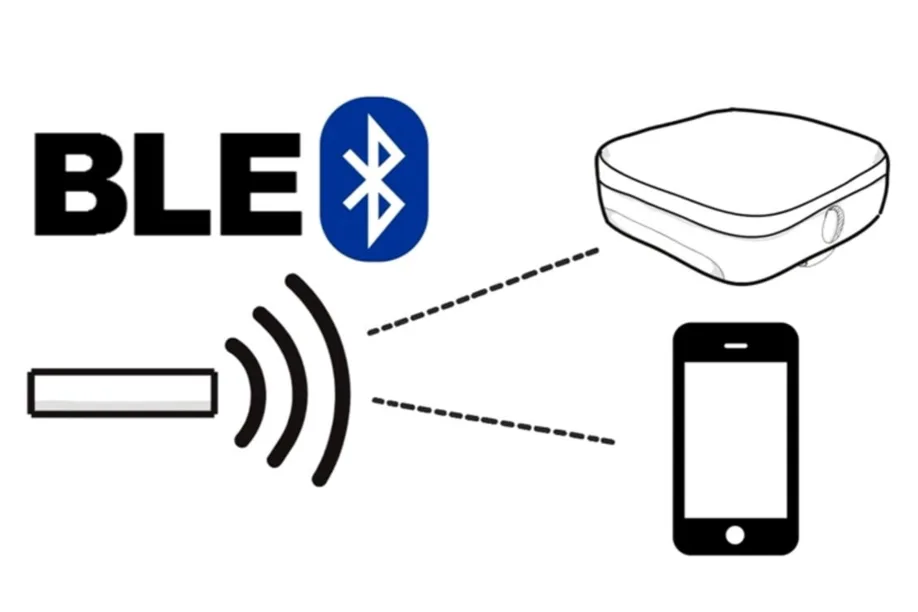
From metal keys to BLE enabled access
Many small businesses started with simple metal keys and mechanical cylinders.
Once staff counts grow and sites expand, that model turns into a daily management problem.
Bluetooth Low Energy, or BLE, gives smart locks a way to pair modern mobile access with practical energy use.
The result is a lock that works with phones, supports remote decisions, and still runs for months or years on batteries.
How BLE changes everyday smart lock use
In a BLE based smart lock, the phone often becomes the primary credential.
Staff tap an app, hold a phone near the reader, and the lock decides whether to grant entry.
For owners and managers, BLE brings a few clear shifts
- Less dependence on physical keys and re keying
- Faster updates to permissions through cloud based tools
- Better fit for battery powered cylinders and retrofit projects
BLE bridges mobile convenience with physical door control in a way that suits small commercial spaces.
Inside BLE for smart lock applications
BLE is part of the Bluetooth standard that focuses on small data packets and low energy radio activity.
Instead of talking all the time, devices wake up in short bursts, exchange just enough information, then return to sleep.
Low energy behavior in simple terms
A BLE lock and a phone use short advertising messages to discover each other.
When a user approaches the door, the lock and phone create a brief connection, exchange encrypted credentials, then close the link.
Because radios stay idle most of the time, the lock can rely on batteries instead of constant wired power.
This approach suits doors where wiring would be expensive or disruptive.
Short range with tight control
BLE operates at close range, typically within a few meters.
That range supports a natural user flow at the door and reduces the chance of long distance radio attacks.
Many systems add rolling keys and strong encryption on top of BLE.
Those layers ensure that even if someone listens to traffic, they cannot reuse captured data to open the lock.
Power strategy for BLE smart locks
Battery performance matters when a facility depends on dozens or hundreds of electronic cylinders.
BLE gives manufacturers several levers to extend uptime.
Battery life in real deployments
In a typical low traffic office door, a BLE cylinder can run for many months on standard batteries.
Higher traffic doors near reception may need more frequent replacement, yet still avoid daily charging or complex wiring.
Key factors that shape battery life include
- Number of daily openings
- Use of indicators such as LEDs or sound
- Radio configuration and connection time
- Mechanical effort needed to drive the latch or bolt
Design choices that extend uptime
System designers can tune both hardware and firmware.
Examples include
- Using efficient motors and balanced mechanical designs
- Optimizing how often the lock advertises its presence
- Adjusting how long the lock stays awake after each event
- Providing clear low battery alerts in the management platform
With a thoughtful setup, businesses gain electronic control without constant maintenance visits.
Remote control and BLE, beyond the door
BLE focuses on short range links between phones and locks.
Remote control comes from the way those locks connect to cloud services.
Common patterns include
- Mobile phones that sync with the cloud over Wi Fi or cellular networks
- Dedicated BLE to IP gateways that sit inside the building network
- Controllers that combine BLE with other radios in one device
An administrator might sit off site, change a user role, and push updated permissions through the cloud.
The next time the phone or gateway talks with the lock, the new rules take effect.
This model supports
- Remote credential updates
- Temporary access windows
- Centralized monitoring of door activity across multiple locations
BLE compared with Wi Fi and other wireless options
Small businesses often compare BLE with Wi Fi when planning smart lock projects.
Each option fits different needs.
Wi Fi suits devices that stream data or need constant connectivity.
That level of activity drains batteries quickly, so many Wi Fi locks depend on wired power or heavy battery packs.
BLE focuses on
- Short range, low duty communication
- Small command and status messages
- Long battery life with modest hardware
Other standards like Zigbee or Z Wave appear mainly in residential and light automation systems.
BLE benefits from native support on modern phones, which makes mobile credentials easier to deploy at scale.
Planning a BLE enabled access control rollout
A structured plan helps owners gain value from BLE smart locks from day one.
Key steps
- Define priority doors
Focus first on staff entrances, storage rooms, or office doors that currently create key management headaches. - Confirm hardware fit
Check door types, cylinder formats, and fire code needs.
Choose BLE hardware that matches local standards and works with existing mechanical setups. - Align with access software
Select a cloud based platform that manages BLE credentials, roles, and audit logs in one place.
Ensure it supports mobile apps your staff can use. - Set clear credential policies
Decide who can approve new users, how long temporary credentials last, and how to handle lost phones. - Pilot before broad rollout
Start with a limited group of users and doors, gather feedback, then refine settings for comfort and security. - Monitor and maintain
Track battery alerts, review access logs, and plan routine checks so hardware stays reliable.
The goal is a system that feels almost invisible to daily users while giving managers strong oversight and control.
FAQ
What do you mean by BLE Bluetooth Low Energy
Bluetooth Low Energy, or BLE, is a version of Bluetooth that sends small bursts of data while using very little power. It supports devices that run on batteries for long periods. In smart locks, BLE lets the lock talk with phones or gateways without constant radio activity or heavy energy use.
What is Bluetooth Low Energy BLE capability
BLE capability means a device can use the low energy mode of Bluetooth for communication. For smart locks, that means the lock can pair with phones, readers, or gateways in short sessions. The device then moves data like credentials and status updates while keeping overall power consumption low.
Why is Bluetooth Low Energy
Bluetooth Low Energy exists to support connected devices that cannot rely on large batteries or constant charging. It reduces radio time and data size so sensors, wearables, and smart locks can run for months. For access control, BLE enables mobile credentials and electronic cylinders that still fit normal door hardware.
What does Bluetooth Low Energy mean on my printer
When a printer lists BLE support, it can accept simple Bluetooth connections with very low power use. Phones or tablets may discover the printer quickly, send configuration data, or support easy setup flows. In many cases, BLE pairs with Wi Fi so the printer handles large print jobs over the main network.
How do I fix Bluetooth Low Energy
If BLE connections fail, start with basic checks. Restart the phone, printer, or lock, confirm Bluetooth stays enabled, move closer to the device, and remove older pairings that you no longer use. Updating firmware on both sides and resetting the device to factory defaults often restores stable BLE communication.
Is BLE faster than Wi Fi
BLE focuses on low power rather than high speed, so it does not move data faster than Wi Fi. Wi Fi supports large files and streaming, while BLE sends small control messages. For smart locks and credentials, BLE is fast enough, the user only needs quick open commands and status updates.
What devices use Bluetooth Low Energy
Many modern devices rely on BLE. Common examples include smart locks, fitness trackers, beacons, health sensors, headphones, keyboards, and industrial sensors. Phones, tablets, and laptops usually support BLE as well, which makes them ideal as mobile credentials or control points in a smart access system.
How to disable BLE on Android
On most Android phones, you control BLE through the main Bluetooth settings. Open Settings, tap the Bluetooth menu, and turn Bluetooth off to stop BLE activity. Some apps use background scanning, so you can also review app permissions and location access if you want tighter control over wireless behavior.
About EOS SECURE
EOS SECURE delivers precision engineered mechanical and electronic lock cylinders backed by more than a decade of manufacturing expertise. Established in 2011, our factory operates under ISO9001 and ISO14001 certifications, and our products meet rigorous international standards including EN1303 and SKG. With more than 50 advanced Swiss type CNC automatic lathes and integrated machining centers, we manufacture high quality lock cylinders trusted by commercial clients worldwide. Whether you need BLE ready electronic cylinders, small batch customization, or large scale production, EOS SECURE provides reliable performance, consistent quality, and dependable technical support. Secure your business with solutions built for long term stability, contact us today.