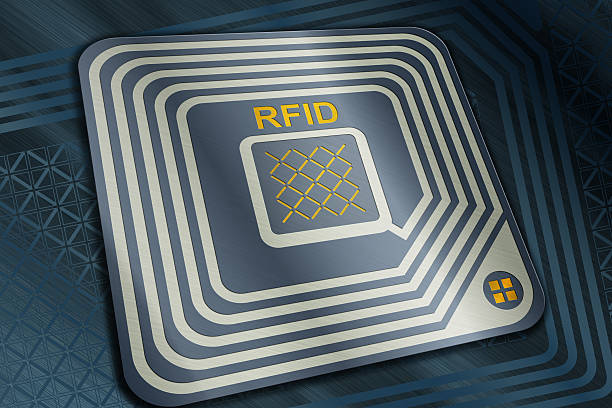
As technology advances, so do our security networks. Lock systems have now become a framework where keys are gradually becoming a thing of the past, making access to houses or properties as easy as a swipe of a card or tag. With RFID door locks, security now matches innovation. RFID lock systems have emerged as a more advanced solution for securing access to properties, providing a better alternative to conventional locking processes. These infrastructures utilize RFID technology, offering advanced access control for property owners. If you own a residential or commercial property, this is for you. Keep reading!
What is RFID
RFID, also known as Radio Frequency Identification, is an innovative access control mechanism that uses RFID technology to produce a more secure, efficient, and comfortable access management. RFID lock adopts the use of tags or cards to authorize access through its communication with a card reader or tag reader. This locking system provides improved flexibility and security, making it the perfect choice for establishments.
RFID door lock systems do not need a reader to work. Unlike the barcode reader, which needs to scan a barcode, it makes use of radio waves to communicate. For the system to work, the components of the system must be complete. These include: RFID tags, an RFID reader, an antenna, and a transmitter.
The RFID door lock access control system employs the user’s ID. It is usually a fob or keycard that has an RFID chip, with the inclusion of a tag that identifies data. Often, when a man is in proximity to the RFID tag, the signal from the reader device discovers it and sends a signal to the antennas to authorize the user through the access control system.
How Do RFID Locks Work

Radio Frequency Identification technology employs wireless communication between devices, advancing homes and properties with a perfect experience. The key components of this technology are the RFID reader, RFID tag, control board, and lock mechanism. The working of an RFID lock varies from that of a smart lock or any other.
The nature of RFID door locks is wireless. Therefore, there is a need for proximity for the wholesome operation of the RFID door lock access control system. When using an RFID lock, the user is given a key card that has an RFID chip. As soon as the user approaches the door, the RFID reader immediately identifies the card and understands the data it contains. Then, the data is transferred to the house’s database to check whether the information sent matches any room. If a match is found, the door opens without the use of a card.
Summarily, the RFID lock goes through tag detection, card authentication, and lock control before access is granted to the user.
RFID Door Lock System Components
For the complete use of the RFID door lock access control system, some accessories are constructed into the locking system. These components include;
RFID Tags
The RFID tags, also known as the transponders, are small devices that store specific data. It contains an antenna and a microchip that keeps the user’s access information. This is the device that transmits data to the reader.
Credential/RFID Reader
This RFID door lock system component receives radio waves and transmits signals to the RFID tags. It can be built either as a self-contained unit or implemented into the lock system.
Control Unit
The control panel is the brain of the RFID door lock access control system. This is the device that receives the transmitted data from the reader and compares it with the database of authorized users. If the authorization is found, it transmits the information back to the door to unlock.
Lock System
This device is the lock attached to the door that physically locks and unlocks the door depending on the transmitted information from the controller. It could be a servo motor, solenoid lock, or any other locking mechanism.
Types of RFID Locks

RFID door locks vary in frequency, each exhibiting its own strengths. These variations include;
Active versus Passive RFID
An active RFID lock is powered by a battery. It employs the use of an internal source of power to produce radio waves when it detects the signal of a close reader. However, passive RFID makes use of electromagnetic energy from the readers. Low-energy electric field continuously produces an excite field which is a low-energy electric field. This is the power used by a passive reader, providing enough energy to transmit information. An active RFID is stronger as it can detect signals from afar. However, because it is powered by a battery, there will be a need for constant charging or replacement. This makes the system more expensive as you would have to replace key cards or keys forbs at a more expensive rate.
A passive RFID lock operates on a smaller scale and does not use a battery. It is powered by a reader and does not have an internal power source. A passive RFID lock is more commonly seen in businesses that have large inventories. This is because of its less expensive cost and ability for a longer operational timeline. Also, an active RFID door lock’s signal has a range of up to 150 meters, while a passive RFID has a shorter one. These features will determine which best fits your property.
Low versus High-frequency RFID
In commercial buildings, low frequency and high frequency are the most common. The frequency rate for low-frequency RFID locks is 125 KHz and is mostly used for primary access control. Due to a short range of 3 to 10cm, low-frequency RFID door locks ensure the reduction of unauthorized scans. Some of its other features are that it has great resistance to any disruption from water and other environmental factors. It is ideal for secure, close-range access due to its short-range scanning. It is less expensive, and it is usually used in cost-effective hotel installations. However, it has less data transmission speed and limited memory in comparison to high frequency.
The frequency range of the high-frequency RFID is 13.56 KHz. It is usually employed in more advanced RFID lock systems. High-frequency locks are usually based on ISO/IEC 14443 or ISO/IEC 15693. Its other features are faster data transmission speed and greater memory, ensuring the storage of additional information. Also, it has improved encryption and security. With respect to cost, it is higher than the low-frequency RFID. All these features must be taken into consideration before choosing an RFID locking system.
Benefits of Using RFID Locks for Home & Hotel
For Home
RFID door locks represent a safe and practical method for homeowners to access their residence. With one tap of an RFID card or tag, homeowners can simply access their residence without keys. This way, they never have to deal with the hassle of losing, replacing, or duplicating keys. All RFID locks for home facilitate convenience for family members or guests, while typically allowing the user to set time-specific access to selected users.
Their key benefits include:
- No key to lose with RFID card or tags
- An unlimited number of user accesses with time restrictions
- No worrying about duplication or hiding spare keys
- Increased convenience for homeowners
- Modern style, professionally fitted for smart home systems
Nevertheless, RFID door locks, like any tech-driven option, run a few risks. One of the most frequent challenges is simply running out of battery or misplacing your RFID card. Thus, one is strongly encouraged to target door lock models with low battery alerts, back-up mechanical keys, and external power ports. Upgraded security practices should include the use of an encrypted RFID door lock system, as well as deactivating lost or unused RFID credentials.
For Hotel
The hospitality industry has seen a vast amount of adoption of RFID due to its usability and professionalism. Guests using RFID hotel key cards can access hotel rooms relatively quicker and have a notably reduced chance of losing their key cards. Plus, a hotel RFID lock system means hotel staff can centrally administer room access and improve security and operating efficiencies.
Their key benefits include:
- Quicker and easier guest check-in
- Easy to replace cards if lost or damaged
- Central access control for housekeeping and staff
- Improved security with room time-limited access
- Compatible with hotel management systems
However, there is a chance of the cards being demagnetized. This concern can be mitigated by using more robust RFID cards with encryption, or all mobile-based RFID accessions, and by running regular audits of cards that are assigned guest access. Most lock access controls are integrated with RFID door lock systems, so it is easy to address any access issues.
For Other Applications
RFID technology has applications beyond residential uses and hotels. Offices, gyms, medical buildings, and even warehouses can leverage the RFID lock system to unclutter entry for staff or members, limit unwanted access, and provide data system management for facilities. This is because, at all times, the RFID lock system will always provide a strong balance of security and convenience.
How to Choose the Best RFID Door Lock System
Selecting the optimal RFID door lock system is a matter of personal preference for home or commercial use. First, figure out where the lock will be used. For home use, ease of use and battery life are essential. Choose an RFID home door lock that includes a low battery alert, a mechanical key backup, and an easy-to-use interface.
For the RFID hotel door lock system, the integration feature is critical. The best RFID hotel door lock system will seamlessly integrate with property management systems and enable room reassignments on the fly, while using encrypted RFID hotel key cards to protect guest privacy; and for efficiency, select an RFID lock system that offers mobile access that replaces keyed cards altogether.
Also, consider durability and material quality based on how heavily they are used. If using the RFID lock as an access control system in high-traffic environments, it is very important to select a lock system robust enough to endure daily use and still be secure.
Furthermore, if you are managing access across many access control points or to many people, you may want to consider an RFID door lock access control system that has centralized management features, which will save time and enhance security.
Ultimately, choose an RFID lock system supplier you trust that has after-sales support and can customize your lock system and fit your specifications to your application. Choose EOS Secure to address these needs. EOS Secure has durable supplemental RFID locks for all applications that combine sophisticated security with elegant design and smart access ability.
Conclusion
By learning how RFID locks work to discover how RFID locks can be used in homes, hotels, and more, it is clear this technology is changing access control in time-saving, increased security, and flexibility. Whether you are interested in the straightforward performance of passive RFID systems or the extensive control of high-frequency systems, there are options to meet your requirements.
Ready to upgrade your protective measures with a smart, reliable RFID door lock system? EOS Secure can help you arrive at a logical choice, with knowledgeable support and top-quality RFID solutions designed for your space.