
What Works, What to Avoid, and How to Decide
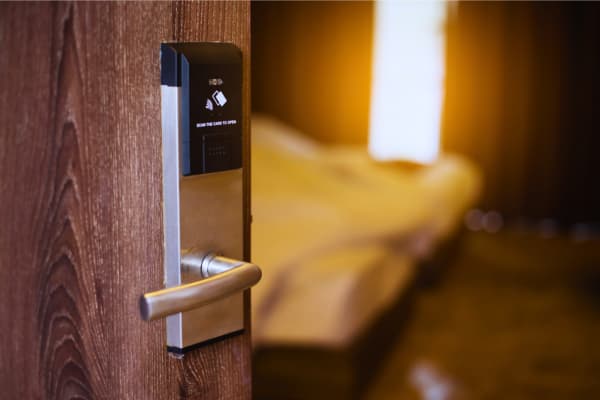
Choosing the right hotel door lock system is no longer a simple hardware decision. In 2026, it is a long-term operational investment shaped by mobile-first guests, leaner staffing models, and extended technology life cycles. The right choice directly affects guest safety, daily efficiency, and future scalability.
This guide brings together proven industry practices to help hotel owners and operators make confident, future-ready decisions based on real operational requirements rather than short-term trends.
Why the Right Door Lock System Matters for Hotel Security and Guest Experience
Modern hotel door lock systems do more than secure guest rooms. They form the first layer of physical security while shaping how guests experience access throughout their stay.
In 2026, hotels are expected to operate with fewer on-site staff while supporting faster check-ins, flexible access permissions, and higher expectations for digital convenience.
A well-designed door lock system supports three critical business outcomes.
Stronger guest confidence and satisfaction
Reliable access control reassures guests that their privacy and belongings are protected.
Improved operational efficiency
Centralized credential management reduces front desk workload and simplifies check-in and check-out.
Future readiness
Contactless and digital access aligns with evolving travel behavior and strengthens a hotel’s technology image.
Hotel Door Lock System Types, From Traditional Locks to Smart Access
Understanding how each lock technology functions and where it performs best is essential before making a selection.
Mechanical Key Locks
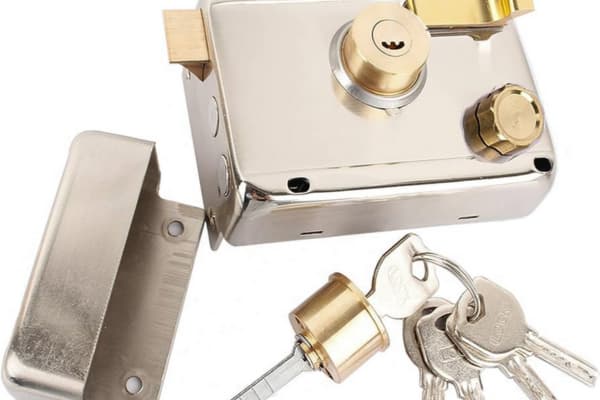
How they work
Physical metal keys operate a mechanical cylinder.
Key advantages
Low upfront cost and straightforward installation.
Main limitations
Keys are easily lost or copied, access cannot be tracked, and rekeying increases long-term cost.
Best use cases
Staff-only areas or very small properties with minimal access turnover.
Magnetic Stripe Card Locks
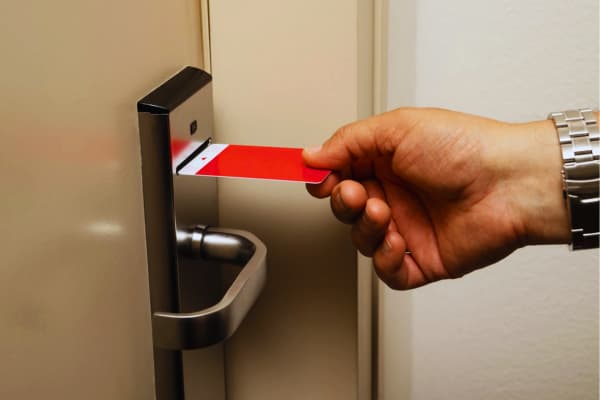
How they work
Cards are swiped to read encoded magnetic data.
Key advantages
Low cost and basic access programming.
Main limitations
Cards demagnetize easily, readers wear over time, and security capabilities are limited.
Best use cases
Legacy systems awaiting replacement. Not recommended for new installations.
RFID Contactless Card Locks
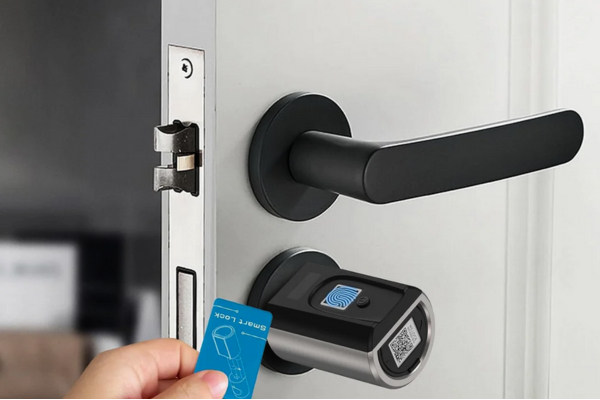
How they work
Cards communicate wirelessly with the reader using radio frequency.
Key advantages
Contactless access, remote activation and deactivation, and detailed audit trails.
Main limitations
Ongoing card replacement costs and the need for battery management.
Best use cases
A common choice for economy to upper-midscale hotels, balancing cost, security, and usability.
PIN Code and Keypad Locks
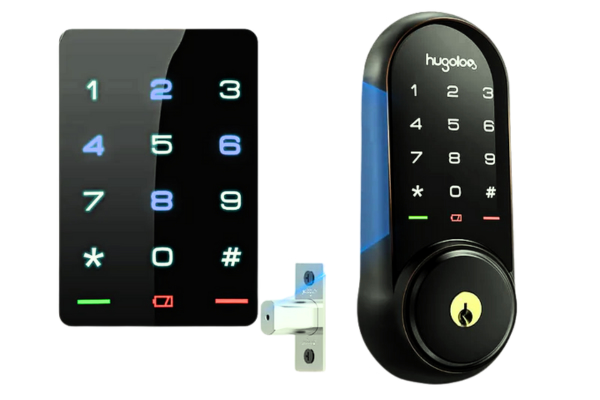
How they work
Users enter a numeric code to unlock the door.
Key advantages
No physical credentials and fast remote code changes.
Main limitations
PIN management becomes complex at scale, and network security must be carefully managed.
Best use cases
Staff areas, storage rooms, small properties, or as a secondary access method.
Smart Locks With Mobile Credentials
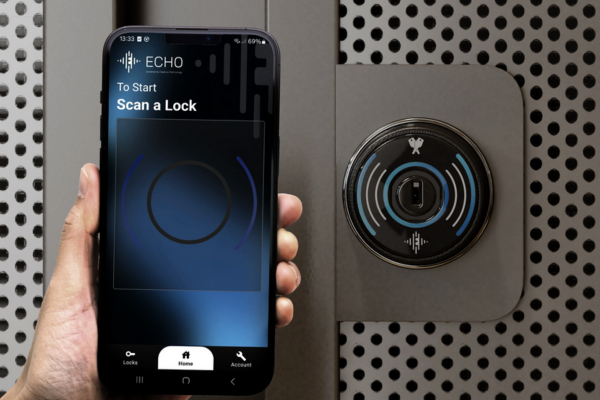
How they work
Smartphones unlock doors using Bluetooth, NFC, or Wi-Fi through a secure application.
Key advantages
Contactless access, real-time remote management, and integration with mobile check-in workflows.
Main limitations
Dependence on guest devices and stable network infrastructure.
Best use cases
Luxury hotels, resorts, and properties focused on digital guest journeys.
As mobile access adoption increases, smart locks are increasingly used to reduce front desk congestion and standardize access workflows rather than serve as premium add-ons.
Biometric Locks
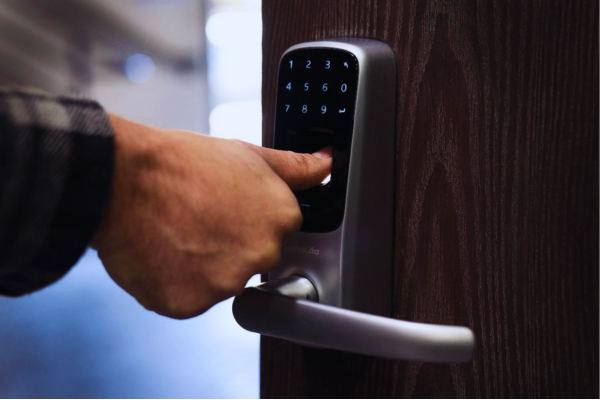
How they work
Fingerprint or facial recognition verifies identity.
Key advantages
High security without physical credentials.
Main limitations
Higher cost, complex maintenance, and privacy considerations.
Best use cases
High-security zones such as executive lounges, VIP suites, or equipment rooms.
Hardware Form Factors
Full-body locks
Reader and handle integrated into a single unit, offering easier installation and minimal door modification.
Separate component locks
Reader and lock body installed separately, providing cleaner aesthetics and greater flexibility for future upgrades.
Six Key Factors That Should Guide Your Hotel Door Lock Decision
A sound decision requires more than comparing features or prices.
Security and Compliance
Security must come first.
- Strong encryption and protection against credential copying
- Durable construction with anti-tamper design
- Compliance with local building and fire regulations
- Detailed audit logs for accountability and investigation
Emergency exits must always allow single-motion unlocking from the inside without credentials.
Guest Experience and Convenience
Locks should simplify the stay.
- Intuitive operation with minimal instruction
- Support for contactless access and mobile check-in
- Consistent performance without frequent lockouts
- Flexibility for diverse guest demographics
Total Cost of Ownership
Initial purchase price rarely reflects the true cost.
- Hardware, installation, and system integration
- Ongoing expenses for cards, batteries, and software
- Hidden costs from downtime, guest complaints, or security incidents
Integration and Scalability
Modern lock systems operate as part of a broader hotel ecosystem.
- Seamless PMS integration for automated access control
- Compatibility with elevators, energy management, and room systems
- Simple expansion for new buildings or future upgrades
Durability and Maintenance
Hotels depend on long-term reliability.
- Expected hardware lifespan of five to ten years
- Resistance to corrosion in coastal or humid environments
- Low-battery alerts and simple replacement procedures
- Access to reliable technical support
Design and Aesthetics
Locks contribute to first impressions.
- Finishes and styles aligned with brand identity
- Clean, professional appearance that complements interiors
How to Match the Right Door Lock System to Your Hotel Type
Economy and Midscale Hotels
Primary needs
Cost control, reliability, and ease of management.
Recommended solution
RFID card lock systems.
Implementation focus
Select platforms with proven PMS integration and clear upgrade paths.
Luxury Hotels and Resorts
Primary needs
Premium guest experience, contactless access, and brand differentiation.
Recommended solution
Mobile credential smart locks with RFID backup.
Implementation focus
Network stability and seamless system integration.
Boutique and Design Hotels
Primary needs
Design cohesion and smooth user experience.
Recommended solution
Separate component RFID or smart locks with custom finishes.
Implementation focus
Balance aesthetics with intuitive operation.
Historic and Heritage Properties
Primary needs
Minimal structural impact with modern security.
Recommended solution
Retrofit-friendly or hybrid RFID systems.
Implementation focus
Careful installation planning and customization.
Large Resorts and Multi-Building Campuses
Primary needs
Centralized management and multi-zone access control.
Recommended solution
Integrated RFID and mobile credential systems.
Implementation focus
Robust central management and granular permission control.
Security and Compliance Requirements Hotels Cannot Ignore
- Emergency exits must unlock instantly from the inside
- Guest room doors must always allow internal exit
- Pool and gym access should restrict unsupervised child entry
- Staff and guest credentials must remain strictly separated
- Electronic systems require battery backups and mechanical overrides
FAQ
What is the biggest advantage of upgrading from mechanical locks to electronic systems?
The primary advantage is control. Electronic systems allow hotels to issue, modify, and revoke access in real time while eliminating key duplication risks. Audit logs improve security oversight and reduce administrative workload for front desk and management teams.
Are mobile smart locks secure?
Yes. Reputable mobile smart lock systems use strong encryption, rolling credentials, and secure authentication. When supported by a properly secured network and regular updates, mobile access often provides stronger protection than physical keys or magnetic cards.
Do hotels need to replace doors to install electronic locks?
In most cases, no. Modern hotel electronic locks are designed to retrofit standard wooden or metal doors. Door thickness, material, and existing mortise dimensions should be confirmed with the supplier before installation.
What happens if a lock runs out of power?
Quality systems include low-battery alerts, emergency power ports, and mechanical override keys. These safeguards ensure guests are not locked out and hotel operations continue without disruption.
How long should a hotel door lock system last?
With proper maintenance, hotel lock hardware typically lasts five to ten years. Software platforms require ongoing updates to maintain security and compatibility, making long-term supplier support essential.
Final Thoughts on Choosing a Future-Ready Hotel Door Lock System
Hotel door lock systems should be viewed as long-term operational infrastructure. The right solution supports evolving guest expectations, lean staffing models, and digital operations over the next five to ten years, not short-term hardware cycles.
About EOS SECURE
EOS SECURE delivers precision-engineered mechanical and electronic lock cylinders backed by more than a decade of manufacturing expertise. Established in 2011, our factory operates under ISO9001 and ISO14001 certifications, ensuring every product meets rigorous international standards including EN1303 and SKG.
With over 50 advanced Swiss-type CNC automatic lathes and integrated machining centers, EOS SECURE manufactures high-quality lock cylinders trusted by clients worldwide. Whether for small-batch customization or large-scale production, EOS SECURE provides reliable performance, consistent quality, and dependable technical support. Explore EOS SECURE solutions to strengthen your property’s access security.